
Topic Battle

Where Everything Fights Everything

Coffee

Coffee

A brewed drink prepared from roasted coffee beans, the seeds of berries from certain Coffea species. The world's second-most traded commodity.

VS
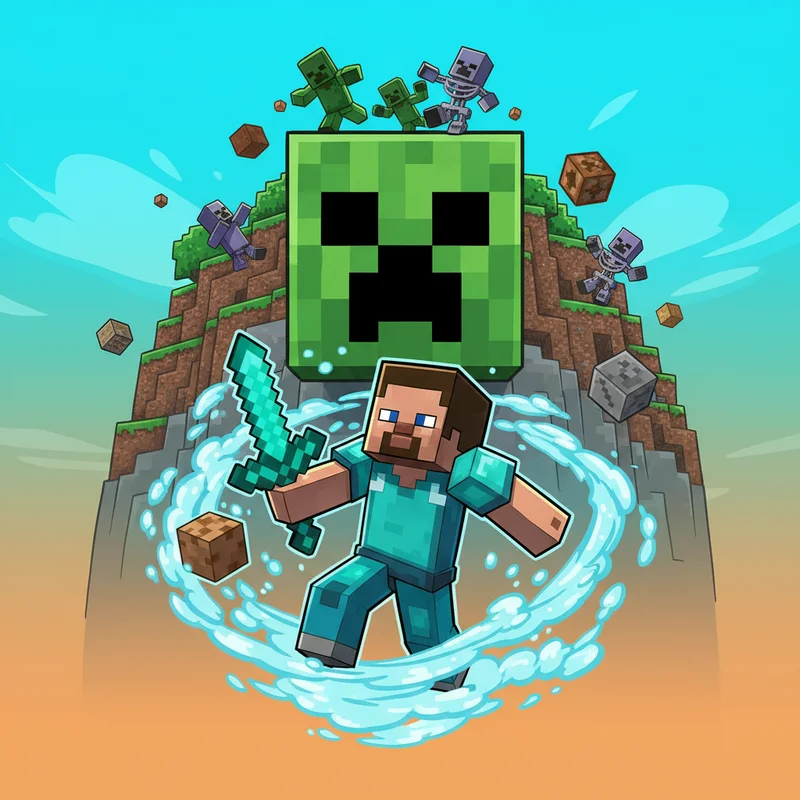
Minecraft

Minecraft

Block-building sandbox game with infinite possibilities.

Battle Analysis

Economic footprint coffee Wins
70%
30%
Coffee Minecraft

Coffee

The coffee economy represents one of humanity's largest commodity markets, second only to petroleum in global trade value. Approximately 125 million people depend directly upon coffee cultivation for their livelihoods, concentrated in equatorial regions spanning three continents. The beverage supports entire national economies, with countries like Ethiopia deriving significant export revenue from their arabica harvests. Downstream, the industry encompasses roasting operations, equipment manufacturing, retail chains, and an elaborate ecosystem of accessories and accoutrements. Starbucks alone employs over 400,000 workers globally.

Minecraft

Minecraft's economic impact, whilst substantial, operates within narrower parameters. Microsoft's $2.5 billion acquisition remains one of gaming's largest transactions, and subsequent merchandise licensing, educational partnerships, and spin-off titles have generated considerable returns. The game supports a creator economy of content producers, modders, and server operators. Professional Minecraft players and streamers earn substantial incomes. However, the total economic footprint remains concentrated within the technology sector rather than distributed across global agricultural systems. Minecraft employs hundreds where coffee employs millions, a disparity reflecting their fundamentally different material requirements.

VERDICT

Coffee sustains 125 million livelihoods across developing economies; Minecraft's economic impact, whilst notable, pales in comparison.
Community formation minecraft Wins
30%
70%
Coffee Minecraft

Coffee

Coffee has generated substantial community infrastructure throughout human history. The coffeehouses of 17th-century London served as intellectual salons where insurance industries were born and revolutions planned. Modern iterations range from the third wave specialty movement, with its single-origin obsessives and cupping competitions, to neighbourhood cafes serving as informal community centres. Coffee subscription services create distributed networks of enthusiasts comparing tasting notes. The beverage transcends demographic boundaries, uniting construction workers and venture capitalists in shared appreciation of their legal stimulant of choice.

Minecraft

Minecraft community formation operates at unprecedented digital scale. The game's multiplayer servers host communities numbering in the tens of thousands, with established governance structures, economic systems, and legal codes. YouTube content creators focusing on Minecraft collectively generate billions of views monthly, establishing parasocial relationships with audiences worldwide. The modding community has produced over 100,000 modifications, extending the base game in directions its creators never anticipated. Server communities have survived for over a decade, their members forming genuine friendships despite never meeting physically. However, these communities remain digitally mediated, lacking the face-to-face interaction of coffee culture.

VERDICT

Minecraft enables community formation at scales impossible for physical coffee gatherings, connecting millions globally.
Longevity potential coffee Wins
70%
30%
Coffee Minecraft

Coffee

Coffee has demonstrated extraordinary civilisational persistence, surviving 500 years of technological and social upheaval since its introduction to European markets. The beverage has outlasted empires, ideologies, and countless competing stimulants. Its chemical properties remain constant regardless of cultural context, and human brain chemistry shows no signs of evolving resistance to caffeine's effects. The infrastructure supporting coffee cultivation is deeply embedded in global agricultural systems, ensuring supply continuity absent catastrophic climate disruption. Coffee's longevity appears essentially guaranteed for the foreseeable human future.

Minecraft

Minecraft's longevity, whilst impressive by gaming standards, faces inherent technological uncertainty. The game has maintained relevance for over thirteen years, a remarkable achievement in an industry where titles typically peak and decline within months. Its educational applications and multigenerational appeal suggest continued relevance. However, the game depends upon hardware platforms and software ecosystems controlled by external parties. Future computing paradigms may render current iterations obsolete. The history of gaming is littered with once-dominant titles now remembered only nostalgically. Minecraft may prove exceptional, but betting against entropy in technological contexts has historically proven unwise.

VERDICT

Coffee has survived five centuries; Minecraft's thirteen years cannot compete with proven historical endurance.
Ritual significance coffee Wins
70%
30%
Coffee Minecraft

Coffee

The morning coffee ritual has achieved quasi-religious status in contemporary society. The sequence of grinding beans, heating water, and extracting essence follows a prescribed liturgy that practitioners perform with meditative devotion. Baristas train for years to master latte art, transforming beverage preparation into visual performance. Coffee shops function as secular temples where pilgrims gather to commune over their shared dependency. The phrase 'but first, coffee' adorns merchandise globally, serving as both confession and creed. The ritual extends beyond preparation into consumption ceremonies, with designated coffee breaks structuring workdays across industries.

Minecraft

Minecraft rituals manifest differently, centering upon procedural generation and discovery. The creation of a new world initiates a familiar sequence: punching trees for wood, crafting basic tools, constructing shelter before nightfall. Experienced players perform these actions with the unconscious precision of muscle memory. The game has spawned its own mythology, with the Ender Dragon serving as ultimate antagonist and the Nether representing purgatory. Multiplayer servers develop elaborate traditions around territory claiming, resource distribution, and social hierarchies. However, these rituals lack the physical grounding of coffee preparation, existing entirely within digital abstraction rather than sensory engagement.

VERDICT

Coffee rituals engage multiple senses and physical reality, granting deeper psychological anchoring than digital procedures.
Productivity enhancement coffee Wins
70%
30%
Coffee Minecraft

Coffee

Coffee's relationship with productivity has been scientifically documented across centuries of human endeavour. Caffeine, the beverage's active compound, blocks adenosine receptors in the brain, creating a state of enhanced alertness and reduced fatigue perception. Studies indicate that moderate consumption improves reaction times by up to 11% and reduces errors in repetitive tasks. The global workforce has essentially organised itself around coffee access, with office cultures allocating significant resources to ensure continuous supply. Writers, programmers, and surgeons alike credit the substance with enabling extended periods of focused effort. The estimated $495 billion global coffee market exists largely because employers recognise its utility in extracting additional output from human capital.

Minecraft

Minecraft's relationship with productivity presents a more complicated portrait. The game has been employed in educational contexts to teach mathematics, architecture, and programming logic through its redstone circuitry system. Microsoft, having acquired Mojang for $2.5 billion, released Minecraft: Education Edition specifically for classroom deployment. However, the game's primary mode of operation remains recreational, and documented cases exist of students missing assignment deadlines whilst constructing elaborate digital fortifications. The hours invested in Minecraft yield transferable spatial reasoning skills, yet these must be weighed against the sheer volume of potentially productive time redirected into cubic world-building. Parents and employers alike view the game with suspicion.

VERDICT

Coffee demonstrably enhances human output; Minecraft's educational benefits compete with its capacity for distraction.
👑

The Winner Is

Coffee

52 - 48

This examination of two titans of human obsession reveals contestants of profoundly different character. Coffee claims victory in four of five categories, demonstrating the advantages of physical embodiment, historical depth, and global economic integration. Its role in enhancing productivity, anchoring daily rituals, supporting developing economies, and demonstrating civilisational persistence reflects a substance deeply woven into human infrastructure. Minecraft's sole victory in community formation acknowledges its unprecedented capacity for connecting millions across digital space. The final assessment awards Coffee a narrow victory of 52 to 48, recognising that whilst both command devoted followings, coffee's integration into the material conditions of human existence grants it advantages no purely digital creation can replicate.

Coffee
52%
Minecraft
48%

Share this battle

More Comparisons