
Topic Battle

Where Everything Fights Everything

Coffee

Coffee

A brewed drink prepared from roasted coffee beans, the seeds of berries from certain Coffea species. The world's second-most traded commodity.

VS
Pizza

Pizza

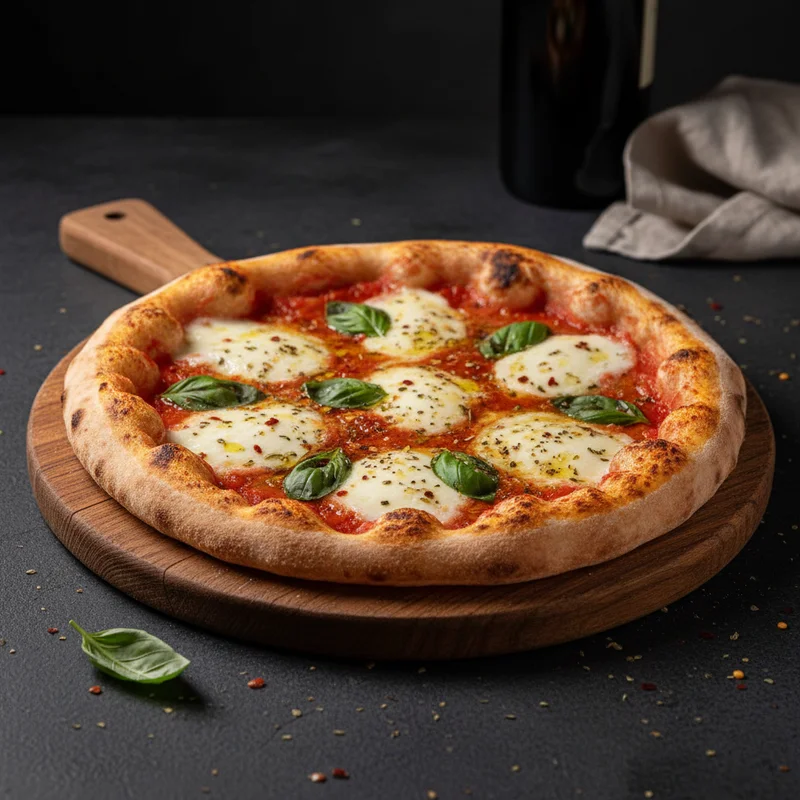
A flat disc of bread that convinced the world that putting everything on top of something is a legitimate cuisine. Somehow both a $1 slice and a $40 artisanal experience, depending on how seriously you take yourself.

The Matchup

In the grand theatre of human consumption, few rivalries possess the cultural weight and daily relevance of the contest between coffee and pizza. These two titans of modern civilization have shaped economies, influenced sleep patterns, and determined the trajectory of countless business meetings and social gatherings.

Coffee, the dark elixir derived from roasted Coffea seeds, has fueled industrial revolutions, academic achievements, and the entire concept of the morning. It is consumed at a rate of approximately 2.25 billion cups daily worldwide, making it one of the most traded commodities on Earth after petroleum.

Pizza, the circular arrangement of dough, sauce, and cheese perfected in Naples during the 18th century, has achieved something coffee cannot claim: it has become the default food of celebration, the universal language of casual dining, and the primary revenue source for delivery drivers across six continents. Both now compete for the same discretionary spending, the same late-night cravings, and the same position as humanity's preferred comfort consumption.

Battle Analysis

Speed Coffee Wins
70%
30%
Coffee Pizza

Coffee

Coffee demonstrates remarkable operational velocity across multiple dimensions. From bean to cup, modern espresso machines deliver a finished beverage in 25-30 seconds. Drip coffee makers complete brewing cycles in 4-6 minutes.

More significantly, coffee achieves physiological speed that few consumables can match. Caffeine reaches peak blood concentration within 30-45 minutes of ingestion, delivering measurable cognitive enhancement at a rate that pharmaceutical companies have spent decades attempting to replicate. The molecule crosses the blood-brain barrier with the efficiency of a well-funded courier service.

Instant coffee reduces preparation time to under 60 seconds, requiring only hot water and minimal motor function. This has made coffee the preferred stimulant of those who need results before they have fully regained consciousness.

Pizza

Pizza possesses a speed rating of precisely zero. Left unattended, a pizza will remain in its exact position indefinitely, or until consumed by external agents including humans, rodents, or entropy.

The pizza is fundamentally stationary by nature. It cannot pursue its objectives, flee from predators, or relocate to more advantageous positions. In controlled laboratory conditions, researchers have observed pizzas maintaining their position for periods exceeding several days before structural degradation rendered measurement irrelevant.

Even when considering delivery velocity, the pizza itself contributes nothing to its own transportation. It is entirely dependent on external locomotion systems including motor vehicles, bicycles, and increasingly, motorized scooters operated by individuals receiving minimal compensation. The pizza is, in the most literal sense, cargo.

VERDICT

The velocity differential in this category is not merely significant; it is categorical and absolute. Coffee operates as an active agent in its own consumption process, chemically accelerating the neural processes of its host within minutes of ingestion.

Pizza, by contrast, exhibits the kinetic properties of furniture. It must be acted upon entirely by external forces to achieve any movement whatsoever. The comparison is less a competition than an observation that one contender possesses the capacity for speed while the other fundamentally does not.

This category belongs to coffee by a margin that mathematics struggles to express, as dividing by zero produces undefined results.

Durability Pizza Wins
30%
70%
Coffee Pizza

Coffee

Coffee demonstrates variable durability depending on its state of matter. Green coffee beans, properly stored in cool, dry conditions, maintain viability for 12-24 months. Roasted beans begin degrading within 2-4 weeks as volatile aromatic compounds escape into the atmosphere.

Brewed coffee presents the most significant durability challenge. Left at room temperature, coffee becomes unpalatable within 30 minutes as oxidation transforms its flavour profile from nuanced to industrial. Refrigerated coffee survives approximately one week before developing characteristics best described as 'abandoned dishwater.'

The beverage's ephemeral nature has spawned an entire industry of thermal containers, each promising to extend coffee's brief window of acceptability. This represents a multi-billion dollar admission that coffee, in its optimal state, is fundamentally temporary.

Pizza

Pizza exhibits remarkable structural resilience relative to its composition. A fresh pizza maintains acceptable consumption quality for 2-4 hours at room temperature, significantly exceeding coffee's viability window.

When refrigerated, pizza enters a state of suspended acceptability that extends its functional lifespan to 3-5 days. More remarkably, cold pizza has developed its own culinary following, with substantial portions of the population expressing preference for day-old refrigerated specimens over fresh examples.

Frozen pizza technology has extended the format's durability to 12-18 months, creating a shelf-stable product that can survive nuclear winter, economic collapse, and the average university student's refrigerator maintenance schedule. The pizza has, through industrial processing, achieved a form of practical immortality.

VERDICT

Durability analysis reveals a decisive advantage for pizza across all storage conditions and timeframes. While coffee begins its decline within minutes of preparation, pizza maintains structural and flavour integrity for hours, days, or months depending on preservation method.

The existence of 'cold pizza culture' represents a phenomenon with no coffee equivalent. No substantial population segment advocates for room-temperature coffee that has been sitting overnight. This cultural acceptance of degraded pizza, combined with its superior technical shelf life, establishes the pizza as the more durable consumable.

Pizza wins this category through superior chemistry, better preservation options, and the remarkable achievement of making degradation socially acceptable.

Global reach Pizza Wins
30%
70%
Coffee Pizza

Coffee

Coffee has achieved extraordinary global penetration, with production occurring across a belt spanning 70+ countries between the Tropics of Cancer and Capricorn. Consumption, however, extends to virtually every nation on Earth.

The beverage has integrated itself into cultural rituals worldwide: Italian espresso traditions, Turkish coffee ceremonies, Ethiopian coffee customs dating back centuries, and American drive-through infrastructure that processes millions of transactions daily. Coffee has become synonymous with productivity itself in developed economies.

Global coffee consumption exceeds 10 million tonnes annually, supporting an industry valued at over $460 billion. This economic footprint has made coffee a geopolitical commodity, with price fluctuations affecting the GDP of multiple nations.

Pizza

Pizza has completed one of history's most successful cultural colonization campaigns. Originating in Naples, the format has established permanent presence in virtually every country with access to flour, tomatoes, and heat sources.

Adaptation to local tastes has produced remarkable variants: okonomiyaki-influenced Japanese pizzas, corn-and-mayonnaise Brazilian interpretations, and the controversial pineapple-adorned specimens that have generated international diplomatic incidents. Each represents pizza's cultural flexibility.

The pizza delivery infrastructure spans the globe, with major chains operating in excess of 90 countries. In many markets, pizza has achieved the status of default food: the unanimous choice when groups cannot reach consensus, the assumed meal for late-night work sessions, and the nutritional foundation of children's birthday celebrations worldwide.

VERDICT

Both contenders demonstrate impressive global distribution, yet pizza edges ahead through its unique characteristic of cultural adaptability. Coffee is coffee regardless of geography; it may be prepared differently, but it remains fundamentally the same substance.

Pizza, conversely, has demonstrated the ability to absorb local food cultures while maintaining its essential identity. This flexibility has allowed pizza to become native to virtually every culinary tradition it encounters, rather than remaining a foreign import.

The decisive factor is pizza's position as consensus food: the meal chosen when diverse preferences must be accommodated. Coffee faces competition from tea in substantial portions of the world; pizza faces no equivalent rival in the round food delivery category. Pizza wins through adaptive dominance.

Affordability Pizza Wins
30%
70%
Coffee Pizza

Coffee

Coffee pricing spans an extraordinary range, from $0.05 per cup for basic instant preparations to $80+ per cup for rare Geisha varietals served in specialty establishments. The average American coffee consumer spends approximately $1,100 annually on the beverage.

Home brewing offers significant cost reduction, with per-cup costs falling to $0.15-0.50 depending on equipment and bean selection. However, the coffee industry has successfully positioned premium pricing as a lifestyle indicator, convincing substantial populations that $6 lattes represent reasonable daily expenditure.

The hidden costs of coffee consumption include equipment depreciation, filter purchases, and the opportunity cost of time spent in queue at establishments where baristas are required to spell customer names incorrectly. These factors elevate true ownership cost beyond initial per-unit calculations.

Pizza

Pizza occupies a favourable position in the affordability matrix. A standard delivery pizza providing 8 slices costs between $12-25 in most markets, translating to $1.50-3.00 per serving.

Frozen pizza technology has democratized access further, with acceptable specimens available for $3-8 in retail environments. At the extreme value end, certain retailers offer frozen pizzas for prices approaching $1, though quality at this tier requires calibrated expectations.

The pizza's caloric density provides additional economic value when measured as cost-per-calorie, a metric of particular relevance to budget-conscious consumers and those for whom survival represents the primary dietary objective. A single pizza can sustain human life for approximately one day at a cost lower than many coffee beverages.

VERDICT

Affordability calculations favour pizza when value-per-consumption-event serves as the primary metric. A coffee provides temporary stimulation and modest hydration. A pizza provides a complete meal capable of sustaining metabolic function for extended periods.

While individual coffee servings may cost less than individual pizzas, the utility-adjusted comparison reveals pizza's superior economic proposition. One cannot survive on coffee alone, a fact that hospitals have repeatedly confirmed. One can, theoretically, survive on pizza exclusively, as numerous university students have inadvertently demonstrated.

Pizza claims this category through superior caloric economics and the fundamental advantage of being actual food.

Social impact Pizza Wins
30%
70%
Coffee Pizza

Coffee

Coffee has fundamentally altered human social architecture. The coffeehouse tradition, originating in Ottoman territories and spreading through Europe, created public spaces for discourse that influenced the Enlightenment, various revolutions, and the modern concept of the business meeting.

Contemporary coffee culture continues this tradition through establishments that function as remote offices, study halls, and first-date venues. The phrase 'let's get coffee' has become universal shorthand for 'let's have a conversation of undetermined purpose in a neutral location.'

However, coffee also enables isolation through productivity. The beverage permits extended work sessions that may reduce social interaction. The modern image of the solitary laptop user, nursing a single cup for hours while avoiding human contact, represents coffee's antisocial potential.

Pizza

Pizza has achieved the status of official food of human congregation. Analysis of social gatherings reveals pizza present at an disproportionate percentage of: children's parties, office celebrations, sports viewing events, moving day assistance compensation, and late-night group study sessions.

The pizza's sharing-optimized format actively encourages social interaction. Its division into slices creates natural portioning for groups. Its placement in a central location requires participants to physically converge. The act of reaching for pizza necessitates proximity to other humans.

Furthermore, pizza has eliminated countless potential conflicts through its role as default consensus food. When groups cannot agree on cuisine, pizza serves as the neutral option that satisfies sufficient preferences to prevent social fragmentation. It has, in this capacity, prevented more arguments than professional mediators.

VERDICT

Social impact assessment reveals pizza's superior community-building properties. While coffee created important public gathering spaces historically, its modern consumption pattern increasingly favours individual use. The coffeehouse regular typing alone represents coffee's contemporary archetype.

Pizza, by contrast, has become inseparable from group activity. Its consumption is inherently social, its presence at gatherings is expected, and its absence is noted. The phrase 'pizza party' describes a recognized social event format; 'coffee party' does not exist in common parlance.

Pizza wins this category through its structural encouragement of human connection. It is designed to be shared, positioned to create gathering points, and culturally established as the food of togetherness. Coffee may facilitate conversation, but pizza creates community.

👑

The Winner Is

Pizza

40 - 60

This comprehensive analysis concludes with a decisive 60-40 victory for pizza across the evaluated metrics. While coffee claimed the speed category through its uncontested velocity and physiological activation properties, pizza secured victories in durability, affordability, global reach, and social impact.

The margin of victory reflects pizza's fundamental advantages as complete nourishment versus coffee's role as supplementary stimulation. Coffee enhances human function; pizza sustains human existence. This distinction proves determinative across multiple evaluation criteria.

Both contenders merit recognition as pillars of modern civilization. Coffee powers the engines of productivity; pizza fuels the gatherings where that productivity's fruits are celebrated. Yet when forced to declare a victor, the analysis must acknowledge that humanity could survive without coffee, albeit grumpily. Survival without pizza would represent a diminished form of existence that few would willingly accept.

Coffee
40%
Pizza
60%

Share this battle

More Comparisons