Where Everything Fights Everything

Coffee vs The Moon

😜 Just for fun — a tongue-in-cheek, gloriously unscientific showdown.

Coffee

Coffee

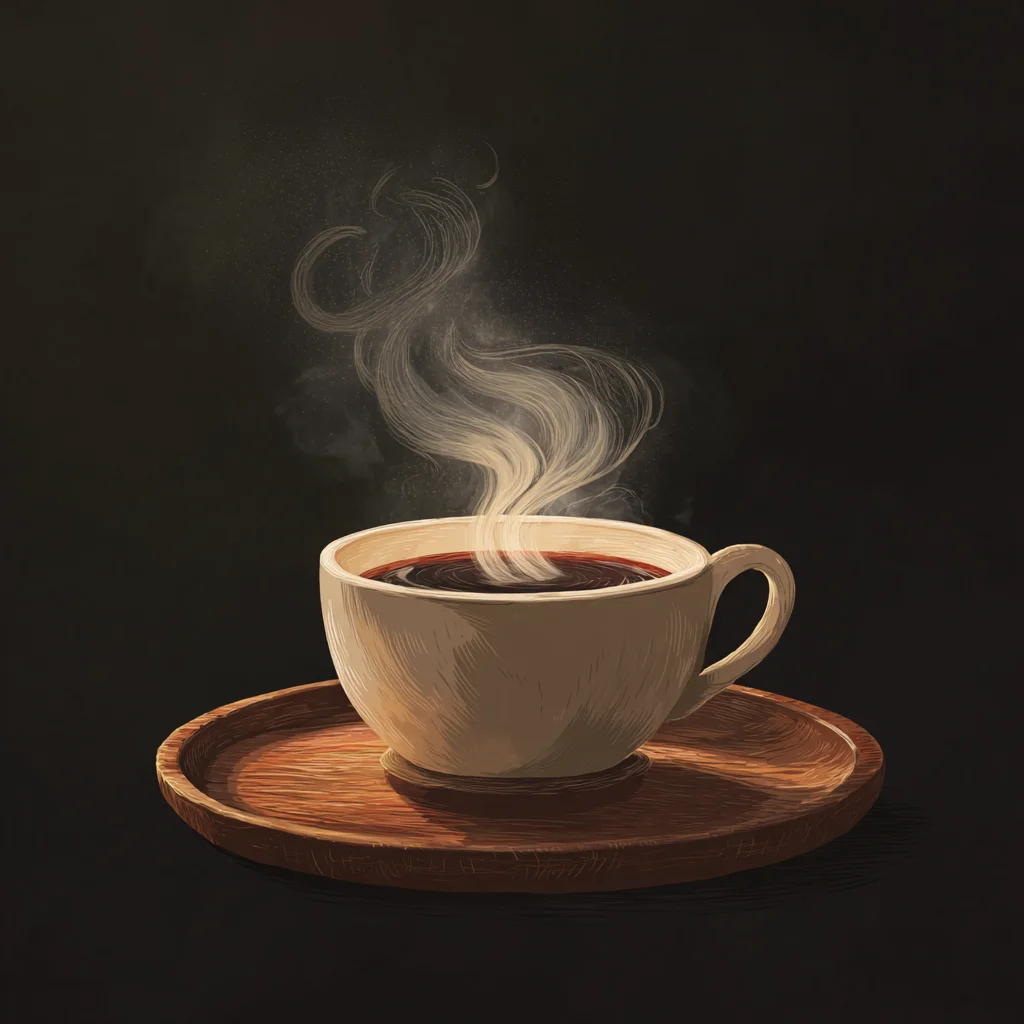
A brewed drink prepared from roasted coffee beans, the seeds of berries from certain Coffea species. The world's second-most traded commodity.

VS
The Moon

The Moon

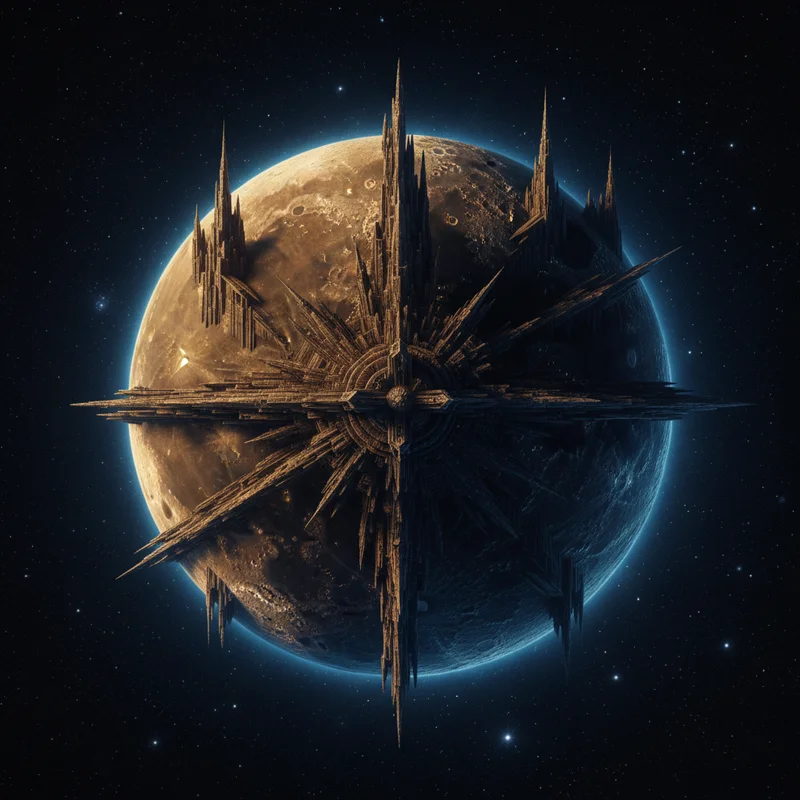
Earth's natural satellite and space race destination.

Battle Analysis

Accessibility Coffee Wins · 80%
80%
20%
Coffee The Moon

Coffee

Coffee demonstrates remarkable accessibility across socioeconomic strata. A cup can be obtained for under one pound at countless establishments, or prepared at home for mere pence. The infrastructure supporting coffee delivery is extraordinary—farms across 70 countries, shipping networks, roasteries, cafes on virtually every urban corner, and instant varieties for those with reduced standards.

Coffee adapts to consumer preferences with admirable flexibility: espresso, Americano, latte, cold brew, Turkish, Vietnamese iced, or instant crystals dissolved in lukewarm desperation. It can be consumed whilst walking, driving, working, or pretending to work. The barriers to coffee acquisition are, in most developed nations, approximately zero.

The Moon

The Moon presents certain accessibility challenges. It is located 384,400 kilometres away, a distance that has been traversed by precisely 12 humans in all of history, each requiring billions of dollars in supporting infrastructure. For the remaining 8 billion people, the Moon is accessible only visually, and then only when clouds permit and light pollution does not overwhelm.

One cannot purchase the Moon at a drive-through window. There is no Moonbucks franchise. The closest most humans will come to lunar proximity is viewing it through a telescope or watching Apollo 13 on streaming services. Even werewolves, the Moon's most dedicated enthusiasts, cannot actually visit their object of devotion.

VERDICT

Available at every corner shop versus requiring spacecraft and international cooperation. Coffee wins decisively.
Cultural significance The Moon Wins · 55%
45%
55%
Coffee The Moon

Coffee

Coffee has shaped civilisation in ways that demand acknowledgement. The Ottoman coffeehouses of the 16th century became centres of intellectual discourse, earning the nickname 'schools of the wise.' Lloyd's of London began as a coffee house. The Boston Tea Party made coffee the patriotic American beverage, demonstrating that coffee can influence geopolitical outcomes.

The ritualistic aspects are equally profound. The fika tradition in Sweden, the Italian espresso bar culture, the Ethiopian coffee ceremony—each represents coffee's integration into social fabric. Approximately 166.63 million 60-kilogram bags of coffee were consumed globally in 2020-2021, representing a shared human experience that transcends borders, languages, and reasonable sleep schedules.

The Moon

The Moon's cultural significance spans the entirety of recorded history. Every human civilisation has mythologised it—from the Greek Selene to the Chinese Chang'e to the Islamic lunar calendar that governs Ramadan. The Moon has inspired approximately every romantic poem ever written, an achievement coffee cannot credibly claim.

The Apollo programme, culminating in human footprints on lunar soil in 1969, represents perhaps humanity's greatest collective achievement. 'One small step for man' resonates culturally in ways that 'one small sip of espresso' simply cannot. The Moon is embedded in idioms, song lyrics, and the fundamental human experience of looking upward and wondering.

VERDICT

Inspiring all of humanity for millennia and hosting human footprints edges out coffeehouse intellectualism.
Gravitational influence The Moon Wins · 75%
25%
75%
Coffee The Moon

Coffee

Coffee exerts no measurable gravitational force on celestial bodies, a fact that initially appears to disadvantage it considerably. However, one must consider metaphorical gravitation—the inexorable pull that draws 62% of American adults to consume it daily. The coffee machine in an office environment creates a gravitational field observable in human behaviour, with workers orbiting it at predictable intervals of approximately 90 to 120 minutes.

Furthermore, the economic gravity of coffee is substantial. The global coffee industry generates over $450 billion annually, creating economic tidal forces that ripple through nations from Ethiopia to Brazil. Entire economies rise and fall with coffee prices, demonstrating a form of fiscal gravitation that, whilst invisible to telescopes, is perfectly measurable in stock exchanges.

The Moon

The Moon's gravitational credentials are, one must concede, rather impressive. With a mass of 7.35 x 10^22 kilograms, it generates tidal forces that move quintillions of litres of seawater twice daily. This is not a metaphor. The Moon literally pulls oceans around the planet, a feat that coffee has never attempted despite its other considerable achievements.

The lunar gravitational influence extends to tidal locking, ensuring the Moon always shows us the same face—a cosmic consistency that coffee drinkers, who see different baristas daily, cannot claim to experience. The Moon also stabilises Earth's axial tilt, preventing the kind of chaotic wobbling that would render all terrestrial life impossible. It is difficult to argue that coffee provides a comparable service to planetary stability.

VERDICT

Actual gravitational force moving quintillions of litres of water outweighs economic metaphors, however compelling.
Long term survival prospects The Moon Wins · 70%
30%
70%
Coffee The Moon

Coffee

Coffee faces existential threats that warrant serious discussion. Climate change is reducing suitable growing regions, with studies suggesting that 50% of current coffee-growing land may become unsuitable by 2050. The Coffea arabica plant is particularly vulnerable, being fussy about temperature and rainfall in ways that climate instability will not accommodate.

Disease presents additional concerns. Coffee leaf rust has devastated plantations historically, and genetic homogeneity in commercial varieties creates vulnerability. Without intervention, future generations may know coffee only from historical documentaries narrated by concerned British voices.

The Moon

The Moon's survival prospects are considerably more robust. It has existed for 4.5 billion years and shows no signs of discontinuation. The Moon is slowly drifting away from Earth at approximately 3.8 centimetres per year, but at this rate, it will remain gravitationally bound for billions of years—long after coffee plantations, coffee drinkers, and Earth's biosphere have concluded their respective runs.

The Moon has survived asteroid bombardments, solar radiation, and the complete absence of an atmosphere. It requires no irrigation, no protection from fungal infections, and no agricultural subsidies. Barring collision with a rogue planetesimal, the Moon will outlast every coffee bean ever grown or yet to be grown.

VERDICT

Four and a half billion years of existence versus climate-vulnerable agricultural crop. Longevity favours the lunar.
Influence on human productivity Coffee Wins · 65%
65%
35%
Coffee The Moon

Coffee

The productivity case for coffee is overwhelming. Caffeine, the active compound, blocks adenosine receptors in the brain, delaying fatigue and increasing alertness. Studies indicate that coffee consumption improves cognitive performance by 10-15% in tasks requiring sustained attention. The Industrial Revolution, the Enlightenment, and the technology startup ecosystem all correlate suspiciously with coffee availability.

Consider that Johann Sebastian Bach composed his Coffee Cantata whilst presumably caffeinated. Voltaire reportedly consumed 40-50 cups daily, which explains both his prolific output and his general disposition. Modern programmers, surgeons, and academics maintain similar dependencies, having collectively decided that natural sleep cycles are optional inconveniences.

The Moon

The Moon's contribution to human productivity is more indirect but historically significant. Before electric lighting, the full moon extended working hours for agricultural societies, enabling night harvesting and other activities. Lunar calendars organised planting seasons for millennia, and the Moon remains essential for calculating tides relevant to fishing and shipping industries.

However, the term 'lunacy' derives from the belief that the full moon caused madness, suggesting a productivity impact of questionable polarity. Emergency room staff report increased activity during full moons, though scientific studies remain inconclusive. The Moon has never successfully enabled anyone to finish a doctoral thesis by morning.

VERDICT

Coffee directly enhances cognitive function; the Moon merely provides ambient lighting for those already awake.
👑

The Winner Is

The Moon

Takes 3 of 5 rounds

This investigation has revealed a contest far closer than initial astronomical considerations might suggest. Coffee commands the practical categories that govern daily human experience—productivity enhancement and accessibility—while The Moon dominates the grander, longer view of things: actual gravitational physics, civilisational mythology, and the rather significant advantage of having existed for 4.5 billion years before coffee was even a gleam in an Ethiopian goatherd's eye.

The Moon takes three rounds to Coffee's two. Gravitational influence goes to The Moon by a commanding margin—moving quintillions of litres of ocean water is not a metaphor, whereas Coffee's economic gravity, however impressive, is. Cultural significance belongs to The Moon as well, inspiring every human civilisation from Selene to Chang'e and hosting the most consequential footprints in history. Long-term survival prospects are no contest: a climate-vulnerable agricultural crop cannot argue longevity against a body that has survived 4.5 billion years of asteroid bombardment without so much as an irrigation permit. Coffee fights back admirably in productivity, where its direct neurological intervention outclasses the Moon's ambient luminosity, and in accessibility, where the gap between a corner-shop cup and a spacecraft journey is simply insurmountable. Three rounds to two: The Moon wins.

Share this battle

More Comparisons