
Crocodile
The Crocodylus genus has cultivated a relationship with speed that might generously be described as strategically selective. For extended periods, crocodiles demonstrate velocity figures indistinguishable from stationary objects. They float. They bask. They achieve a metabolic efficiency that permits survival on approximately 50 meals per year, a feeding frequency that would concern medical professionals if applied to mammals.
However, the crocodile's apparent lethargy conceals explosive capability. During strike events, large crocodiles achieve acceleration rates exceeding those of most sports cars. The Crocodylus porosus, or saltwater crocodile, can launch its body from water at speeds approaching 12 metres per second, closing distances of several metres in fractions of a second. This ambush velocity has remained essentially unchanged for 200 million years, suggesting that evolution concluded the crocodile had, in the terminology of product development, solved the problem.
On land, crocodiles demonstrate sustained movement capabilities that surprise observers expecting permanent aquatic residence. The so-called 'gallop' gait permits speeds of 14-17 kilometres per hour over short distances. This is not, admittedly, competitive with mammalian sprinters, but it substantially exceeds what most humans anticipate when encountering reptiles assumed to be sluggish. Many such assumptions have ended poorly for the human involved.
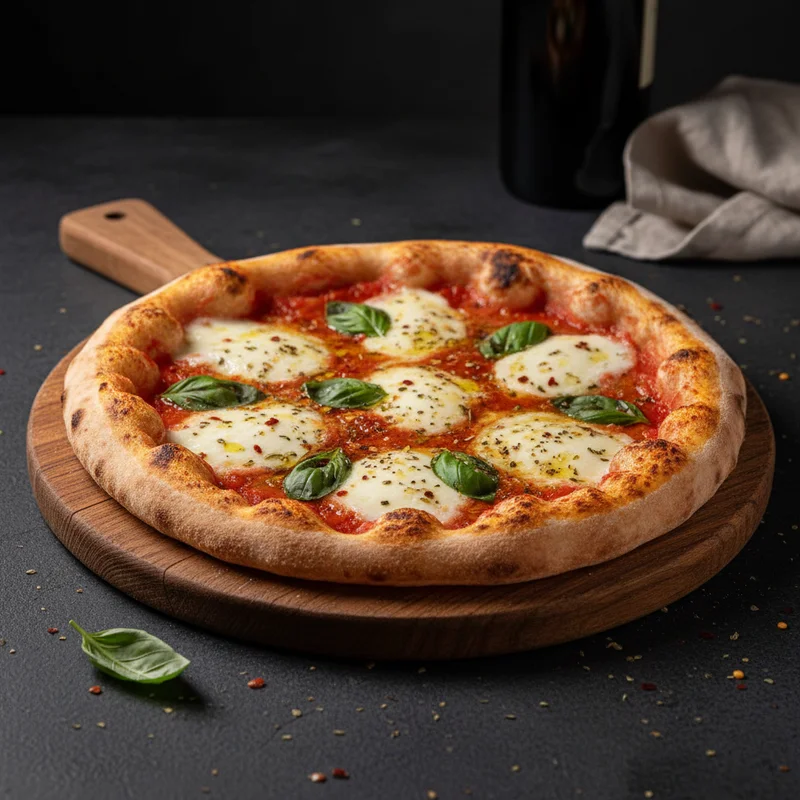
Pizza
Pizza approaches the concept of speed from a perspective of absolute philosophical disengagement. It does not move. It has never moved under its own power. It possesses no capacity for movement whatsoever, lacking both the musculature and the neurological infrastructure that movement requires.
One might argue that pizza achieves considerable velocity through delivery infrastructure. The modern pizza delivery system can transport a prepared pizza from oven to consumer in approximately 30-45 minutes, covering distances that would have seemed miraculous to medieval observers. Delivery vehicles navigate traffic patterns with urgency approaching emergency services. In certain metropolitan areas, pizza arrives faster than ambulances, a statistical reality that raises questions about civic priorities.
Yet this velocity belongs to the delivery system, not to the pizza itself. Remove the external transportation apparatus, and the pizza's inherent speed becomes apparent: precisely zero. A pizza left unattended will remain in its exact position until acted upon by external forces, whether human hands, gravitational events, or the gradual processes of decomposition. It is, in the Newtonian sense, an object entirely at rest.
VERDICT
The speed assessment produces a result so unambiguous that extensive analysis seems almost redundant. The crocodile possesses speed. The pizza possesses none whatsoever. This represents not a marginal differential but a categorical distinction between entities capable of motion and entities that are, fundamentally, stationary objects.
The crocodile's ambush velocity represents 200 million years of refined predatory engineering. Every component of its muscular and skeletal system has been optimised for the explosive acceleration that transforms patience into prey capture. The pizza has undergone no such optimisation, being, as previously noted, incapable of any movement regardless of duration or motivation.
The crocodile wins this category through the simple fact of possessing locomotion. Any speed, however modest, exceeds the pizza's zero. The margin of victory is not merely substantial but infinite in percentage terms, as any positive number divided by zero approaches infinity.