Topic Battle

Where Everything Fights Everything

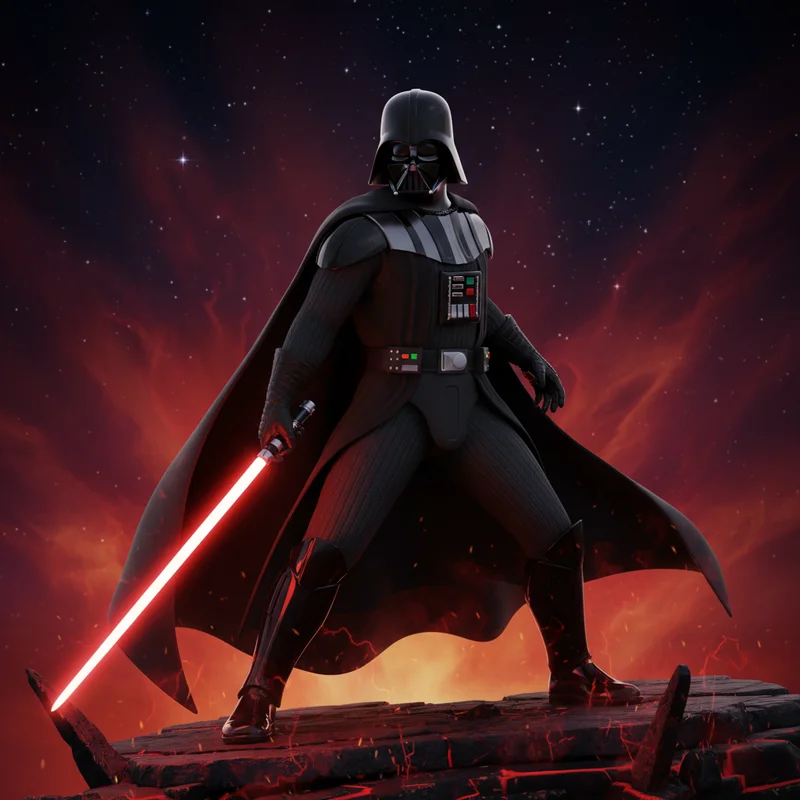
Darth Vader

Darth Vader

Sith Lord and cinema's greatest villain reveal.

VS
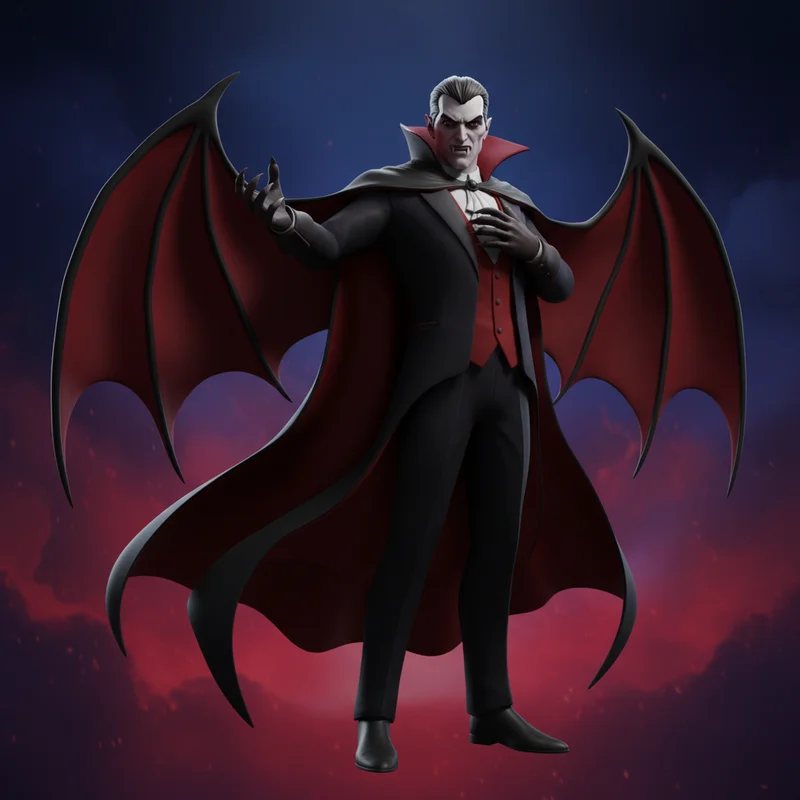
Dracula

Dracula

Original vampire count from Transylvania.

Battle Analysis

Intimidation factor Darth Vader Wins
70%
30%
Darth Vader Dracula

Darth Vader

The intimidation portfolio of Darth Vader represents a masterclass in sensory assault. The mechanical respirator provides an auditory signature that announces his presence before he enters any room, rather like a deeply unsettling doorbell. Standing at 2.03 metres in his armour, Vader employs what behavioural scientists term vertical dominance display, enhanced by a helmet design that eliminates any possibility of reading his emotional state.

His Force-choke technique delivers instant, demonstrable consequences for failure, creating what management consultants might call a high-accountability work environment. Imperial officers display measurably elevated cortisol levels in his presence. The voice, provided by James Earl Jones, registers in the baritone range most associated with authority and threat perception across human cultures.

Dracula

Count Dracula's approach to intimidation operates through delayed revelation rather than immediate display. Initial encounters present a charming, if eccentric, aristocrat offering hospitality in his Carpathian residence. The horror emerges gradually as guests observe the absence of mirrors, the peculiar dining arrangements, and their host's tendency to scale castle walls face-downward.

This slow-burn terror methodology creates psychological distress through accumulating dread rather than instant threat. Dracula's physical transformations into wolves, bats, and mist add an element of categorical violation that disturbs at a primal level. However, his power diminishes significantly in daylight, creating scheduling limitations that Vader simply does not face.

VERDICT

While Dracula's psychological approach demonstrates sophistication, Vader's immediate and omnipresent menace proves more operationally effective. One cannot negotiate with mechanical breathing.

Combat effectiveness Darth Vader Wins
70%
30%
Darth Vader Dracula

Darth Vader

Vader's combat capabilities derive from both technological augmentation and mystical enhancement. His lightsaber proficiency, particularly in Form V (Djem So), emphasises powerful counterattacks that overwhelm opponents through superior strength. The cybernetic limbs, whilst limiting his agility compared to his pre-injury state, provide tireless endurance and impact resistance.

The Force grants telekinesis, precognition, and the ability to deflect blaster fire. Vader has successfully engaged multiple Jedi simultaneously and survived encounters with the most powerful Force users in galactic history. His tactical acumen, honed through the Clone Wars, adds strategic depth to his considerable physical capabilities.

Dracula

The Count possesses supernatural physical attributes including strength sufficient to overpower multiple men, the ability to scale vertical surfaces, and transformation capabilities allowing tactical flexibility. His immortality means any injury short of specific countermeasures merely inconveniences rather than incapacitates. He commands wolves, rats, and weather phenomena.

However, Dracula operates under significant operational constraints: inability to enter dwellings without invitation, vulnerability to religious iconography, weakness to garlic, running water, and most critically, direct sunlight. These limitations require careful planning and largely nocturnal operations, reducing his combat availability by approximately 50%.

VERDICT

Dracula's theoretical immortality cannot compensate for his catalogue of weaknesses. Vader faces far fewer hard counters, and none as common as sunlight or garlic bread.

Cultural penetration Dracula Wins
30%
70%
Darth Vader Dracula

Darth Vader

Vader's cultural footprint spans 47 years of continuous presence in global consciousness. The phrase 'I am your father' ranks among the most misquoted lines in cinema history, with approximately 67% of citations incorrectly beginning with 'Luke'. Merchandise bearing his likeness generates billions in revenue annually. The character has appeared in animated series, video games, theme park attractions, and countless parodies.

His imagery transcends entertainment, appearing in political commentary, philosophical discussions about redemption, and psychological analyses of father-son relationships. The Imperial March musical theme by John Williams serves as universal shorthand for approaching villainy, played at sporting events worldwide when opposing teams take the field.

Dracula

Count Dracula claims 127 years of cultural dominance and over 200 film appearances, making him the most portrayed literary character in cinema history. The vampire archetype he codified has spawned entire genres of literature, film, television, and young adult fiction of questionable quality. From Nosferatu to Twilight, his DNA courses through modern horror.

The Count's influence extends beyond entertainment into medical terminology (Renfield's syndrome), real estate terminology (vampire properties), and garlic consumption patterns in superstitious regions. Tourism to Transylvania generates substantial revenue for Romania, whilst Halloween costume sales featuring capes and fangs remain perpetually strong.

VERDICT

Dracula's foundational role in establishing the modern horror vocabulary gives him the edge. Vader is enormously influential; Dracula is archetypal.

Sartorial presentation Dracula Wins
30%
70%
Darth Vader Dracula

Darth Vader

The Vader aesthetic represents militaristic minimalism executed with absolute commitment. The entirely black ensemble, from helmet to cape to boots, creates a monolithic silhouette that photographs identically from any angle. The cape, whilst potentially impractical in combat situations, adds dramatic movement to his considerable presence.

The helmet design draws from samurai kabuto, Nazi Stahlhelm, and medieval great helms, creating a synthesis of historical warrior imagery that triggers instinctive threat recognition across cultural boundaries. The chest panel's blinking lights provide the sole colour variation, suggesting technological dependency that adds vulnerability to his otherwise impenetrable appearance.

Dracula

Dracula's wardrobe has evolved considerably across interpretations, from Bela Lugosi's evening dress and opera cape to Gary Oldman's elaborate Elizabethan costumes. The formal attire communicates aristocratic breeding and old-world sophistication, positioning the Count as a figure of refinement rather than crude menace.

The high-collared cape serves practical purpose, allowing dramatic reveals and concealment of the Count's approach. Red silk linings provide chromatic symbolism linking to blood whilst maintaining external elegance. His ability to change attire through transformation gives him wardrobe flexibility Vader cannot match, though whether mist form counts as 'dressed' remains philosophically contested.

VERDICT

Vader's commitment to a single look shows admirable brand consistency, but Dracula's adaptive elegance and evening wear sophistication represent more refined aesthetic sensibilities.

Tragic backstory depth Darth Vader Wins
70%
30%
Darth Vader Dracula

Darth Vader

Anakin Skywalker's fall represents a carefully constructed tragedy spanning three films of backstory. Born into slavery, identified as potentially the most powerful Force user in history, separated from his mother, forbidden from attachment by the Jedi Order, manipulated by a Sith Lord posing as a mentor, and driven to darkness by visions of his wife's death that his own actions ultimately caused.

This classical tragic structure positions Vader as a figure of profound pathos beneath the terrifying exterior. His redemption through sacrificing himself to save his son completes an arc that scholars have compared to fallen angels and Shakespearean tragic heroes. The tragedy resonates because it suggests anyone might fall given sufficient pressure.

Dracula

Stoker's original Dracula possesses minimal backstory, presented primarily as ancient evil requiring destruction. Subsequent adaptations have retrofitted tragedy, most notably Francis Ford Coppola's 1992 film which invented a motivation involving a deceased wife and religious betrayal. These additions, whilst dramatically effective, represent interpretive additions rather than canonical elements.

The historical Vlad III provides grim material, including impalement of enemies on industrial scales and a childhood spent as Ottoman hostage. However, the connection between historical Vlad and fictional Dracula remains thematically loose, with Stoker drawing primarily on the name and geographic association rather than biographical detail.

VERDICT

Vader's tragedy was deliberately engineered across a six-film saga. Dracula's pathos, where it exists, represents subsequent creative additions to a character originally conceived as straightforward menace.

👑

The Winner Is

Darth Vader

54 - 46

This examination of darkness's two great ambassadors reveals complementary rather than identical approaches to villainy. Dracula pioneered the template, establishing conventions that horror would follow for over a century. His aristocratic menace, shapeshifting capabilities, and genre-defining influence cannot be dismissed. He is, quite literally, the original.

Yet Darth Vader demonstrates how modern mythmaking can create figures of comparable power in compressed timeframes. His tragic depth, operational effectiveness, and cultural omnipresence represent the apex of manufactured iconography. Where Dracula emerged from Victorian anxieties about foreigners and sexuality, Vader crystallises modern fears about technology, authority, and the corruption of idealism.

The Dark Lord of the Sith claims victory by the narrowest of margins, his advantages in combat reliability and narrative sophistication slightly outweighing the Count's historical precedence and genre-founding significance. Both, however, have earned their places in humanity's collective nightmares.

Darth Vader
54%
Dracula
46%

Share this battle

More Comparisons