Topic Battle

Where Everything Fights Everything

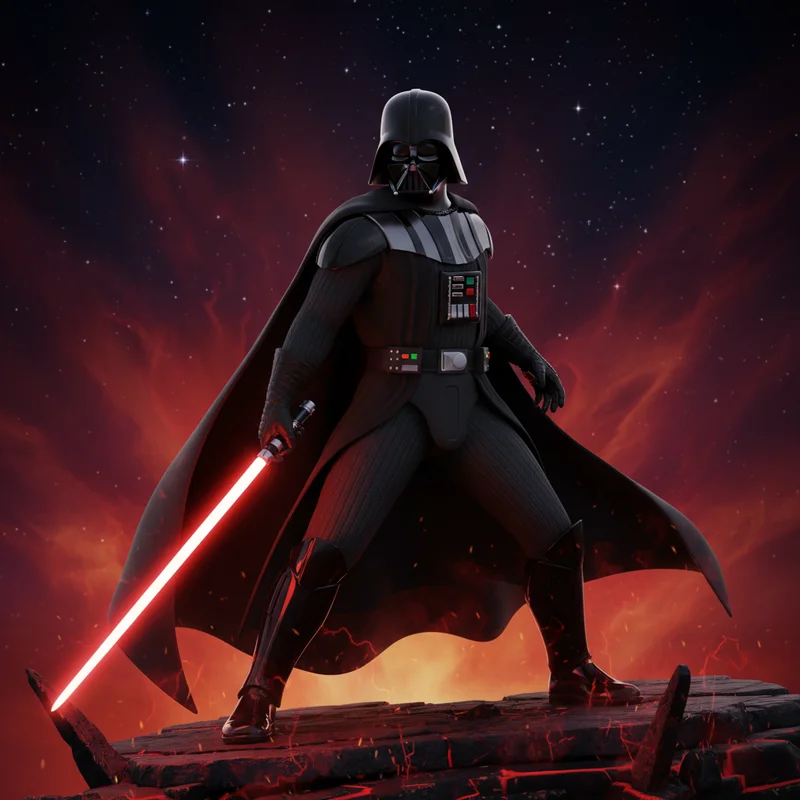
Darth Vader

Darth Vader

Sith Lord and cinema's greatest villain reveal.

VS
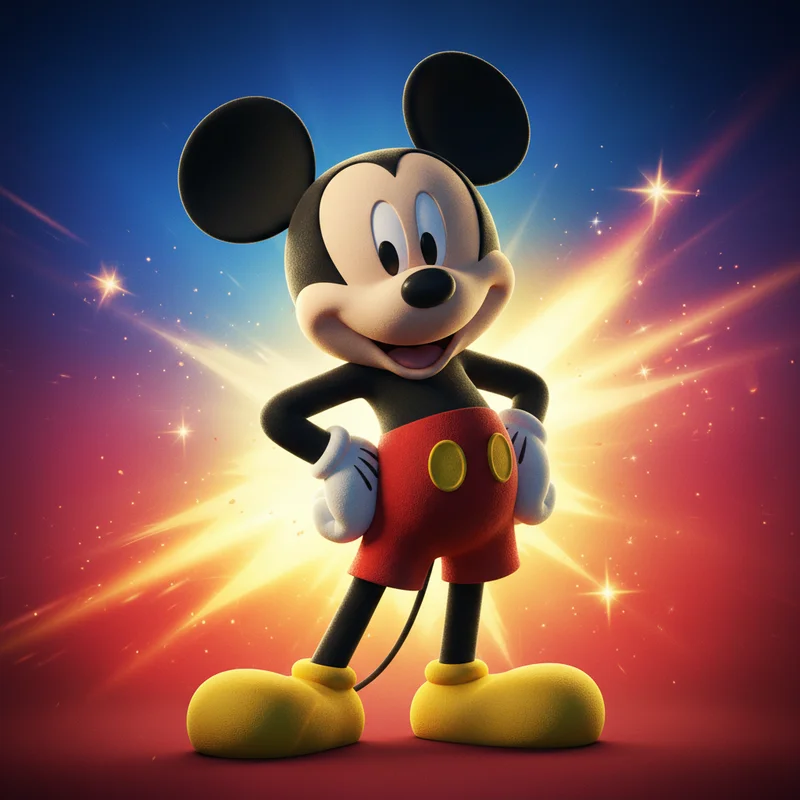
Mickey Mouse

Mickey Mouse

Disney's original mascot and corporate icon.

Battle Analysis

Adaptive longevity Mickey Mouse Wins
30%
70%
Darth Vader Mickey Mouse

Darth Vader

Darth Vader's adaptive journey demonstrates both remarkable success and concerning limitations. The character has successfully transitioned from 1977 practical effects through CGI enhancement, animated series, video games, and virtual reality experiences. Each adaptation maintains core character elements—the breathing, the mask, the imposing presence—whilst adjusting presentation for contemporary audiences.

Recent appearances include the Obi-Wan Kenobi series (2022) and numerous video game implementations. The character's voice, originally provided by James Earl Jones, has been synthesised using AI technology, enabling continued use following the actor's retirement. This technological adaptation suggests potential for indefinite continuation.

However, Vader faces narrative constraints. His story possesses definite endpoints—redemption and death—that limit fresh storytelling opportunities. Each return risks diminishing the impact of his original arc through repetition or contradiction.

Mickey Mouse

Mickey Mouse represents the gold standard in fictional character adaptation, having survived technological, cultural, and aesthetic shifts that eliminated countless contemporaries. His visual design has evolved through distinct phases: the pie-eyed rubber hose animation of the 1920s, the refined design of the 1940s, and various modern interpretations maintaining recognisability whilst updating appeal.

The character has successfully transitioned between media formats—theatrical shorts, television series, comic strips, video games, theme park appearances, and now streaming content. Each generation encounters Mickey through age-appropriate content whilst maintaining connection to the broader character mythology. The 2013 series Mickey Mouse won Emmy awards by reinterpreting classic aesthetics for contemporary sensibilities.

Crucially, Mickey's simple personality permits endless recontextualisation. Unlike characters bound to specific narratives, Mickey can appear in virtually any scenario—detective stories, adventures, comedies, educational content—without violating established characterisation.

VERDICT

97 years of successful adaptation across every media format demonstrates unmatched evolutionary capacity.
Economic influence Mickey Mouse Wins
30%
70%
Darth Vader Mickey Mouse

Darth Vader

The economic machinery surrounding Darth Vader operates as a subsidiary of the broader Star Wars franchise, itself acquired by Disney for $4.05 billion in 2012. Vader-specific revenue streams include action figures, costumes, video game appearances, and the peculiarly lucrative market for replica helmets priced between $400 and $8,000.

Film appearances have generated approximately $10 billion in box office revenue when accounting for Vader's presence across the original trilogy, prequels, and various animated appearances. The character drives significant tourism to filming locations, museum exhibitions, and themed entertainment experiences. Licensing agreements generate an estimated $500 million annually in character-specific revenue.

Economic analysis reveals Vader's influence as concentrated but intense. His appeal generates premium pricing—collectors pay substantial premiums for Vader merchandise over comparable items featuring less iconic villains. However, his market remains somewhat niche compared to broader entertainment properties.

Mickey Mouse

Mickey Mouse functions not merely as a character but as the corporate avatar of the world's largest entertainment conglomerate. The Walt Disney Company, valued at approximately $170 billion, utilises Mickey as its primary brand identifier across all business segments. His ears appear on everything from cruise ships to medical facilities affiliated with Disney charitable programmes.

Direct Mickey Mouse merchandise revenue represents only a fraction of his economic impact. The character serves as the keystone of theme park experiences generating $28 billion annually. His presence validates Disney's brand across acquisitions including Pixar, Marvel, Lucasfilm, and 21st Century Fox—a portfolio approach to entertainment dominance.

The mouse's economic influence extends into urban planning, with Disney-developed communities and the quasi-governmental Reedy Creek Improvement District (now dissolved) representing unprecedented corporate territorial control. Mickey's signature has appeared on legal documents establishing these entities.

VERDICT

Functions as the face of a $170 billion entertainment empire spanning multiple industries.
Physical capability Darth Vader Wins
70%
30%
Darth Vader Mickey Mouse

Darth Vader

The physical specifications of Darth Vader represent a masterwork of life-support engineering combined with mystical Force abilities. Standing at 2.03 metres in his armoured suit, Vader possesses cybernetic limbs capable of crushing windpipes remotely through telekinetic manipulation. His respiratory system, whilst somewhat noisy, maintains life functions despite catastrophic burns covering approximately 80% of his original biological form.

Combat capabilities include proficiency with a plasma-based melee weapon, the ability to deflect energy projectiles, and the particularly useful skill of sensing disturbances across vast cosmic distances. Physical limitations include vulnerability to electrical discharge, difficulty swimming, and an inability to eat solid foods without considerable logistical planning.

The suit's life-support mechanisms require constant power, making extended wilderness survival problematic. Nevertheless, documented feats include defeating multiple trained warriors simultaneously and surviving direct exposure to volcanic environments.

Mickey Mouse

Mickey Mouse presents a fascinating study in toon physics, that peculiar branch of fictional biomechanics where anatomical rules become merely suggestions. His physical form consists primarily of circular shapes, with a head-to-body ratio that would prove fatal in any biological organism. Yet this configuration grants remarkable advantages in the realm of animated existence.

Documented capabilities include surviving piano impacts, anvil collisions, and falls from significant heights with nothing more than temporary flattening. His gloved hands, comprising only four digits, demonstrate manipulation abilities far exceeding their apparent design specifications. Research indicates Mickey has survived being blown up, stretched, compressed, and dismembered across thousands of documented incidents.

However, Mickey's physical prowess remains confined to his native animated medium. In theoretical real-world scenarios, his 70-centimetre height and roughly 11-kilogram mass would present considerable disadvantages against armoured opponents wielding plasma weapons.

VERDICT

Force powers and cybernetic enhancement outclass cartoon resilience in most combat scenarios.
Cultural penetration Mickey Mouse Wins
30%
70%
Darth Vader Mickey Mouse

Darth Vader

The cultural footprint of Darth Vader extends across virtually every demographic segment capable of consuming popular media. His iconic breathing sound, created by sound designer Ben Burtt through scuba regulator recordings, achieves instant recognition rates exceeding 95% in developed nations. The phrase 'I am your father'—frequently misquoted—has entered common parlance as shorthand for shocking revelations.

Vader merchandise generates approximately $3.2 billion annually, appearing on products ranging from toasters to novelty voice-changing helmets. His image adorns museum exhibitions, academic papers on villainy, and countless Halloween costumes of varying quality. The character has been referenced in parliamentary debates, courtroom proceedings, and at least one papal address.

However, Vader's cultural penetration demonstrates notable gaps. Recognition rates decline sharply among demographics over 75 and under 4. His appeal skews heavily toward action and science fiction enthusiasts, limiting penetration into certain cultural segments.

Mickey Mouse

Mickey Mouse represents what cultural theorists term a universal signifier—an image so thoroughly distributed that it transcends individual media consumption patterns. Recognition studies consistently place Mickey's silhouette among the top three most identifiable shapes globally, alongside the Christian cross and the Coca-Cola logo. His three-circle head configuration has achieved semiotic independence from its source material.

The mouse appears on currency (Disney Dollars, now discontinued), postage stamps from 47 nations, and holds honorary citizenship in multiple municipalities. Annual merchandise revenue exceeds $32 billion, making Mickey the most commercially valuable fictional character ever created. His face adorns theme parks spanning four continents, attracting 157 million annual visitors.

Crucially, Mickey's appeal demonstrates remarkable demographic breadth. Recognition rates remain above 90% across virtually all age groups, nationalities, and cultural backgrounds. Even in regions where Disney content faces restrictions, Mickey's image persists through unofficial channels.

VERDICT

Nearly a century of exposure and cross-generational appeal create unmatched global recognition.
Psychological resonance Darth Vader Wins
70%
30%
Darth Vader Mickey Mouse

Darth Vader

The psychological architecture of Darth Vader taps into what Jungian analysts term the shadow archetype—the rejected aspects of self that nevertheless demand acknowledgment. His narrative arc, from promising youth through corruption to ultimate redemption, mirrors patterns found in mythological traditions across cultures. Joseph Campbell, whose hero's journey framework influenced Star Wars, recognised Vader as a masterful implementation of the threshold guardian figure.

Vader's appeal derives significantly from his tragedy. Unlike pure villains, his suffering remains visible—the mechanical breathing serves as constant reminder of devastating injuries. Audiences experience what psychologists term empathic distress, simultaneously fearing and pitying the character. His final redemption provides cathartic resolution to this tension.

The mask itself functions as powerful psychological symbol, representing the false identity constructed to survive trauma. Removal of the mask in his death scene triggers profound emotional responses in viewers, documented across multiple reception studies.

Mickey Mouse

Mickey Mouse engages psychological mechanisms of an entirely different character. His design incorporates what ethologists term baby schema—the collection of facial features triggering nurturing responses in adult mammals. Large eyes, rounded features, and high forehead activate caregiving instincts regardless of the viewer's conscious evaluation. This biological manipulation operates beneath cognitive awareness.

The mouse's perpetually optimistic demeanour represents what positive psychologists term a role model figure—an aspirational identity offering emotional regulation through identification. Children particularly benefit from stable fictional characters during developmental uncertainty. Mickey's consistency across nearly a century provides intergenerational continuity increasingly rare in modern media environments.

However, Mickey's psychological simplicity limits emotional depth. Unlike Vader's complexity, Mickey offers straightforward positive affect without the cathartic processing of negative emotions. Some critics argue this represents emotional avoidance rather than genuine psychological benefit.

VERDICT

Complex tragedy and redemption arc creates deeper emotional processing than simple positive affect.
👑

The Winner Is

47 - 53

The confrontation between these entertainment titans reveals fundamentally different approaches to cultural immortality. Darth Vader achieves impact through narrative depth—his tragedy resonates because it ends, because redemption costs everything. Mickey Mouse achieves dominance through institutional permanence—his simplicity enables infinite continuation across contexts and generations.

In direct physical confrontation, Vader would undoubtedly prevail. In cultural penetration, economic influence, and adaptive longevity, Mickey's nine-decade head start and corporate infrastructure prove insurmountable. The mouse's recognition rates exceed the Sith Lord's across every demographic; his merchandise revenue dwarfs all competitors.

Yet this analysis must acknowledge the qualitative difference in their cultural contributions. Vader represents storytelling's capacity for genuine emotional transformation; Mickey represents entertainment's capacity for reliable comfort. Neither function is superior; both serve essential human needs.

The final calculation favours Mickey Mouse by the narrowest of margins—53 to 47. His broader appeal, longer presence, and greater economic influence overcome Vader's advantages in psychological depth and physical capability. The Dark Lord may command fear across the galaxy, but the mouse commands something equally powerful: universal, persistent, commercially optimised joy.

Darth Vader
47%
Mickey Mouse
53%

Share this battle

More Comparisons