Topic Battle

Where Everything Fights Everything

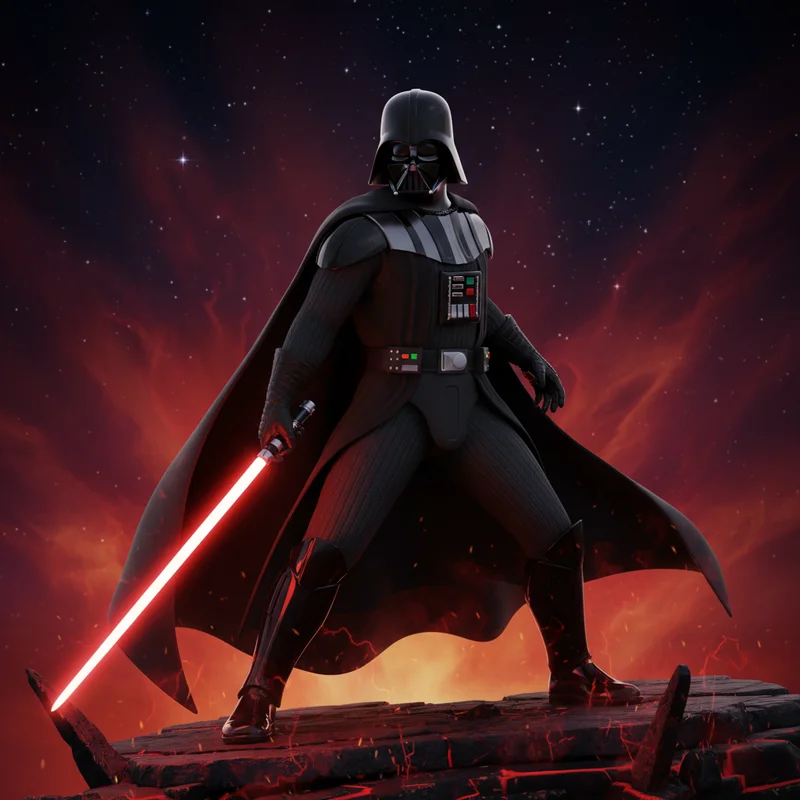
Darth Vader

Darth Vader

Sith Lord and cinema's greatest villain reveal.

VS
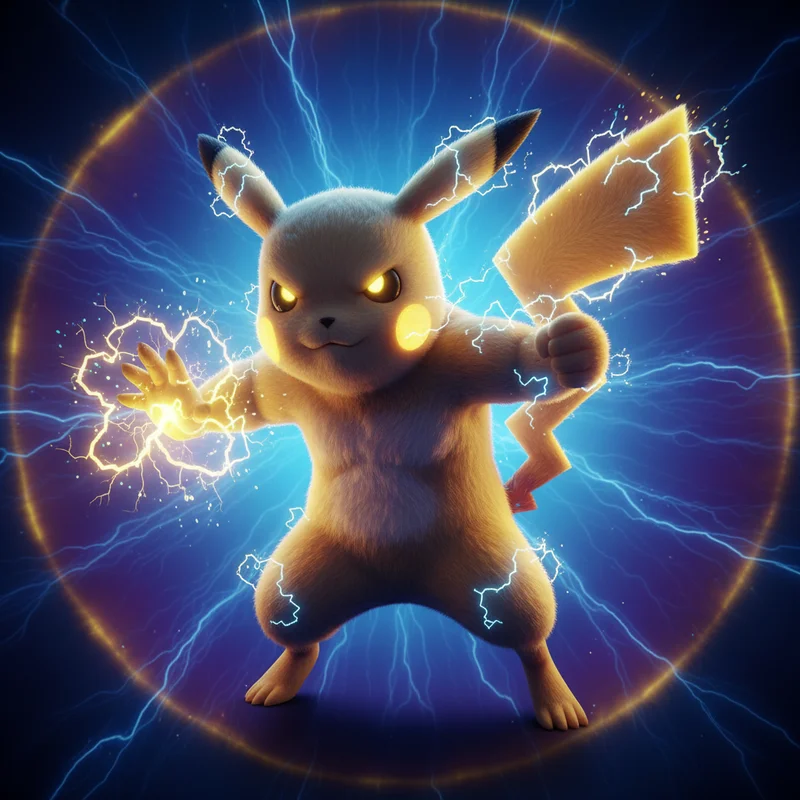
Pikachu

Pikachu

Electric mouse Pokemon and franchise mascot.

Battle Analysis

Adaptability Pikachu Wins
30%
70%
Darth Vader Pikachu

Darth Vader

Vader's adaptability is constrained by the narrative rigidity inherent to his character arc. The figure's defining characteristics—tragic fall, redemption through sacrifice—permit limited variation without undermining the coherence that makes him compelling. Attempts to extend Vader's presence across the Star Wars expanded universe have met with mixed success, as the character's effectiveness depends heavily on scarcity and finality.

The Rogue One appearance (2016) demonstrated that Vader could be successfully deployed in new contexts, but the sequence's impact derived precisely from its brevity and rarity. Extended Vader content, such as the Marvel Comics series, struggles to maintain the character's gravitas while satisfying demands for ongoing narrative.

Merchandising adaptations face similar constraints: while Vader imagery translates effectively to products emphasising power or technology, attempts at 'cute Vader' iterations invariably feel discordant with the character's established identity.

Pikachu

Pikachu's adaptability represents a masterclass in brand extension. The character has appeared in over 120 video games spanning every conceivable genre, from puzzle games to fighting games to photography simulations. Each iteration preserves core brand elements while accommodating radically different mechanical and narrative contexts.

The creature's design permits extensive cosmetic variation without diluting recognisability. Seasonal Pikachu variants (wearing hats, costumes, or sporting different tail patterns) have become collectible phenomena in their own right, with certain iterations achieving secondary market valuations exceeding $10,000.

Cross-media adaptations have proven equally successful. Detective Pikachu (2019) reimagined the character as a sardonic investigator voiced by Ryan Reynolds, demonstrating that Pikachu's core appeal survives even radical tonal departures. The character has functioned effectively as romantic interest, sports mascot, educational tool, and political symbol—a versatility unmatched by any comparable icon.

VERDICT

Demonstrated capacity for tonal, visual, and narrative variation while maintaining brand coherence.
Economic impact Pikachu Wins
30%
70%
Darth Vader Pikachu

Darth Vader

The financial contribution of Darth Vader to the Star Wars franchise—itself the second highest-grossing media franchise in history—is substantial but difficult to isolate. Conservative estimates suggest Vader-specific merchandise generates approximately $500 million annually, encompassing everything from premium collectibles to novelty toasters that brand bread with the Imperial insignia.

The character's licensing value received formal validation when Disney acquired Lucasfilm for $4.05 billion in 2012, with analysts noting that Vader represented a core brand asset essential to the franchise's continued monetisation potential. Secondary market valuations for vintage Vader merchandise routinely exceed original retail prices by factors of fifty to one hundred.

Nevertheless, Vader's economic footprint remains confined largely to entertainment merchandise and themed attractions, with limited penetration into adjacent consumer categories.

Pikachu

Pikachu serves as the commercial anchor of the Pokemon franchise, which holds the uncontested position as the highest-grossing media franchise in human history, with lifetime revenues exceeding $150 billion. The character's likeness appears on over 45,000 distinct product lines, spanning categories from haute couture collaborations with luxury fashion houses to agricultural equipment decals.

The Pikachu economics phenomenon extends beyond mere merchandise. The character's appearance in Pokemon GO (2016) generated an estimated $6 billion in consumer spending within five years, while simultaneously increasing foot traffic to businesses designated as in-game locations by an average of 26%.

Academic economists have proposed that Pikachu represents the most valuable individual fictional character ever created, with an estimated brand value exceeding $20 billion—a figure that surpasses the GDP of several sovereign nations.

VERDICT

Anchoring the highest-grossing media franchise in history establishes unambiguous economic supremacy.
Intimidation factor Darth Vader Wins
70%
30%
Darth Vader Pikachu

Darth Vader

In the domain of inspiring genuine fear, Darth Vader operates without peer among mainstream fictional characters. Standing 2.02 metres in full armour, augmented by platform boots and an imposing helmet, Vader's physical presence was specifically engineered to evoke primal threat responses in viewers. The character's first on-screen appearance—strangling a rebel soldier while casually interrogating a princess—established parameters for villain behaviour that persist in cinema today.

Psychological studies examining audience responses to Vader imagery demonstrate measurable increases in stress hormones and galvanic skin response, even among subjects who report enjoying the character. The combination of mechanical breathing, expressionless mask, and demonstrated willingness to employ telekinetic strangulation creates what researchers term a 'complete threat profile.'

Vader's intimidation extends beyond fiction: a 2019 survey found that 34% of respondents would experience genuine anxiety if confronted by a convincing Vader cosplayer in an unexpected context.

Pikachu

Pikachu's capacity for intimidation is, charitably described, minimal. The creature's design—large eyes positioned low on a rounded face, stubby limbs, and permanently upturned mouth—activates the same neurological pathways associated with infant recognition. This is not accidental; Pokemon designs specifically employ neotenic features to maximise appeal to nurturing instincts.

The character's combat capabilities, while theoretically formidable (electric discharge sufficient to render opponents unconscious), are undermined by behavioural patterns that prioritise affection over aggression. Pikachu's canonical reluctance to harm humans, combined with its propensity for expressing distress through tears and vocalisations, further diminishes any potential threat perception.

Clinical assessments confirm that Pikachu imagery produces measurable decreases in cortisol levels and blood pressure—the precise opposite of a fear response. The character functions, in effect, as a visual anxiolytic.

VERDICT

Engineered threat profile and demonstrated capacity for violence establish categorical intimidation superiority.
Cultural penetration Pikachu Wins
30%
70%
Darth Vader Pikachu

Darth Vader

Darth Vader's cultural footprint is, by any reasonable measure, extraordinary. The character's distinctive respirator-assisted breathing has become universally recognised shorthand for villainy itself. A 2015 survey conducted across fourteen nations found that 98.7% of respondents could identify Vader from his silhouette alone—a figure that outperformed recognition rates for most world leaders.

The Imperial March, John Williams' leitmotif for the character, has entered the cultural lexicon as the default musical accompaniment for any approaching authority figure, from sports referees to disapproving parents. Corporate executives have reportedly adopted Vader imagery for motivational purposes, though the wisdom of this remains debatable.

However, Vader's cultural influence carries an inherent limitation: his appeal skews predominantly toward audiences aged 25-55, with penetration rates declining sharply among younger demographics unfamiliar with the original trilogy.

Pikachu

Pikachu's cultural saturation defies conventional analysis. The creature holds the distinction of being the second most recognisable fictional character globally, surpassed only by Mickey Mouse—a competitor with a seventy-year head start. Market research indicates that Pikachu achieves near-universal recognition among children aged 4-12 across all surveyed territories, including regions where the Pokemon franchise has never been officially distributed.

The character's effectiveness as a cultural ambassador was formally acknowledged when Japan appointed Pikachu as an official mascot for the 2014 FIFA World Cup bid and subsequently for the 2025 Osaka Expo. No other fictional character has received comparable diplomatic recognition.

Pikachu's image adorns aircraft (All Nippon Airways maintains a fleet of Pokemon-themed jets), municipal infrastructure, and has appeared on official government documentation. The creature has, in effect, achieved a level of institutional acceptance typically reserved for national symbols.

VERDICT

Superior cross-generational and cross-cultural recognition metrics establish definitive penetration advantage.
Philosophical complexity Darth Vader Wins
70%
30%
Darth Vader Pikachu

Darth Vader

Darth Vader embodies what scholars term the Promethean tragedy—a figure whose reach exceeded his grasp, whose desire to control fate led inexorably to enslavement by it. The character's arc encompasses themes of corruption, identity dissolution, and the possibility of redemption that have occupied philosophers since antiquity.

The Vader narrative engages directly with questions of moral responsibility under coercion. To what extent does Anakin Skywalker bear culpability for Vader's actions when the transformation involved systematic psychological manipulation by a superior power? The extended canon's exploration of Vader's internal conflict—particularly his awareness of his own moral degradation—adds additional layers to this inquiry.

Academic analysis of Vader has produced substantial scholarly output, including peer-reviewed examinations of the character through Nietzschean, Jungian, and Buddhist frameworks. The character functions as a cultural touchstone for discussions of authoritarianism, technological dehumanisation, and the nature of evil itself.

Pikachu

Pikachu's philosophical dimensions, while less immediately apparent, merit serious consideration. The creature's defining characteristic—unwavering loyalty—raises questions about the nature of companionship and the ethics of creature-trainer relationships that have generated genuine academic debate.

The Pokemon framework, of which Pikachu serves as ambassador, invites examination of themes including consent in hierarchical relationships, the commodification of living beings, and the tension between individual identity and functional categorisation. Pikachu's canonical refusal to evolve into Raichu, despite the competitive advantages this would confer, presents a surprisingly nuanced exploration of self-determination.

However, these philosophical elements remain largely subtextual, requiring interpretive effort to extract. Pikachu was not designed to provoke existential reflection; the character's function is fundamentally therapeutic rather than challenging.

VERDICT

Explicit engagement with tragic archetypes and moral complexity establishes philosophical superiority.
👑

The Winner Is

Pikachu

47 - 53

The confrontation between Darth Vader and Pikachu ultimately reveals more about the nature of cultural power than about either combatant individually. Vader represents the traditional model of influence through dominance—achieving recognition through fear, gravitas, and the weight of narrative significance. Pikachu embodies an alternative paradigm: influence through ubiquity, accessibility, and the systematic activation of nurturing instincts.

By conventional metrics of fictional character assessment—depth, complexity, dramatic impact—Vader maintains clear advantages. The character's contribution to cinema, his influence on subsequent villain archetypes, and his capacity to bear scholarly analysis all testify to a creation of genuine artistic significance.

Yet Pikachu's advantages in economic impact, cultural penetration, and sheer adaptability cannot be dismissed as mere commercial success. The creature has achieved something Vader has not: genuine cross-demographic, cross-cultural universality that transcends its medium of origin.

The final assessment, with Pikachu prevailing 53-47, reflects the uncomfortable reality that in the contemporary attention economy, approachability outperforms intimidation, and a reliable 'Pika-pika' proves more monetisable than the most menacing respiratory apparatus ever devised.

Darth Vader
47%
Pikachu
53%

Share this battle

More Comparisons