Topic Battle

Where Everything Fights Everything

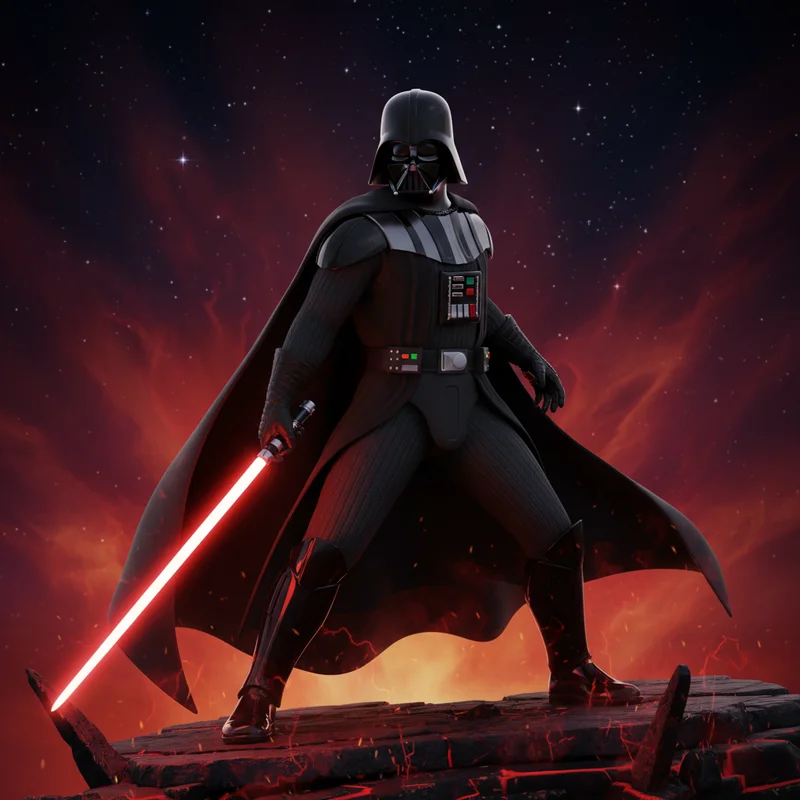
Darth Vader

Darth Vader

Sith Lord and cinema's greatest villain reveal.

VS
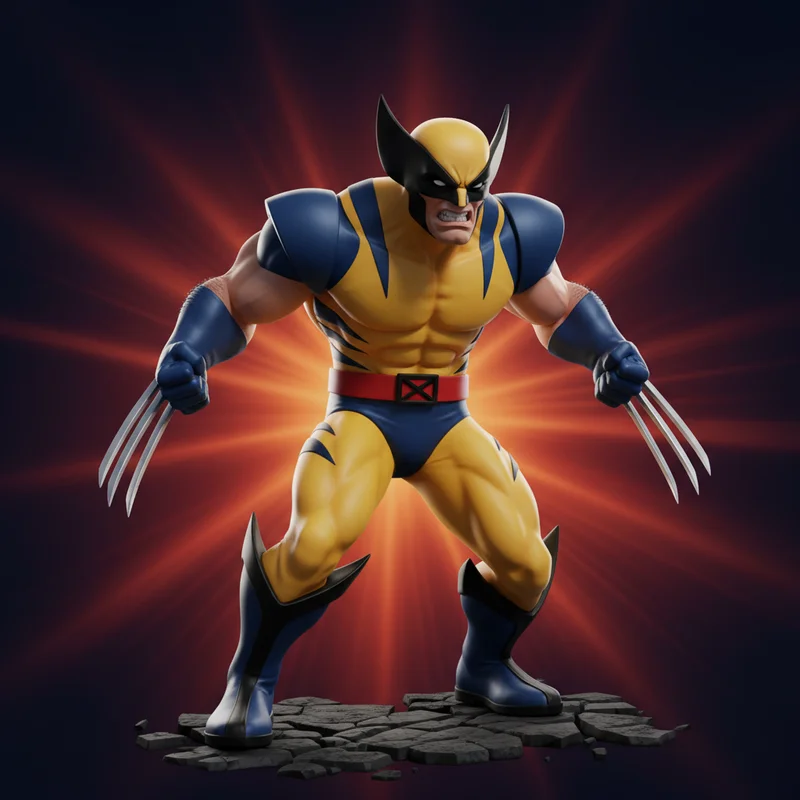
Wolverine

Wolverine

Clawed mutant with regeneration and anger issues.

Battle Analysis

Combat effectiveness Darth Vader Wins
70%
30%
Darth Vader Wolverine

Darth Vader

Darth Vader's combat capabilities derive from the synthesis of elite physical conditioning, technological augmentation, and mastery of the Force. His lightsaber technique, classified as Form V (Djem So), emphasises powerful counterattacks and overwhelming strength, perfectly suited to his cybernetically enhanced musculature. Historical records document his elimination of numerous Jedi survivors following Order 66, establishing an execution rate that suggests near-invincibility against conventional opponents.

The Force amplifies his effectiveness exponentially. Telekinetic manipulation allows engagement at distance, whilst precognitive abilities render ambush virtually impossible. His signature technique of Force-assisted strangulation requires neither proximity nor physical contact, enabling elimination of threats before combat properly begins.

However, Vader's combat style sacrificed the agility of his youth. The suit's weight and joint limitations preclude the acrobatic manoeuvres characteristic of prequel-era Anakin, forcing adaptation toward a more stationary, defensive posture that relies upon raw power rather than finesse.

Wolverine

Wolverine represents perhaps the most dangerous close-quarters combatant in the Marvel universe, combining over a century of martial training with biological enhancements that render traditional injury calculations meaningless. His adamantium claws can bisect virtually any material, whilst his skeleton provides invulnerability to blunt trauma that would shatter ordinary bone.

His combat psychology proves equally significant. The 'berserker rage' state suppresses higher cognitive function in favour of pure predatory instinct, dramatically increasing lethality whilst reducing self-preservation impulses. This psychological weapon transforms him from skilled combatant to force of nature.

Centuries of conflict have exposed Logan to virtually every fighting discipline humanity has developed. He demonstrates proficiency in Japanese martial arts, Western boxing, military combatives, and numerous esoteric systems. This encyclopaedic knowledge allows tactical adaptation to any opponent's style, whilst his healing factor permits learning through failure without permanent consequence.

VERDICT

Force precognition and telekinesis provide decisive range advantage against melee-dependent opponents.
Cultural penetration Darth Vader Wins
70%
30%
Darth Vader Wolverine

Darth Vader

The cultural footprint of Darth Vader defies conventional measurement. Since his debut in 1977, the character has transcended entertainment to become a universal symbol of villainy, authority, and redemption. His distinctive silhouette, the mechanical wheeze of his respirator, and John Williams' Imperial March constitute a semiotic package recognisable across virtually every human society.

Academic studies consistently rank Vader among the most recognised fictional characters globally, competing only with figures like Mickey Mouse and Superman. His influence permeates political discourse, psychological terminology, and everyday conversation. The phrase 'I am your father' has achieved the rare status of truly universal cultural reference, understood even by those who have never watched the films.

Commercially, Vader merchandise generates approximately $2.7 billion annually, representing a substantial portion of the Star Wars licensing empire. Museums worldwide display his costume as artistic and cultural artefact, whilst academic papers analysing his character number in the hundreds.

Wolverine

Wolverine's cultural trajectory presents a compelling study in slow-burn penetration. Introduced in 1974 as a relatively minor antagonist, the character required over a decade to achieve prominence, eventually becoming the most popular member of the X-Men franchise and a standalone commercial phenomenon. His path to ubiquity followed the growth of comic book culture itself.

The Hugh Jackman portrayal, spanning seventeen years and nine films, cemented Wolverine's position in mainstream consciousness. However, his recognition remains demographically stratified, achieving near-universal awareness among those aged 15-50 whilst showing significant drop-off among older populations unfamiliar with superhero cinema.

Wolverine's cultural contribution lies primarily in redefining heroic archetypes. He legitimised the anti-hero as protagonist, proving audiences would embrace morally ambiguous figures who killed, struggled with addiction, and rejected traditional virtue. This influence radiates through contemporary fiction, from prestige television to video games.

VERDICT

Universal recognition across all demographics; the breathing alone identifies him instantly worldwide.
Regenerative capacity Wolverine Wins
30%
70%
Darth Vader Wolverine

Darth Vader

The regenerative profile of Darth Vader presents a fascinating study in technological supplementation versus biological healing. Following his catastrophic injuries on Mustafar, where approximately 80% of his body sustained severe burns, Vader's survival became entirely dependent upon his iconic life-support suit. The apparatus maintains respiratory function, regulates body temperature, and provides continuous pain management through a sophisticated network of sensors and dispensers.

However, this technological dependency represents a double-edged vibroblade. The suit cannot regenerate tissue; it merely preserves what remains. Vader exists in a state of managed deterioration, his biological systems held in perpetual stasis rather than genuine recovery. The psychological toll proves equally significant, as the suit's constant reminder of his fall serves as both prison and penance.

Imperial records suggest the suit was deliberately designed with limitations, ensuring Vader's continued subordination to Emperor Palpatine. The breathing apparatus, whilst iconic, represents vulnerability rather than strength.

Wolverine

Wolverine's regenerative capabilities stand as perhaps the most thoroughly documented healing factor in comic book literature. His mutant physiology enables recovery from injuries that would prove instantly fatal to ordinary humans, including complete tissue regeneration, organ reconstruction, and even neurological repair. Scientific analysis within the Marvel universe suggests his cells operate on a fundamentally different metabolic framework, continuously replacing damaged material at accelerated rates.

The implications extend far beyond mere wound healing. Logan's healing factor has preserved his life across nearly two centuries, granting effective biological immortality whilst maintaining peak physical condition. His immune system proves equally formidable, neutralising poisons, diseases, and foreign substances that would overwhelm conventional biology.

Perhaps most remarkably, Wolverine has demonstrated recovery from reduction to mere skeletal remains, though such extreme regeneration requires substantial time. His adamantium skeleton, whilst providing structural permanence, actually places considerable strain on his healing factor, suggesting his natural capabilities may be even more impressive when unencumbered.

VERDICT

Biological regeneration triumphs over technological maintenance; one heals, the other merely persists.
Tragic backstory depth Wolverine Wins
30%
70%
Darth Vader Wolverine

Darth Vader

The tragedy of Anakin Skywalker operates on genuinely Shakespearean dimensions, incorporating prophecy, forbidden love, and the corruption of noble intention. Born into slavery on Tatooine, his liberation by the Jedi Order merely exchanged one form of bondage for another. The rigid emotional suppression demanded by Jedi doctrine proved incompatible with his passionate nature, creating psychological fractures that Palpatine methodically exploited.

His fall hinges upon the terrible irony that his desperate attempts to prevent Padme's death directly caused it. The prequel trilogy, whatever its artistic merits, establishes a deterministic nightmare wherein Anakin's every effort to escape destiny merely fulfils it more completely. His transformation into Vader represents not merely physical disfigurement but the complete annihilation of hope.

Twenty-three years of existence as Vader constitutes extended psychological torment, serving the very man who orchestrated his destruction whilst knowing his children live somewhere in the galaxy, beyond his reach. His redemption, achieved only in death, offers catharsis rather than healing.

Wolverine

Wolverine's tragedy derives its power from accumulated horror across an unnaturally extended lifespan. Born James Howlett in late 19th-century Canada, his mutant abilities manifested during the traumatic murder of his father figure, initiating a pattern of violence and loss that would repeat endlessly. The Weapon X programme represents merely the most concentrated atrocity, surgically bonding adamantium to his skeleton whilst attempting to erase his identity entirely.

The true weight of his tragedy lies in memory itself. Logan has loved and lost repeatedly across over a century, watching companions age and die whilst he persists unchanged. His healing factor, seemingly a gift, functions as curse, ensuring he survives to carry grief that would overwhelm ordinary human psychology.

Perhaps most devastating, his memories have been manipulated so extensively that he cannot trust his own history. False recollections mingle with genuine trauma, leaving his sense of self fundamentally unstable. He fights not merely external enemies but the possibility that everything he believes about himself constitutes elaborate fiction.

VERDICT

Compounded grief across centuries exceeds concentrated tragedy; immortality transforms loss into eternal burden.
Merchandising potential Darth Vader Wins
70%
30%
Darth Vader Wolverine

Darth Vader

From a commercial perspective, Darth Vader constitutes one of the most valuable intellectual properties in entertainment history. His likeness generates revenue across virtually every conceivable product category, from action figures to kitchen appliances, luxury watches to children's breakfast cereals. The character's distinctive visual elements translate effectively to merchandise at every price point.

The Disney acquisition of Lucasfilm for $4.05 billion in 2012 reflected, in substantial part, the ongoing commercial viability of Vader-related properties. Annual licensing revenue attributable to the character exceeds that of most standalone entertainment franchises. His image sells products to multiple generations simultaneously, appealing to nostalgic adults and newly initiated children alike.

Collector markets demonstrate particular enthusiasm, with original 1977 merchandise commanding prices in the tens of thousands. The character's merchandising infrastructure, developed over nearly five decades, represents an unrivalled combination of brand recognition, emotional resonance, and commercial efficiency.

Wolverine

Wolverine's merchandising profile, whilst substantial, operates within distinctly different parameters. As a character embedded within the larger X-Men and Marvel frameworks, his commercial exploitation often occurs through ensemble products rather than standalone merchandise. Action figures, video games, and apparel frequently feature him as one element among many.

The Hugh Jackman era significantly expanded his commercial footprint, establishing Wolverine as a viable solo property. However, licensing complexities arising from the pre-Disney Fox ownership created fragmentation that limited unified merchandising strategies. The character's violent nature also restricts certain market segments, particularly younger demographics.

Contemporary valuations place Wolverine merchandise revenue at approximately $500 million annually, a figure impressive in absolute terms but representing roughly one-fifth of Vader's commercial output. His appeal skews toward older collectors and dedicated comic enthusiasts rather than the mass-market penetration achieved by Star Wars properties.

VERDICT

Five decades of established licensing infrastructure versus fragmented Marvel/Fox history creates insurmountable commercial gap.
👑

The Winner Is

Darth Vader

54 - 46

This comprehensive analysis reveals two characters who have profoundly shaped popular culture through remarkably similar archetypes: the tortured warrior, physically transformed by violence, struggling between darkness and redemption. Yet Darth Vader emerges with a narrow but decisive advantage, claiming victory in three of five criteria examined.

Vader's dominance in cultural penetration and merchandising potential reflects the structural advantages of his position within the Star Wars franchise, a property that achieved global saturation before Wolverine had even completed his ascent to X-Men prominence. His combat effectiveness, enhanced by the supernatural capabilities of the Force, provides tactical superiority despite Wolverine's formidable regenerative advantages.

However, Wolverine's victories in regenerative capacity and tragic backstory depth should not be dismissed. His biological healing represents genuine recovery rather than Vader's technological stasis, whilst his accumulated centuries of grief create psychological complexity that Anakin's more concentrated tragedy cannot match.

The final calculation favours Darth Vader at 54% to Wolverine's 46%, a margin reflecting respectful acknowledgment of both combatants' extraordinary qualities rather than decisive superiority of either.

Darth Vader
54%
Wolverine
46%

Share this battle

More Comparisons