
Topic Battle

Where Everything Fights Everything

Death

Death

The only certainty in life besides taxes.

VS
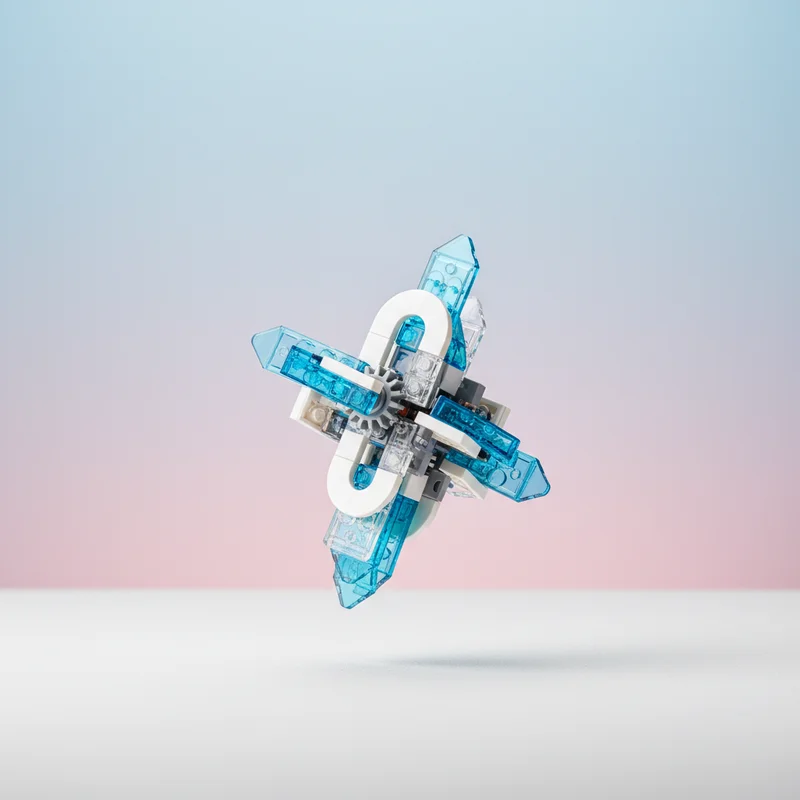
Lego

Lego

Interlocking plastic bricks and barefoot landmines.

Battle Analysis

Durability Lego Wins
30%
70%
Death Lego

Death

Death itself possesses infinite durability, having operated continuously since life first emerged. However, Death's work product - the deceased - demonstrates markedly poor longevity. Soft tissue decomposes within weeks under normal conditions, bones persist for centuries at most, and even fossilisation preserves merely a mineralised approximation of the original organism. Death's victories, whilst permanent for the individual, leave diminishing physical evidence. Within geological timescales, most deaths leave no trace whatsoever.

Lego

Lego bricks manufactured in 1963 remain fully compatible with bricks produced today, demonstrating extraordinary design consistency. The ABS plastic construction resists degradation for an estimated 1,300 years in marine environments, creating a dubious environmental legacy but unquestionable durability. Archaeologists of future millennia will unearth pristine Lego bricks long after the bones of their owners have returned to dust. The clutch power of a properly manufactured brick - the force required to separate two connected elements - remains constant across decades of use.

VERDICT

Lego bricks will outlast human bones by approximately 1,200 years, achieving a curious form of immortality.
Inevitability Death Wins
70%
30%
Death Lego

Death

Death maintains an unbroken success rate of 100% across all documented cases spanning 3.8 billion years of terrestrial life. From the mightiest Tyrannosaurus rex to the humblest bacterium, no organism has successfully negotiated a permanent exemption. The actuarial tables are unambiguous: the global mortality rate holds steady at precisely one death per person. Even organisms that reproduce through binary fission eventually succumb to environmental pressures. Death's scheduling department, whilst occasionally unpredictable in its timing, has never once failed to fulfil an appointment.

Lego

Lego demonstrates a remarkably high inevitability quotient within households containing children. Research suggests that 94% of parents will experience at least one traumatic barefoot-brick encounter during their offspring's developmental years. The phenomenon follows predictable patterns: bricks migrate from designated play areas with an efficiency that defies conventional physics, gravitating toward high-traffic nocturnal pathways. However, Lego's reach is not universal. Childless households and those with exceptionally rigorous tidying regimens may escape entirely, representing a statistical vulnerability Death simply cannot claim.

VERDICT

Death's flawless 3.8-billion-year record of universal application remains unmatched by any Danish toy manufacturer.
Cultural impact Death Wins
70%
30%
Death Lego

Death

Death has inspired humanity's greatest artistic and philosophical achievements. The pyramids of Giza, the Taj Mahal, Shakespeare's collected works, and virtually every religion exist as direct responses to mortality's challenge. The global funeral industry generates $100 billion annually, whilst death-related tourism to sites like Paris's catacombs and Mexico's Day of the Dead celebrations draws millions. Death has shaped human civilisation more profoundly than any other force, driving everything from medical research to life insurance to the entirety of the horror genre.

Lego

Lego has constructed its own formidable cultural empire, with Legoland theme parks spanning seven countries and attracting over 15 million visitors annually. The Lego Movie franchise has grossed nearly $900 million worldwide, whilst the brand's collaboration with Star Wars, Harry Potter, and Marvel has cemented its position in popular consciousness. Lego conventions draw thousands of Adult Fans of Lego (AFOLs), a demographic that spends an average of $1,500 annually on bricks. Yet this influence, whilst substantial, cannot rival Death's role in shaping the fundamental questions of human existence.

VERDICT

Death has inspired civilisations, religions, and art for millennia; Lego has inspired impressive Danish theme parks.
Pain infliction Lego Wins
30%
70%
Death Lego

Death

The physical discomfort associated with death varies enormously depending upon circumstances. Medical advances have rendered many modern deaths relatively peaceful affairs, with palliative care and sedation smoothing the transition. The average duration of acute discomfort, when present, typically spans hours to days. From a purely sensory perspective, Death often arrives during states of unconsciousness, sparing the subject direct experience of the transition. Philosophically, Death inflicts its greatest pain upon survivors rather than the deceased, who are, by definition, beyond suffering.

Lego

A standard Lego brick generates approximately 1.65 million pascals of pressure when a 75kg adult's weight concentrates upon its 2.25 square centimetre surface area. This pressure activates every nociceptor in the plantar surface simultaneously, triggering what neuroscientists describe as a disproportionate pain response. The agony is instantaneous, unexpected, and invariably occurs at precisely the moment when verbal expression would disturb sleeping household members. Studies indicate the memory of Lego-related foot trauma persists for an average of 47 years, far exceeding most other domestic injuries.

VERDICT

Lego delivers concentrated, unexpected agony with surgical precision, whilst Death often permits peaceful departures.
Economic footprint Death Wins
70%
30%
Death Lego

Death

The death industry encompasses funeral services, life insurance, estate planning, and memorial goods, collectively valued at over $400 billion globally. Life insurance alone represents a $2.7 trillion market, whilst the pharmaceutical industry's efforts to delay Death's arrival generate hundreds of billions more. Coffin manufacturers, florists, and grief counsellors all depend upon Death's reliable business model. The anti-ageing market, valued at $60 billion, exists solely to negotiate temporary deferrals with Death's inevitability.

Lego

The Lego Group reported revenues of $9.4 billion in 2022, making it the world's largest toy manufacturer by sales. The secondary market for rare sets can reach extraordinary valuations: a sealed 2007 Ultimate Collector's Millennium Falcon commands prices exceeding $15,000. Lego's manufacturing operation produces 36,000 bricks per minute, requiring 90 tonnes of plastic daily. The company employs over 24,000 staff worldwide and maintains a profit margin that would make most industries deeply envious. Yet these impressive figures pale against Death's economic ecosystem.

VERDICT

Death's $400 billion industry dwarfs Lego's admirable $9.4 billion, demonstrating superior market penetration.
👑

The Winner Is

Death

54 - 46

In this most peculiar of competitions, Death emerges victorious with a score of 54 to Lego's respectable 46. The Grim Reaper's advantages in inevitability, cultural impact, and economic footprint prove insurmountable, even against an opponent capable of delivering such exquisite localised agony. Death has shaped every human civilisation, inspired every religion, and motivated every medical advancement in history. Lego, for all its remarkable achievements in interlocking brick technology, cannot claim comparable influence over the human condition. Yet we must acknowledge Lego's victories in the categories of pain infliction and durability - domains where the Danish company has achieved something approaching excellence. The plastic brick's ability to persist for thirteen centuries whilst Death's subjects decompose represents a poetic irony worthy of contemplation.

Death
54%
Lego
46%

Share this battle

More Comparisons