
Topic Battle

Where Everything Fights Everything

Dog

Dog

Loyal canine companion celebrated for unconditional love, tail wagging, and being humanity's best friend for millennia.

VS
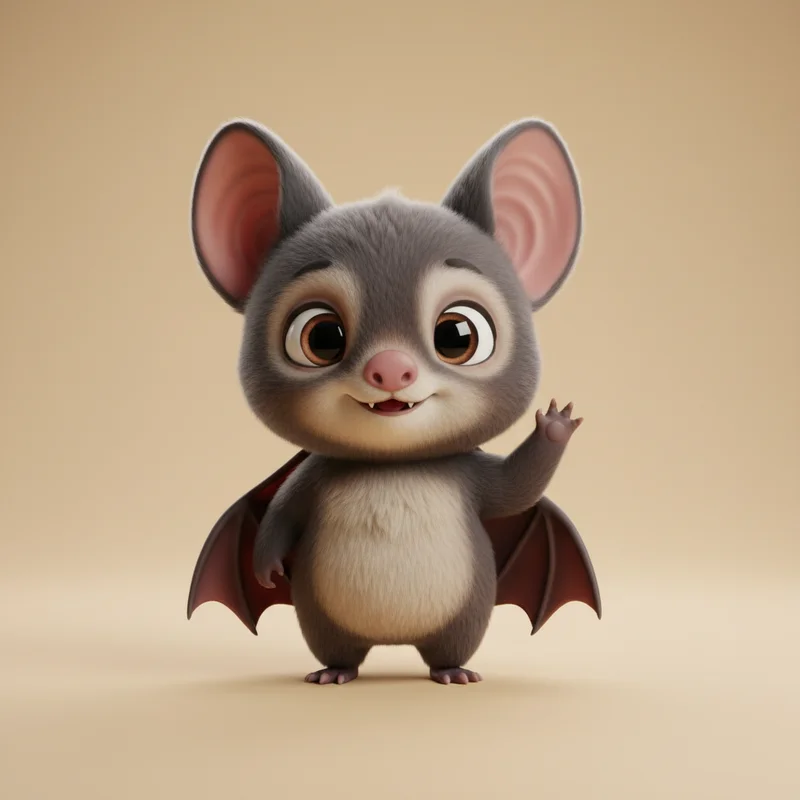
Bat

Bat

Only mammal capable of sustained flight, providing crucial ecosystem services through pollination and pest control.

The Matchup

Approximately 65 million years ago, mammals began their great diversification following the unfortunate retirement of the dinosaurs. From this evolutionary explosion emerged two creatures that would come to occupy radically different ecological niches: the domestic dog, which chose partnership with humanity, and the bat, which chose to hang upside down in caves and develop sonar. Both decisions have proven remarkably successful, though they have led to profoundly different lifestyle outcomes.

Today, 471 million dogs live alongside humans as companions, workers, and occasionally furniture destroyers. Meanwhile, 1,400 species of bat represent roughly twenty percent of all mammalian diversity, making them the second most species-rich mammalian order after rodents. One attends obedience classes and learns to fetch newspapers. The other navigates complete darkness using biological sonar that human engineers have spent decades attempting to replicate. The question of which represents the superior mammalian achievement deserves rigorous examination.

Battle Analysis

Dietary flexibility Dog Wins
70%
30%
Dog Bat

Dog

The domestic dog demonstrates opportunistic omnivory of impressive scope. Having evolved alongside human settlements, dogs developed the ability to digest starches that their wolf ancestors could not process, courtesy of additional copies of the AMY2B gene. This adaptation permits dogs to consume essentially whatever humans discard, a survival strategy that has proven extraordinarily successful.

Modern dogs consume commercial kibble, raw meat, vegetables, and, given opportunity, items that cannot reasonably be classified as food including socks, remote controls, and furniture components. Their digestive systems accommodate this variety with remarkable resilience, though veterinary emergency rooms maintain steady business nonetheless.

Bat

Bat dietary specialisation has produced astonishing diversity. Fruit bats pollinate over 500 plant species and disperse seeds across tropical forests. Insectivorous bats consume their body weight in insects nightly, with a single colony of Brazilian free-tailed bats removing an estimated one million kilograms of insects from the ecosystem annually. Vampire bats have evolved to subsist entirely on blood, developing anticoagulant saliva and infrared heat sensors to locate blood vessels beneath skin.

This specialisation, however, creates vulnerability. A fruit bat cannot pivot to insects when fruiting seasons fail. A vampire bat cannot suddenly appreciate the merits of a nice salad.

VERDICT

Bats achieve remarkable dietary specialisation. Dogs achieve remarkable dietary indiscrimination, which proves more adaptable to changing circumstances.

Social intelligence Dog Wins
70%
30%
Dog Bat

Dog

Fifteen thousand years of domestication have produced a creature with unprecedented interspecies social cognition. Dogs read human facial expressions with accuracy exceeding 75 percent. They follow human pointing gestures, a capability that even chimpanzees, our closest relatives, struggle to master. They have evolved a specific muscle, the levator anguli oculi medialis, solely to produce the expression humans interpret as puppy dog eyes.

Research from Duke University demonstrates that dogs preferentially seek human help when confronting problems, even when independent solutions exist. They have learned that humans are tools, and they deploy this knowledge with sophisticated manipulation.

Bat

Bat social structures reveal unexpected complexity. Female vampire bats form long-term bonds and share blood meals with hungry roost-mates, a behaviour that represents reciprocal altruism rarely observed in mammals. Mother bats recognise their own pups amongst thousands in crowded roosts using individualised calls, a feat of auditory discrimination that operates with near-perfect accuracy.

However, bats have invested no evolutionary effort in understanding humans. They find humanity largely irrelevant to their concerns, which may represent either limitation or wisdom depending on perspective.

VERDICT

Bats possess sophisticated intra-species social cognition. Dogs possess sophisticated inter-species social cognition, having learned to manipulate the dominant species on the planet.

Ecological contribution Bat Wins
30%
70%
Dog Bat

Dog

The domestic dog's ecological contribution has become somewhat complicated by human intervention. In controlled contexts, dogs serve as conservation tools, detecting endangered species, tracking poachers, and locating invasive plants. Search-and-rescue dogs save approximately 500 lives annually in wilderness emergencies across North America alone.

However, feral and free-ranging dogs pose documented threats to wildlife on every continent except Antarctica. They have contributed to the extinction of at least eleven species and remain identified as a threat to an additional 188 species globally. The dog's ecological impact depends entirely upon human management.

Bat

Bats perform irreplaceable ecosystem services that operate without human intervention or awareness. Insectivorous bats save American agriculture an estimated $23 billion annually in pest control. Fruit bats disperse seeds that regenerate tropical forests and pollinate plants including agave, without which tequila production would face existential crisis.

A single brown bat consumes approximately 1,000 mosquitoes per hour during peak feeding. Multiply this across millions of individuals and the public health implications become staggering. Bats ask nothing from humanity whilst providing services humanity cannot replicate.

VERDICT

Dogs provide ecological services when directed by humans. Bats provide ecological services worth billions of pounds annually entirely independently.

Navigational capability Bat Wins
30%
70%
Dog Bat

Dog

The domestic dog navigates primarily through olfactory supremacy. With approximately 300 million scent receptors compared to humanity's paltry 6 million, dogs can detect odours at concentrations nearly 100,000 times lower than human detection thresholds. A bloodhound can follow a scent trail that is over 300 hours old, a capability that makes GPS technology appear somewhat rudimentary.

However, visual navigation presents challenges. Dogs possess dichromatic vision, perceiving a world rendered primarily in blues and yellows. They cannot distinguish a red ball from green grass, which explains certain retrieval difficulties and has launched a million confused human exclamations of it's right there.

Bat

Bats have developed what scientists describe as the most sophisticated biological sonar system on Earth. Echolocation permits navigation in complete darkness through the emission of ultrasonic pulses at frequencies up to 200 kilohertz and the processing of returning echoes with temporal precision measured in microseconds. A bat can detect a human hair in total darkness. It can distinguish between insects of nearly identical size based on wing-beat frequency.

This capability required substantial evolutionary investment. The auditory cortex of echolocating bats represents a significantly larger proportion of brain volume than in any other mammal. They have, essentially, built sonar from scratch using only the materials provided by standard mammalian biology.

VERDICT

Dogs navigate brilliantly through smell. Bats navigate brilliantly through self-generated sound waves processed with computational precision that engineers still cannot fully replicate.

Longevity relative to size Bat Wins
30%
70%
Dog Bat

Dog

Canine longevity follows a depressingly predictable inverse relationship with body size. Small breeds may survive fifteen years or more, whilst giant breeds consider reaching eight an achievement. The average dog lifespan of 10-13 years means that human companions must prepare for multiple cycles of attachment and loss across a typical lifetime.

This mortality rate reflects the metabolic costs of maintaining warm-blooded activity at the sizes dogs occupy. Evolution has not solved this equation elegantly.

Bat

Bats demonstrate what biologists term exceptional longevity for their size. Brandt's bat, weighing merely seven grams, has been documented surviving over 41 years, making it the longest-lived mammal relative to body size ever recorded. The metabolic theory that predicts lifespan from body mass fails spectacularly when applied to chiropterans.

Scientists attribute this anomaly to several factors: reduced oxidative stress during hibernation, efficient DNA repair mechanisms, and immune systems that tolerate viral loads without inflammatory response. Bats have, essentially, solved ageing in ways that continue to elude human medicine.

VERDICT

Dogs live predictable lifespans that scale with body mass. Bats live extraordinarily long lifespans that violate fundamental biological predictions.

👑

The Winner Is

Dog

55 - 45

This analysis reveals two divergent strategies for mammalian success. The dog pursued partnership with humanity, sacrificing independence for security and developing remarkable abilities to understand and manipulate its chosen host species. The bat pursued technological innovation, developing sonar, defying metabolic predictions of lifespan, and performing ecosystem services of extraordinary value without requiring any acknowledgment whatsoever.

The scoring reflects a narrow victory for the dog, driven primarily by social intelligence that has proven spectacularly successful as a survival strategy. Dogs have achieved global distribution, guaranteed food security, and veterinary care by the simple expedient of making themselves indispensable to humans. Bats, despite their remarkable capabilities, receive considerably less appreciation and face ongoing challenges including habitat loss, wind turbines, and persistent public relations problems.

The 55-45 margin acknowledges that whilst bats may represent the more impressive biological achievement, dogs have demonstrated superior practical wisdom in their choice of evolutionary strategy.

Dog
55%
Bat
45%

Share this battle

More Comparisons