
Topic Battle

Where Everything Fights Everything

Dog

Dog

Loyal canine companion celebrated for unconditional love, tail wagging, and being humanity's best friend for millennia.

VS
Bicycle

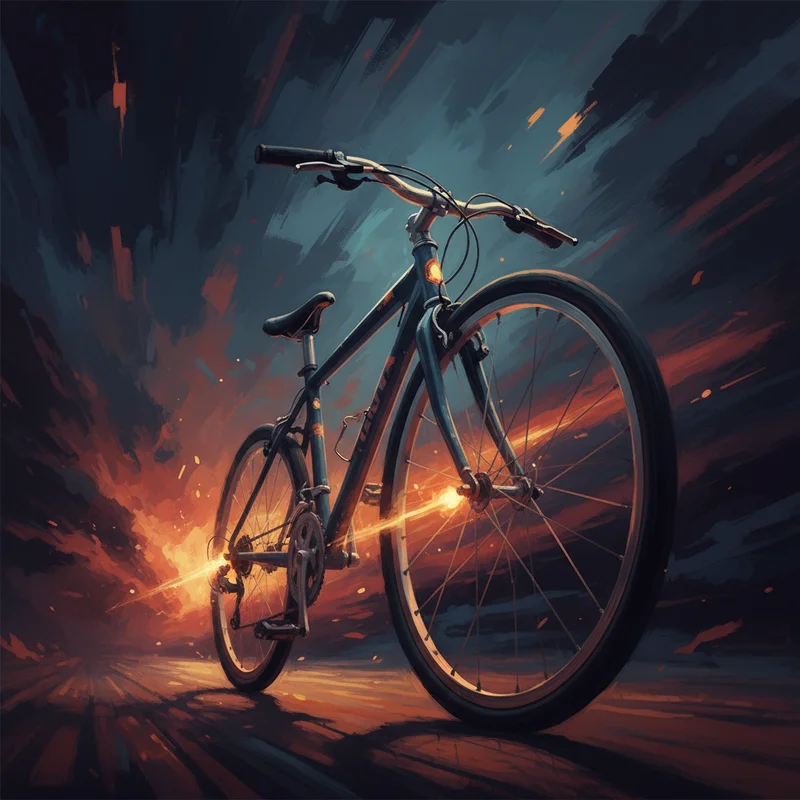
Bicycle

Two-wheeled human-powered transportation and fitness device.

The Matchup

Across suburban driveways and urban flats worldwide, two entities compete for the most precious of human resources: free time. 471 million dogs currently serve as companions to the human species, whilst approximately one billion bicycles occupy garages, hallways, and increasingly elaborate wall-mounting systems. Both promise transformation of sedentary existence into active adventure. Both require initial investment followed by ongoing commitment. Yet their approaches to human improvement could not differ more fundamentally.

The domestic dog operates through emotional manipulation refined over 15,000 years of coevolution, deploying guilt, enthusiasm, and strategically timed affection to motivate human activity. The bicycle, by contrast, relies entirely upon human initiative, sitting in patient silence until its owner summons the motivation to engage. One demands attention through biological imperative. The other waits, gathering dust and quiet mechanical reproach, for attention that may never arrive.

Battle Analysis

Exercise motivation Dog Wins
70%
30%
Dog Bicycle

Dog

The domestic dog has evolved into what behavioural scientists describe as an inescapable exercise obligation. Regardless of weather conditions, personal energy levels, or the compelling nature of current television programming, a dog requiring outdoor relief will employ escalating tactics until its human complies. Studies published in the Journal of Physical Activity and Health demonstrate that dog owners achieve 22 additional minutes of walking daily compared to non-owners.

This exercise occurs not through willpower but through biological necessity avoidance. The consequences of ignoring a dog's needs manifest on carpets and in behavioural deterioration. Exercise becomes less a choice than a damage limitation strategy.

Bicycle

The bicycle represents what psychologists term a pure voluntary commitment. It cannot compel its owner to engage. It possesses no mechanism for expressing disappointment when neglected. Research indicates that 46 percent of bicycles purchased for fitness purposes see fewer than ten uses in their first year of ownership. The bicycle's silence becomes, paradoxically, its weakness.

When utilised, however, the bicycle delivers exercise of remarkable efficiency. Cycling burns approximately 400-600 calories per hour whilst minimising joint impact. The machine amplifies human effort into speed and distance that walking cannot match. Yet this potential remains theoretical until human motivation independently manifests.

VERDICT

The bicycle offers superior exercise potential. The dog offers superior exercise probability. Potential unrealised holds no value.

Maintenance demands Bicycle Wins
30%
70%
Dog Bicycle

Dog

The domestic dog requires what economists classify as comprehensive ongoing life support. Veterinary care averages $500-1,000 annually for healthy animals, rising dramatically with age or chronic conditions. Nutrition, grooming, boarding during travel, and the replacement of items destroyed during enthusiastic play accumulate into substantial financial commitment. The ASPCA estimates total annual costs between $1,500 and $4,500 depending on size and circumstances.

Beyond financial demands, dogs consume time. They require feeding on schedule, walking regardless of weather, and attention that cannot be indefinitely postponed. The dog's needs are non-negotiable and continuous.

Bicycle

Bicycle maintenance represents a fundamentally different category of obligation. A well-maintained bicycle requires annual expenditure of perhaps $50-200 for routine items: brake pads, chain lubrication, occasional tyre replacement. Major components last thousands of kilometres before requiring attention. The bicycle does not require daily intervention. It can be ignored for weeks without consequence beyond accumulated dust.

The bicycle asks nothing of its owner's time except during actual use. It generates no guilt when neglected. It will not develop behavioural problems if left alone for a fortnight.

VERDICT

The cost differential is substantial but not decisive. The crucial distinction lies in flexibility. Bicycles permit neglect. Dogs convert neglect into household destruction and veterinary bills.

Transportation utility Bicycle Wins
30%
70%
Dog Bicycle

Dog

As a transportation device, the domestic dog performs with spectacular inadequacy. Whilst sled dogs in Arctic regions demonstrate that canine-powered locomotion remains technically viable, the average companion dog contributes nothing to human mobility. Indeed, dogs actively complicate transportation, requiring their own conveyance arrangements for journeys exceeding comfortable walking distance.

The dog transforms its owner into a logistics coordinator, necessitating considerations of pet-friendly venues, travel carriers, and the complex calculus of whether bringing the dog will enhance or catastrophically complicate any given outing.

Bicycle

The bicycle represents humanity's most efficient transportation device, converting human energy into movement at approximately 98 percent mechanical efficiency. A moderately fit cyclist covers ground three to four times faster than walking speed whilst consuming fewer calories per kilometre than any other self-powered locomotion method. In urban environments with congested traffic, bicycles frequently outpace motor vehicles over distances under ten kilometres.

Operating costs approach zero following initial purchase. No fuel, no insurance, no registration. The bicycle asks only for occasional maintenance and a secure location when not in use.

VERDICT

This category presents no meaningful competition. Dogs are passengers, not vehicles. Attempting to ride a dog to work would result in termination of employment and possible veterinary intervention.

Emotional companionship Dog Wins
70%
30%
Dog Bicycle

Dog

Dogs have evolved into what neuroscientists describe as oxytocin production specialists. Physical interaction with dogs triggers measurable increases in bonding hormones in both species. Research from the University of Missouri demonstrates that dog owners exhibit lower baseline cortisol levels and recover more rapidly from stress-inducing stimuli than non-owners. Dogs read human emotional states with documented accuracy exceeding 75 percent and respond with proximity-seeking behaviour during periods of distress.

The dog provides what therapists term unconditional positive regard, a form of acceptance that human relationships rarely achieve. It does not judge the quality of your career, the state of your finances, or the duration since you last vacuumed.

Bicycle

The bicycle offers emotional support of an entirely different character. It provides what enthusiasts describe as meditative engagement, the absorption in physical activity that quiets anxious minds. Cycling releases endorphins, reduces cortisol through exercise, and offers the psychological benefit of measurable accomplishment. Distance travelled and elevation climbed provide concrete metrics of achievement in a world of ambiguous progress.

However, the bicycle cannot detect human distress. It cannot position itself as a warm presence during difficulty. When its owner weeps, it maintains the same aluminium indifference it displays during triumph.

VERDICT

Both reduce stress through different mechanisms. But the dog reduces stress through relationship whilst the bicycle reduces stress through distraction. Relationship addresses root causes.

Social connection generation Dog Wins
70%
30%
Dog Bicycle

Dog

Dogs function as what sociologists term involuntary social catalysts. Research published in PLOS ONE demonstrates that dog owners receive three times more unsolicited social approaches from strangers than individuals walking alone. Dog parks operate as community centres where humans discover common ground through their animals' mutual sniffing investigations. Walking routes become familiar, neighbours become acquaintances, acquaintances become friends through accumulated brief interactions.

The dog creates what urban planners describe as ambient sociability, low-stakes social contact that builds community cohesion without demanding the vulnerability of initiated friendship.

Bicycle

The bicycle generates social connection through shared enthusiasm rather than ambient presence. Cycling clubs, group rides, and the quiet camaraderie of passing fellow cyclists create community among the initiated. Cycling infrastructure advocacy brings together individuals who might otherwise never interact. The shared suffering of hill climbs creates bonds that psychologists recognise as particularly durable.

However, the bicycle provides these benefits only to those who actively seek cycling community. It does not generate spontaneous interaction during ordinary use. Solo cycling remains solo unless deliberate effort creates otherwise.

VERDICT

Dogs create social connection automatically and unavoidably. Bicycles create social connection only for those who pursue cycling-specific communities.

👑

The Winner Is

Dog

55 - 45

This analysis reveals a competition between fundamentally incompatible approaches to human enhancement. The bicycle excels as a tool, a magnificently efficient device that amplifies human capability when human motivation independently manifests. The dog operates as a partner, an entity with its own agenda that nonetheless drags its owner toward outcomes beneficial to both parties.

The bicycle wins decisively on transportation utility and maintenance demands, categories where its inanimate nature provides genuine advantage. No reasonable person would choose a Golden Retriever over a road bicycle for their commute. The dog claims victory in exercise motivation, emotional companionship, and social connection, domains where living partnership proves irreplaceable.

The 55-45 margin reflects a fundamental truth: the bicycle's benefits require human initiative to access, whilst the dog's benefits impose themselves regardless of human preference. In the contest between potential excellence and reliable adequacy, reliability proves more valuable over the long arc of a human life. The dog wins not because it is superior in any measurable dimension, but because it ensures its benefits are actually received.

Dog
55%
Bicycle
45%

Share this battle

More Comparisons