
Topic Battle

Where Everything Fights Everything

Dog

Dog

Loyal canine companion celebrated for unconditional love, tail wagging, and being humanity's best friend for millennia.

VS
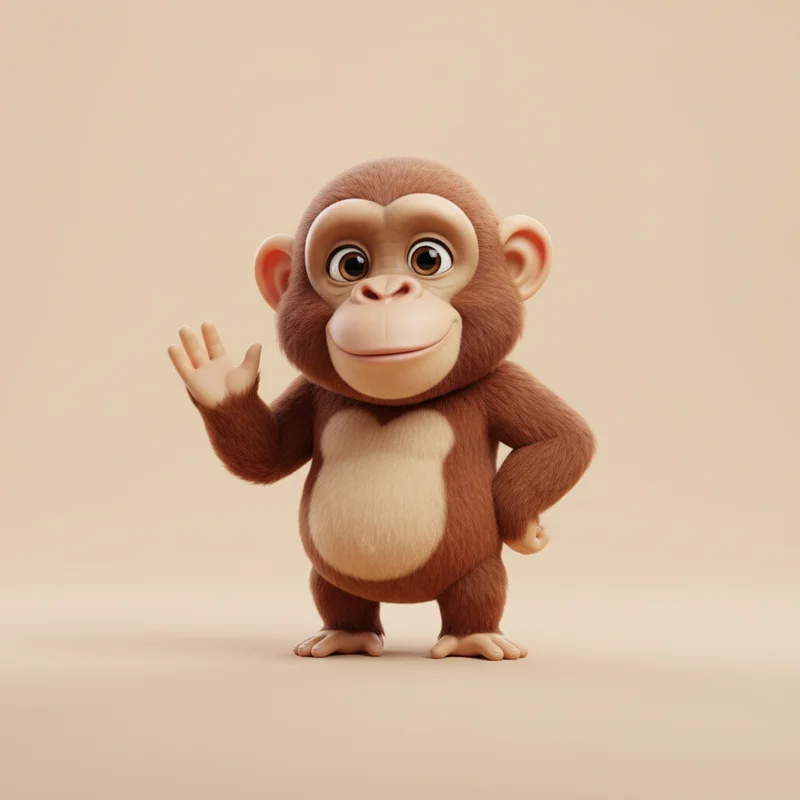
Chimpanzee

Chimpanzee

Highly intelligent great ape using tools, displaying emotions, and sharing 99% genetic similarity with humans.

Battle Analysis

Intelligence chimpanzee Wins
30%
70%
Dog Chimpanzee

Dog

The domestic dog possesses cognitive architecture specifically optimised for human interaction and communication. Research published in Current Biology demonstrates dogs can learn and retain over 1,000 verbal commands, as documented in the case of Border Collie 'Chaser'. Dogs exhibit theory of mind capabilities, understanding human pointing gestures from puppyhood without training. They demonstrate episodic-like memory and can make inferences about hidden objects.

However, canine intelligence operates within parameters defined by domestication. Dogs excel at tasks involving human cooperation but show limited capacity for independent problem-solving compared to their wolf ancestors. Their cognitive strengths are fundamentally interpersonal rather than abstract.

Chimpanzee

The chimpanzee demonstrates intellectual capabilities that place it amongst the most cognitively sophisticated non-human species on Earth. Documented achievements include tool manufacture and use, symbolic language acquisition exceeding 400 signs in American Sign Language, and performance on certain memory tasks that exceeds human capability. The famous Ayumu, a chimpanzee at Kyoto University, consistently outperforms humans on numerical memory tests.

Chimpanzees engage in strategic deception, plan for future events, and demonstrate cultural transmission of knowledge across generations. Their prefrontal cortex, whilst smaller than the human equivalent, enables abstract reasoning and problem-solving capabilities unmatched in the canine world. This is raw, autonomous intelligence unconstrained by domestication's selective pressures.

VERDICT

Chimpanzees demonstrate superior autonomous problem-solving, tool use, and abstract reasoning capabilities.
Trainability dog Wins
70%
30%
Dog Chimpanzee

Dog

The domestic dog demonstrates unparalleled trainability amongst non-human species. Dogs not only respond to training but actively seek human approval, creating a motivational framework that accelerates learning. Positive reinforcement techniques exploit this inherent desire for social reward, producing reliable behavioural modification within remarkably short timeframes. A dog can master basic obedience commands within one to two weeks of consistent training.

The breadth of trained canine behaviours spans extraordinary territory: guide dogs navigate complex urban environments, detection dogs identify substances at concentrations below one part per trillion, and search-and-rescue dogs locate survivors beneath rubble. Dogs learn not merely to perform tasks but to generalise learned concepts to novel situations. This trainability reflects evolutionary selection for human cooperation over fifteen millennia.

Chimpanzee

Chimpanzee training requires fundamentally different methodology. These primates learn observationally and through trial-and-error rather than through desire for human approval. Successful chimpanzee training demands understanding of their social hierarchies, individual personalities, and intrinsic motivations. Training timelines extend considerably beyond canine equivalents, often requiring months or years for complex behaviours.

Critically, trained chimpanzees retain autonomous decision-making that dogs largely surrender. A chimpanzee may refuse previously trained behaviours based on mood, social context, or perceived inequity of reward. Their intelligence enables evaluation of training value, leading to negotiated rather than obedient compliance. This makes chimpanzees valuable research subjects but problematic working animals.

VERDICT

Dogs' inherent desire for human approval creates reliable, rapid, and generalised trainability unmatched by chimpanzees.
Longevity and care dog Wins
70%
30%
Dog Chimpanzee

Dog

The domestic dog lifespan varies by breed, averaging 10 to 13 years for medium-sized individuals. Veterinary care requirements remain well-established, with standardised vaccination schedules, predictable health concerns, and widely available medical expertise. Annual care costs in developed nations average £1,500 to £2,500, a figure most households can accommodate. Dogs adapt to various housing arrangements, from urban flats to rural estates.

End-of-life care for dogs, whilst emotionally challenging, occurs within manageable timeframes. The relatively brief canine lifespan, whilst a source of grief, allows owners to provide comprehensive care throughout the animal's natural life without multi-generational planning requirements.

Chimpanzee

Chimpanzee longevity presents formidable challenges for any caretaker. Captive individuals routinely exceed 50 years of age, with some reaching 60. This lifespan frequently exceeds that of human carers, creating succession planning requirements unprecedented in animal husbandry. Annual care costs for captive chimpanzees exceed £15,000 to £25,000, encompassing specialised diet, veterinary care, and enrichment requirements.

Housing requirements prove equally demanding. Chimpanzees require extensive outdoor space, climbing structures, and social companions of their own species to maintain psychological health. Few private individuals possess resources or expertise for appropriate chimpanzee care, explaining why most captive individuals reside in research facilities, zoos, or specialised sanctuaries with institutional funding.

VERDICT

Dogs require manageable care investment across predictable lifespans, whilst chimpanzees demand institutional-level resources.
Physical capability chimpanzee Wins
30%
70%
Dog Chimpanzee

Dog

The domestic dog exhibits remarkable physical diversity, with breeds ranging from the 1.5-kilogram Chihuahua to the 90-kilogram English Mastiff. Athletic breeds such as the Greyhound achieve speeds exceeding 70 kilometres per hour, whilst Siberian Huskies demonstrate endurance capabilities allowing continuous exertion over 160 kilometres daily. The canine olfactory system contains approximately 300 million receptors compared to the human six million.

However, dogs lack manipulative appendages, limiting their interaction with the physical environment to what can be achieved through mouth, paws, and body weight. They cannot climb, grasp tools, or manipulate objects with precision. Their physical prowess, whilst impressive in specific domains, represents specialised rather than generalised capability.

Chimpanzee

The chimpanzee possesses physical capabilities of extraordinary breadth. Adult males generate pulling force exceeding 450 kilograms, whilst their climbing ability allows effortless navigation of vertical environments inaccessible to humans. Opposable thumbs on both hands and feet enable dexterous manipulation of objects with precision approaching human levels. Their brachiating locomotion achieves remarkable efficiency in arboreal environments.

Chimpanzees demonstrate genuine physical versatility that dogs cannot approach. They throw objects with accuracy, construct sleeping platforms nightly, and use tools ranging from termite-fishing implements to stone hammers. This generalised physical capability reflects their evolutionary heritage as undomesticated primates navigating complex African forest environments.

VERDICT

Chimpanzees possess superior strength, dexterity, and generalised physical capability across diverse tasks.
Social compatibility dog Wins
70%
30%
Dog Chimpanzee

Dog

The domestic dog represents perhaps the most successful example of interspecies social integration in evolutionary history. Through fifteen millennia of selective breeding, dogs have developed neural architecture specifically attuned to human social cues. The hormone oxytocin, associated with bonding and trust, rises in both dogs and humans during mutual eye contact, a phenomenon not observed with any other species.

Dogs demonstrate unconditional positive regard towards their human companions, greeting them with consistent enthusiasm regardless of circumstance. They integrate seamlessly into human family structures, adapt to diverse living arrangements, and provide documented therapeutic benefits for conditions ranging from autism to post-traumatic stress disorder. The dog-human bond requires no negotiation; it emerges organically through cohabitation.

Chimpanzee

Despite genetic proximity, chimpanzees present substantial challenges to human social integration. Adult males possess physical strength estimated at 1.5 to 2 times that of comparably sized humans, creating inherent safety concerns. Sexual maturity triggers behavioural changes that render formerly tractable individuals unpredictable and potentially dangerous. The Travis incident of 2009 serves as sobering documentation of these risks.

Chimpanzees require complex social hierarchies with their own species and do not transfer these social needs to human substitutes without psychological damage. Captive chimpanzees frequently exhibit stereotypic behaviours indicative of mental distress. Their social compatibility with humans, whilst possible in controlled research settings, cannot be described as natural or mutually beneficial in domestic contexts.

VERDICT

Dogs have co-evolved specifically for human social integration, whilst chimpanzees retain wild social requirements.
👑

The Winner Is

Dog

55 - 45

This comprehensive analysis reveals two species of remarkable capability operating within fundamentally different paradigms. The chimpanzee demonstrates superior raw intelligence, physical capability, and autonomous problem-solving ability. These attributes reflect their evolutionary heritage as undomesticated primates who must navigate complex social and physical environments without human assistance.

The domestic dog, however, excels in precisely those dimensions most relevant to interspecies partnership. Their trainability, social compatibility, and manageable care requirements represent fifteen millennia of selection for human integration. Where the chimpanzee offers a window into our evolutionary past, the dog offers a practical companion for our present.

The final score of 55-45 in favour of the dog reflects not superiority in abstract capability but superiority in relevant capability. The chimpanzee may outperform the dog in laboratory cognitive tests, but the dog outperforms the chimpanzee in the test that matters most: enhancing human daily life without requiring institutional resources or accepting elevated safety risks.

Dog
55%
Chimpanzee
45%

Share this battle

More Comparisons