
Topic Battle

Where Everything Fights Everything

Dog

Dog

Loyal canine companion celebrated for unconditional love, tail wagging, and being humanity's best friend for millennia.

VS
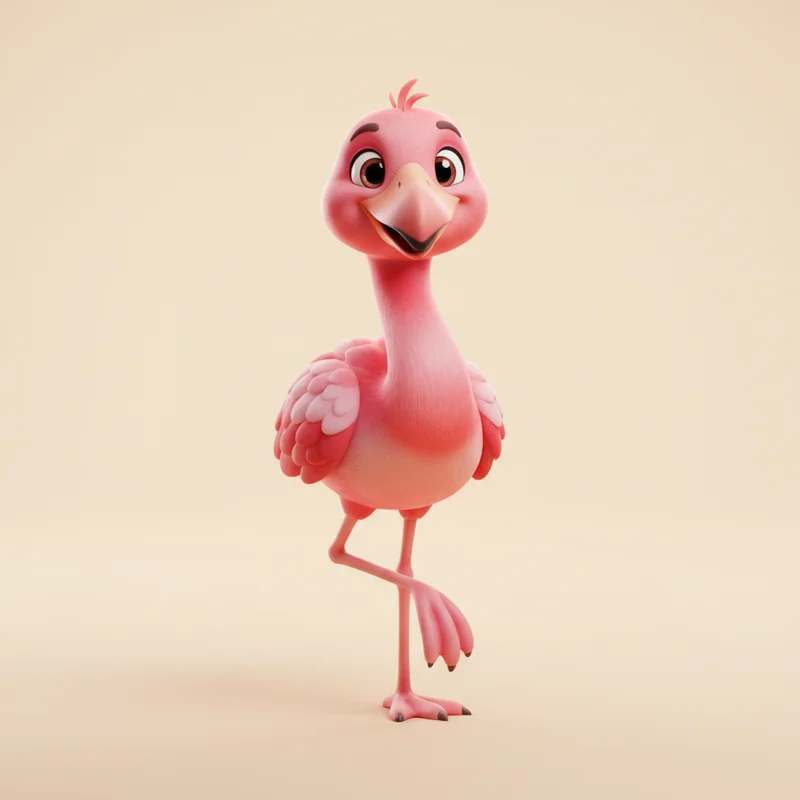
Flamingo

Flamingo

Pink wading bird whose color comes entirely from diet, known for one-legged standing and synchronized displays.

Battle Analysis

Companionship dog Wins
70%
30%
Dog Flamingo

Dog

The domestic dog has evolved an unparalleled capacity for interspecies emotional bonding. Research published in Science demonstrates that mutual gazing between dogs and owners triggers oxytocin release in both parties, a neurochemical response previously documented only in human parent-infant relationships. Dogs recognise their owners' faces, respond to emotional states, and demonstrate distress during separation. They greet returning owners with enthusiasm regardless of absence duration, whether five minutes or five years.

The dog's social intelligence encompasses an estimated 165-word vocabulary comprehension and the ability to follow human pointing gestures, a skill absent in our closest genetic relatives, the great apes. This creature has fundamentally restructured its cognition around human social cues.

Flamingo

The flamingo's relationship with humanity exists primarily at observational distance. Whilst flamingos demonstrate complex social structures within their own species, forming colonies exceeding one million individuals in certain East African lakes, they display minimal interest in cross-species relationships. Flamingos do not fetch, do not come when called, and show no documented instances of greeting behaviour toward human observers.

Attempts at flamingo domestication have proven uniformly unsuccessful. The birds require highly specialised dietary conditions, display stress responses to human proximity, and show a marked preference for the company of other flamingos. Their capacity for human companionship remains, charitably described, theoretical.

VERDICT

Dogs have evolved specifically for human companionship over 15,000 years; flamingos have evolved specifically to ignore humans for 50 million years.
Aesthetic value flamingo Wins
30%
70%
Dog Flamingo

Dog

The domestic dog presents considerable aesthetic variability across its 340-plus recognised breeds. From the elegant lines of the Afghan Hound to the compact muscularity of the French Bulldog, canine aesthetics accommodate virtually any preference. However, this diversity has been achieved through selective breeding that occasionally prioritises appearance over functionality, resulting in breeds with documented respiratory difficulties, joint problems, and shortened lifespans.

The average dog's appearance, whilst endearing to its owner, does not typically prompt strangers to pause in appreciation. Muddy paws, enthusiastic drooling, and the occasional roll in deceased wildlife further complicate the aesthetic proposition.

Flamingo

The flamingo possesses what can only be described as inherent architectural elegance. Its pink plumage, derived from carotenoid pigments in its crustacean diet, presents a colour palette that interior designers have spent decades attempting to replicate. The bird's proportions follow principles that would satisfy classical aestheticians: elongated neck, precisely balanced stance, and improbably thin legs supporting a body of graceful curves.

Flamingos have achieved sufficient aesthetic standing to appear on an estimated 75 million plastic lawn ornaments worldwide. No other bird has been so comprehensively adopted as a decorative motif. The flamingo requires no grooming, emits no unpleasant odours, and maintains its elegance whether feeding, sleeping, or standing on a single leg for reasons science has yet to fully explain.

VERDICT

The flamingo's aesthetic appeal has achieved universal recognition and plastic immortality; dog aesthetics remain subject to individual taste and muddy conditions.
Practical utility dog Wins
70%
30%
Dog Flamingo

Dog

The dog's utility portfolio represents one of nature's most comprehensive service catalogues. Guard duties, herding, hunting, search and rescue, disability assistance, therapeutic intervention, drug detection, and truffle location represent merely the documented applications. Dogs serve in military and police forces across every continent. Guide dogs enable independent mobility for visually impaired individuals. Detection dogs identify cancers with accuracy exceeding medical instrumentation.

The economic value of canine services has been estimated at several billion pounds annually in the United Kingdom alone. This figure excludes the incalculable value of companionship and the documented health benefits of dog ownership, including reduced cardiovascular mortality and improved mental health outcomes.

Flamingo

The flamingo's practical applications remain narrowly circumscribed. The birds serve effectively as indicators of wetland ecosystem health, with their presence signalling appropriate water chemistry and invertebrate populations. Tourist revenue generated by flamingo observation at sites such as Lake Nakuru and the Camargue provides measurable economic benefit to local communities.

Beyond these limited functions, the flamingo offers few practical services. They cannot be trained to perform tasks, show no aptitude for detection work, and their long legs prove unsuitable for herding activities. The flamingo's primary contribution to human endeavour appears to be standing attractively whilst tourists photograph them.

VERDICT

Dogs provide documented services across security, assistance, detection, and therapeutic domains; flamingos provide photographic opportunities.
Cultural significance dog Wins
70%
30%
Dog Flamingo

Dog

The dog's cultural footprint spans the entirety of recorded human history. From Anubis in ancient Egypt to Lassie in twentieth-century television, dogs appear in mythology, literature, and popular culture with unmatched frequency. The phrase 'man's best friend' has achieved idiomatic status across multiple languages. Dogs feature in works ranging from Homer's Odyssey to contemporary social media, where they generate engagement rates exceeding human content creators.

Religious traditions across cultures assign dogs spiritual significance, whether as loyal guardians, psychopomps guiding souls to afterlives, or symbols of fidelity. The dog has achieved narrative ubiquity across human storytelling traditions.

Flamingo

The flamingo occupies a more specialised cultural niche, yet one of considerable intensity. The plastic pink flamingo, introduced in 1957 by Don Featherstone, has become an enduring symbol of American suburban aesthetics, irony, and deliberate kitsch. The bird represents tropical escapism, appearing on countless items from shower curtains to cocktail stirrers to hotel logos.

In more recent decades, the flamingo has achieved millennial icon status, appearing on inflatable pool toys, fashion accessories, and interior design elements. This cultural penetration, whilst impressive, remains largely aesthetic rather than narrative. The flamingo appears in few stories, myths, or religious traditions. It is admired rather than narrated.

VERDICT

Dogs feature in mythology, literature, and narrative traditions spanning 15,000 years; flamingos feature primarily on pool inflatables.
Environmental adaptability dog Wins
70%
30%
Dog Flamingo

Dog

Through selective breeding and inherent behavioural flexibility, the domestic dog has colonised virtually every environment humans inhabit. From Arctic sledge operations to desert nomad camps, from high-altitude Tibetan monasteries to tropical island villages, dogs have demonstrated remarkable adaptive capacity. Their omnivorous diet permits nutritional flexibility, whilst their social nature enables integration into diverse human cultural contexts.

Dogs regulate body temperature through panting, grow appropriate coat densities for local climates, and adjust activity patterns to available resources. The species' range now encompasses every continent, including research stations in Antarctica where dogs historically provided essential transport services.

Flamingo

The flamingo occupies one of Earth's most hostile ecological niches with apparent contentment. These birds thrive in alkaline lakes with pH levels exceeding 10.5, waters so caustic they would strip flesh from most organisms. They filter-feed in conditions that would prove fatal to the majority of avian species, extracting nutrients from environments that appear lifeless to casual observers.

However, this specialisation creates significant geographic constraints. Flamingos require specific wetland conditions and cannot adapt to temperate climates without artificial intervention. They cannot survive in urban environments, domestic settings, or any location lacking appropriate aquatic resources. Their environmental mastery proves simultaneously impressive and limiting.

VERDICT

Dogs inhabit every environment humans occupy; flamingos require highly specific alkaline wetland conditions.
👑

The Winner Is

Dog

58 - 42

The evidence presents a decisive case for canine supremacy across the majority of assessed criteria. The dog's 15,000-year investment in human partnership has yielded returns the flamingo's 50 million years of evolutionary refinement cannot match. In companionship, practical utility, environmental adaptability, and cultural significance, the dog demonstrates clear superiority. The flamingo concedes these categories with characteristic elegance, standing on one leg throughout the proceedings.

Yet the flamingo's singular victory in aesthetic value deserves acknowledgement. No creature has achieved such universal recognition of beauty whilst subsisting on brine shrimp in caustic lakes. The flamingo has transformed itself into a global design motif through sheer visual excellence, a feat no amount of canine loyalty can replicate. The dog may be man's best friend, but the flamingo remains man's favourite decorative inspiration.

Dog
58%
Flamingo
42%

Share this battle

More Comparisons