
Topic Battle

Where Everything Fights Everything

Dog

Dog

Loyal canine companion celebrated for unconditional love, tail wagging, and being humanity's best friend for millennia.

VS
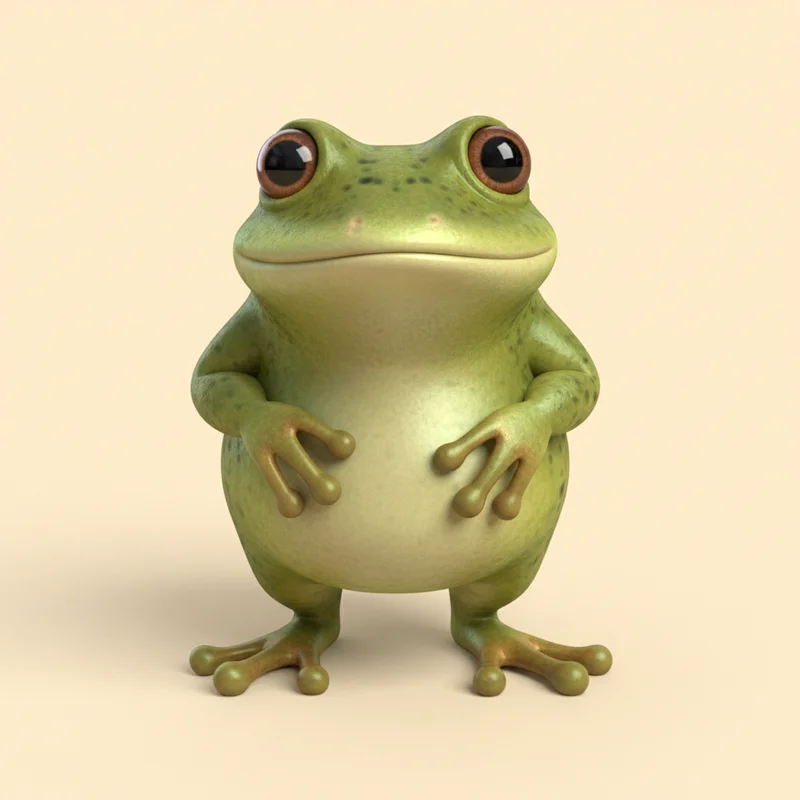
Frog

Frog

Amphibian indicator species with remarkable metamorphosis lifecycle and diverse global distribution.

Battle Analysis

Educational value frog Wins
30%
70%
Dog Frog

Dog

Dogs provide substantial educational opportunities regarding mammalian behaviour, responsibility, and emotional intelligence. Children raised with dogs demonstrate improved empathy scores and reduced allergy rates. The dog teaches consequence through training, patience through care, and mortality through its relatively brief lifespan. However, the dog's educational value centres primarily on social-emotional learning rather than scientific observation. Its biology, whilst fascinating, operates at scales largely invisible to casual observers.

Frog

The frog functions as a complete biological laboratory in miniature. Observers witness metamorphosis - one of nature's most dramatic transformations - in real time. The vivarium demonstrates ecosystem principles: water cycles, predator-prey relationships, and environmental sensitivity. Frogs serve as indicator species, their health reflecting broader environmental conditions. Schools employ frogs in biology curricula precisely because they render invisible processes visible. A single frog lifecycle teaches more tangible biology than years of dog ownership.

VERDICT

Frogs provide direct observation of metamorphosis, ecosystems, and biological processes invisible in mammalian pets.
Emergency utility dog Wins
70%
30%
Dog Frog

Dog

The dog's practical utility extends far beyond companionship into genuine functional service. Dogs detect intruders, with burglary rates 300% lower in households with canine residents. They guide the visually impaired, alert diabetics to blood sugar changes, and detect seizures before onset. Search and rescue dogs locate disaster survivors. Police dogs apprehend criminals. Even the average family pet provides credible deterrence and early warning. The dog is not merely a companion; it is a multi-function biological security system.

Frog

The frog's utility profile presents certain taxonomic limitations. Frogs cannot guard property, guide the blind, or apprehend criminals. They offer no early warning system beyond, perhaps, silence indicating environmental toxicity. No emergency service employs amphibians in operational capacities. The frog's contribution during crisis amounts to continued existence within its enclosure, undisturbed by events affecting the household. In fairness, the frog also creates no emergencies, which might be considered a form of negative utility.

VERDICT

Dogs provide active security, service functions, and emergency response capabilities entirely absent in amphibians.
Maintenance demands frog Wins
30%
70%
Dog Frog

Dog

Canine stewardship constitutes a substantial lifestyle commitment. Daily requirements include feeding (twice), exercise (minimum 30 minutes, breed-dependent), and emotional engagement. Annual costs in the United Kingdom average £1,875, encompassing food, veterinary care, insurance, and accessories. Dogs require outdoor access regardless of weather conditions, cannot be left unattended for extended periods, and generate waste requiring collection. Holiday arrangements demand kennelling or trusted caregivers. The commitment spans 10-15 years on average.

Frog

The frog presents a maintenance profile of remarkable economy. A properly established vivarium requires feeding approximately three times weekly, water changes at similar intervals, and occasional substrate replacement. Annual costs rarely exceed £200 inclusive of electricity, food, and supplies. Frogs require no walking, no outdoor access, and no emotional validation. They may be left unattended for a week with appropriate preparation. The commitment, whilst potentially spanning 15 years for certain species, demands perhaps twenty minutes weekly of active care.

VERDICT

Frogs demand approximately 5% of the time investment and 10% of the financial commitment required by dogs.
Companionship quality dog Wins
70%
30%
Dog Frog

Dog

The canine's capacity for companionship borders on the professionally engineered. Dogs recognise approximately 165 human words on average, with exceptional individuals exceeding 1,000. They demonstrate genuine emotional attunement, modifying behaviour in response to owner mood with documented reliability. The dog offers physical warmth, enthusiastic greetings, and what researchers term secure base effects - the psychological comfort of a consistently available attachment figure. Dogs remember their owners across years of separation. They mourn absence and celebrate return.

Frog

The frog's approach to companionship might charitably be described as minimalist. Amphibians demonstrate no evidence of recognising individual humans, responding instead to generalised movement patterns associated with feeding schedules. The frog cannot be trained, petted, or meaningfully interacted with beyond visual observation. It offers no greeting upon owner return, no awareness of human emotional states, and no apparent distinction between its keeper and any other large warm-blooded organism. The relationship, such as it exists, flows exclusively in one direction.

VERDICT

Dogs provide genuine bidirectional emotional bonds; frogs offer aesthetic value without reciprocal attachment.
Environmental adaptability frog Wins
30%
70%
Dog Frog

Dog

The domestic dog has evolved alongside human civilisation with remarkable geographic flexibility. Breeds exist for arctic conditions, desert climates, and everything between. Dogs adapt to flats, houses, farms, and estates. However, they remain dependent on human infrastructure: they cannot survive independently in modern urban environments, require temperature regulation, and face legal restrictions in many rental properties. An estimated 43% of UK landlords prohibit dogs outright.

Frog

Frogs occupy an interesting position of contained self-sufficiency. Within their terrarium, they require specific humidity, temperature, and lighting conditions - parameters demanding careful management. Yet once established, the system operates with minimal intervention. Frogs face no tenancy restrictions, no breed-specific legislation, and no public access limitations. The amphibian travels poorly but requires no travel: its entire world exists within forty litres of carefully maintained ecosystem. This constraint, paradoxically, grants remarkable flexibility to the owner.

VERDICT

Frogs face no housing restrictions and require no accommodation from landlords, employers, or public spaces.
👑

The Winner Is

Dog

62 - 38

The comparative analysis reveals what intuition perhaps suggested: the dog and frog occupy fundamentally incomparable ecological niches in human life. The dog excels in categories requiring interaction, reciprocity, and active contribution to household function. The frog prevails in dimensions valuing minimal intrusion, observational interest, and economic efficiency.

Yet the margin of canine victory in companionship and utility proves decisive beyond mere numerical advantage. The dog addresses fundamental human needs for emotional connection, security, and reciprocal relationship in ways the frog cannot conceptually approach. The frog offers a window into natural processes; the dog offers partnership in daily existence. This distinction, whilst obvious upon reflection, deserves explicit acknowledgement in the final assessment.

Dog
62%
Frog
38%

Share this battle

More Comparisons