
Topic Battle

Where Everything Fights Everything

Dog

Dog

Loyal canine companion celebrated for unconditional love, tail wagging, and being humanity's best friend for millennia.

VS
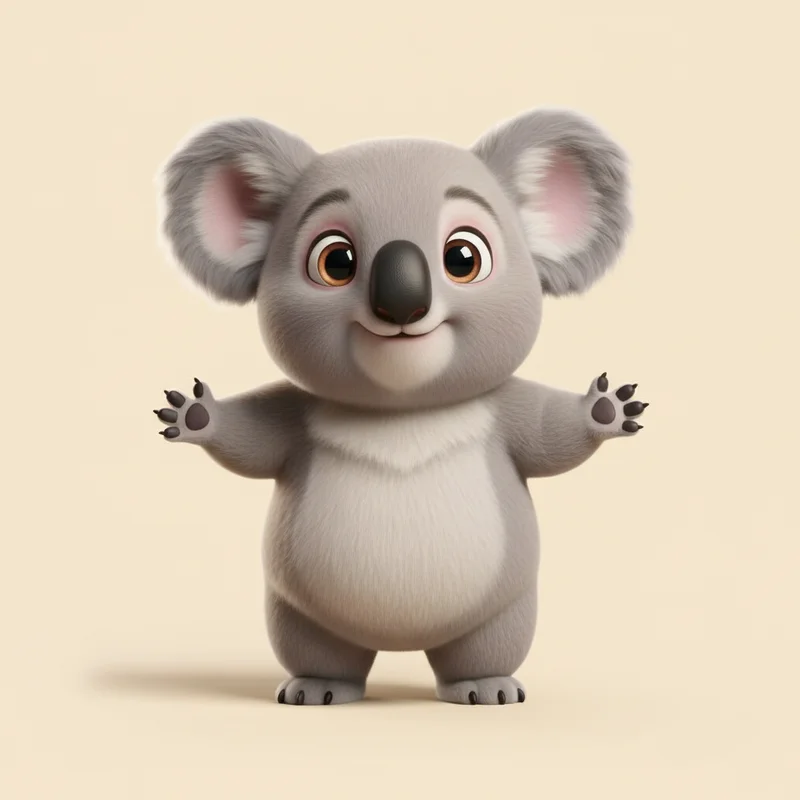
Koala

Koala

Australian marsupial spending 22 hours daily sleeping in eucalyptus trees while looking perpetually cuddly.

Battle Analysis

Cultural impact dog Wins
70%
30%
Dog Koala

Dog

The dog has embedded itself within human culture to an unparalleled degree. It appears in mythology spanning Anubis to Cerberus, in literature from White Fang to Marley and Me, and in contemporary media commanding Instagram followings exceeding 10 million. Dogs feature in religious texts, legal frameworks, and political discourse. The phrase 'man's best friend' has been in circulation since at least 1789. The dog has achieved cultural permanence few species can claim.

Koala

The koala occupies a distinctive but narrower cultural niche. It serves as an unofficial emblem of Australia, appearing on currency, tourism materials, and Qantas aircraft. The koala generates approximately 2.3 billion social media engagements annually, driven primarily by images of koalas appearing confused, sleepy, or slightly damp. Its cultural role centres on being adorable rather than meaningful. The koala is famous for being cute; the dog is famous for everything.

VERDICT

Dogs permeate global culture across mythology, literature, and daily life; koalas serve primarily as cute Australian mascots.
Practical utility dog Wins
70%
30%
Dog Koala

Dog

The domestic dog has developed an extraordinary portfolio of practical applications. Beyond basic companionship, dogs serve as guide animals for the visually impaired, detection specialists for explosives and narcotics, search-and-rescue operatives, and therapeutic assistants. The global working dog industry contributes an estimated £12.4 billion annually to various economies. A single detection dog can screen 500 parcels per hour, outperforming mechanical alternatives by considerable margins. The dog has made itself genuinely useful.

Koala

The koala's contribution to practical human enterprise remains somewhat limited by any objective measure. Its primary function appears to be sitting in eucalyptus trees and looking vaguely disgruntled. Tourism represents the koala's sole economic contribution, generating approximately £1.1 billion annually for the Australian economy through wildlife experiences. The koala cannot fetch, guard, herd, detect, or assist. It can, however, sleep for up to 22 hours daily, a skill of questionable practical application.

VERDICT

Dogs provide measurable economic and practical value across dozens of professional applications; koalas primarily generate tourism revenue through existing.
Conservation status koala Wins
30%
70%
Dog Koala

Dog

The domestic dog faces no conservation concerns whatsoever. With a global population approaching one billion and projected growth, the species enjoys a security unknown to most mammals. Dogs benefit from active human investment in their survival, including dedicated medical care, breeding programmes, and legal protections. The dog has achieved the ultimate evolutionary victory: convincing another species to ensure its perpetual survival and comfort. Extinction risk: negligible.

Koala

The koala was officially listed as 'Endangered' across much of its range in 2022. Population declines of 28-53% over three generations have been documented, driven by habitat destruction, disease (particularly chlamydia, affecting up to 90% of some populations), vehicle strikes, and bushfires. The 2019-2020 Australian fires killed an estimated 30,000 koalas. Conservation efforts require significant resources, and the species' specialised requirements complicate rewilding initiatives. The koala's future remains genuinely uncertain.

VERDICT

The koala's endangered status generates greater conservation importance and cultural significance; dogs require no protection measures.
Emotional intelligence dog Wins
70%
30%
Dog Koala

Dog

Decades of research confirm the dog's remarkable capacity for emotional attunement. Studies published in Current Biology demonstrate dogs can differentiate between human emotional expressions and respond appropriately. They exhibit separation anxiety, jealousy, and demonstrable affection. The canine gaze triggers oxytocin release in human observers at rates comparable to human infant-parent bonding. Dogs have evolved specifically to read human faces, developing unique eyebrow muscles absent in wolves that facilitate expressive communication.

Koala

The koala's emotional repertoire has been described by researchers as 'remarkably constrained'. Brain mass constitutes merely 0.2% of body weight, among the lowest ratios of any mammal. This cerebral economy appears to preclude complex emotional processing. Koalas show no recognition of human emotional states, demonstrate no attachment behaviours toward specific individuals, and respond to threats primarily through immobility. Their facial expression remains constant regardless of circumstances, a look best described as 'vaguely perplexed bewilderment'.

VERDICT

Dogs demonstrate sophisticated emotional intelligence and human attunement; koalas possess insufficient neural architecture for complex emotional processing.
Environmental adaptability dog Wins
70%
30%
Dog Koala

Dog

The domestic dog has colonised every continent except Antarctica, adapting to environments ranging from Arctic tundra to equatorial jungles. Selective breeding has produced breeds suited to specific climates: the thick-coated Husky for frozen landscapes, the hairless Xoloitzcuintli for tropical regions. Dogs thrive in urban apartments, rural farms, nomadic camps, and space stations. Their dietary flexibility encompasses commercial kibble, raw meat, and, when necessary, whatever they find in bins. The dog goes where humans go.

Koala

The koala has staked its entire evolutionary strategy on a single, highly specific ecological niche. It requires eucalyptus trees, which grow exclusively in Australia and limited cultivation zones. Its digestive system has evolved to process eucalyptus leaves, a food source so nutritionally poor and toxic that virtually no other mammal will touch it. Climate change, bushfires, and habitat loss pose existential threats precisely because the koala cannot adapt. It has no Plan B.

VERDICT

Dogs thrive across all inhabited continents and climates; koalas require a single tree species in a single geographical region.
👑

The Winner Is

Dog

62 - 38

This investigation reveals what naturalists have long suspected: the domestic dog represents one of evolution's most successful partnership strategies. By aligning its survival with human interests, the dog has achieved global distribution, population security, and cultural integration that the koala, despite its considerable charm, simply cannot match.

The koala's victory in conservation status, whilst noteworthy, reflects vulnerability rather than strength. Its specialised adaptations, once advantageous, now threaten its survival in a rapidly changing world. The dog's generalised capabilities have proven infinitely more robust across evolutionary timescales.

Dog
62%
Koala
38%

Share this battle

More Comparisons