
Topic Battle

Where Everything Fights Everything

Dog

Dog

Loyal canine companion celebrated for unconditional love, tail wagging, and being humanity's best friend for millennia.

VS
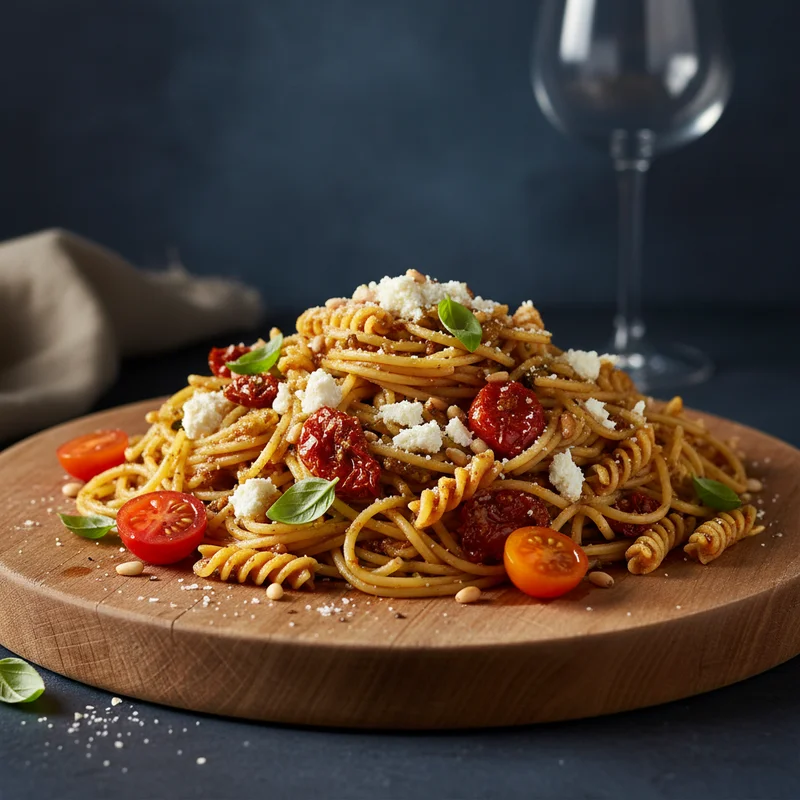
Pasta

Pasta

Italian staple in hundreds of shapes, each supposedly for different sauces.

The Matchup

In the hierarchy of human comforts, two champions have emerged through millennia of evolutionary refinement and culinary innovation. 471 million dogs currently share living quarters with humans worldwide, whilst pasta consumption reaches approximately 14.5 million tonnes annually. Both promise solace after difficult days. Both have inspired devotion bordering on the religious. Yet these comfort providers operate through mechanisms so fundamentally different that comparing them requires the suspension of conventional categorical thinking.

The domestic dog, Canis lupus familiaris, represents 15,000 years of selective breeding that transformed apex predators into creatures genuinely distressed by their owner's unhappiness. Pasta, by contrast, represents 4,000 years of grain processing that transformed wheat into approximately 350 distinct shapes, each apparently essential despite serving identical nutritional purposes. One responds to its name. The other responds to boiling water. The philosophical implications are considerable.

Battle Analysis

Long term value Dog Wins
70%
30%
Dog Pasta

Dog

The average dog provides ten to thirteen years of companionship, during which it develops what owners consistently describe as a unique personality. Research demonstrates that long-term dog ownership correlates with reduced cardiovascular disease risk, lower rates of depression, and that controversial finding from Swedish longitudinal studies: a 33 percent reduction in all-cause mortality for solitary individuals.

The investment required is substantial. Lifetime costs range from $20,000 to $55,000 depending on breed, health, and the owner's susceptibility to premium treat marketing.

Pasta

Individual pasta purchases provide value measured in single meals. A kilogram of quality dried pasta costs approximately $3-8 and serves six to eight portions. The immediate satisfaction-to-cost ratio represents one of the most efficient comfort acquisitions available in modern commerce.

However, pasta accumulates no loyalty, remembers no shared experiences, and cannot greet its consumer at the door after a long journey. Its value exists entirely in the moment of consumption, after which it contributes only to the washing-up.

VERDICT

Pasta provides excellent value per meal. Dogs provide value that compounds across years into something pasta cannot approximate.

Preparation complexity Pasta Wins
30%
70%
Dog Pasta

Dog

Dogs arrive pre-assembled but require ongoing operational maintenance. The initial acquisition involves selection decisions of considerable complexity, vetting processes that rival adoption agencies for thoroughness, and a commitment ceremony involving microchipping and registration. Thereafter, the dog requires daily feeding, regular exercise, periodic veterinary intervention, and the management of a social calendar that includes interactions with other dogs and their exhausting owners.

The time investment totals approximately two to three hours daily for walks, feeding, and the dignified retrieval of faecal matter from public spaces.

Pasta

Pasta requires procurement, storage, and the application of precisely timed thermal energy. Dried pasta demands only a pantry shelf. The cooking process follows a sequence of admirable simplicity: boil water, add pasta, wait eight to twelve minutes, drain. The entire operation, from cabinet to consumption, need not exceed fifteen minutes.

Fresh pasta complicates matters with flour, eggs, and equipment that pasta enthusiasts describe as essential whilst their partners describe as clutter. Nevertheless, even artisanal preparation occupies less time than a single dog walk.

VERDICT

A dog demands hours of daily attention that cannot be postponed. Pasta demands fifteen minutes and permits cancellation without guilt.

Emotional responsiveness Dog Wins
70%
30%
Dog Pasta

Dog

The domestic dog has evolved what researchers term hyper-social cognition. Studies from the Family Dog Project in Budapest demonstrate that dogs can distinguish between human emotional expressions with accuracy exceeding 80 percent. They respond to tears with comfort-seeking behaviour. They respond to laughter with participatory enthusiasm. They have learned, through selective pressure applied over countless generations, to read humans better than humans read themselves.

This responsiveness operates continuously. A dog does not require emotional preparation time. It does not need to be heated to optimal temperature. It maintains its empathic capacity twenty-four hours daily, including at 3 AM when existential despair strikes most efficiently.

Pasta

Pasta offers what culinary anthropologists describe as consistent thermal comfort. A bowl of properly prepared spaghetti delivers approximately 220 calories per serving, triggering serotonin production through carbohydrate-mediated tryptophan uptake. The warmth radiates through the hands holding the bowl. The act of consumption provides rhythmic oral activity that psychology identifies as inherently soothing.

However, pasta cannot detect human emotional states. A carbonara responds identically to joy and grief. A penne arrabiata maintains its spiciness regardless of whether its consumer requires heat or gentle blandness. Pasta is, in therapeutic terms, magnificently indifferent to the human condition.

VERDICT

Pasta provides comfort through chemistry. Dogs provide comfort through genuine apparent concern. The difference matters profoundly when one has received difficult news.

Versatility of application Dog Wins
70%
30%
Dog Pasta

Dog

Dogs serve functions that span the entire range of human activity. Security, through territorial behaviour and alarming dentition. Exercise motivation, through requirements that cannot be ignored. Social facilitation, through the documented phenomenon whereby dog owners receive three times more spontaneous social approaches than the dog-free. Emotional regulation, through mechanisms that pharmaceutical companies have failed to replicate.

Working breeds extend this versatility into professional domains: herding, detection, assistance, therapy, and the location of humans trapped beneath avalanches or rubble.

Pasta

Pasta accommodates every culinary tradition on Earth. Italian preparations range from the austere simplicity of cacio e pepe to the baroque complexity of lasagne. Asian adaptations include stir-fried noodles, cold sesame preparations, and soup vehicles of extraordinary diversity. Pasta serves as main course, side dish, soup component, salad base, and in certain regrettable instances, dessert.

The 350-plus shapes available each claim specific sauce-holding properties, though blind tests consistently fail to confirm that rigatoni appreciably outperforms penne in any measurable dimension.

VERDICT

Pasta adapts to cuisines. Dogs adapt to lives. The scope of versatility differs categorically.

Reliability of satisfaction Pasta Wins
30%
70%
Dog Pasta

Dog

Dogs offer variable quality experiences dependent on factors beyond owner control. Temperament varies by individual. Health fluctuates unpredictably. Behavioural challenges emerge despite best training efforts. The same dog that provided delightful companionship on Tuesday may on Wednesday consume furniture, terrorise postal workers, or develop inexplicable nocturnal anxiety requiring midnight intervention.

Satisfaction surveys nonetheless indicate that 94 percent of dog owners consider their animals sources of happiness, despite or perhaps because of this unpredictability.

Pasta

Properly cooked pasta delivers consistent results with minimal variance. The same recipe executed with identical ingredients produces outcomes of reliable quality. This reproducibility allows humans to anticipate satisfaction with a precision that dog ownership cannot match. The carbonara will taste like carbonara. The comfort will arrive on schedule.

Failure modes exist but are largely user-generated: overcooking produces mush, undercooking produces dental resistance, and undersalting produces existential disappointment.

VERDICT

Dogs provide higher peaks but also lower valleys. Pasta provides consistent moderate satisfaction without behavioural surprises.

👑

The Winner Is

Dog

58 - 42

This analysis reveals the fundamental distinction between consumable comfort and companion comfort. Pasta wins on preparation simplicity and reliability, categories where its inanimate nature eliminates variables that plague living relationships. Dogs claim victory in emotional responsiveness, versatility, and long-term value, domains where their capacity for genuine interaction proves irreplaceable.

The 58-42 margin reflects a recognition that whilst pasta serves immediate physical comfort with admirable efficiency, dogs serve a broader human need that carbohydrates cannot address. One fills the stomach. The other fills the home.

The optimal life, naturally, includes both. The dog that greets you at the door and the pasta waiting in the pantry represent complementary rather than competing comforts, each serving distinct requirements in the complex architecture of human contentment.

Dog
58%
Pasta
42%

Share this battle

More Comparisons