
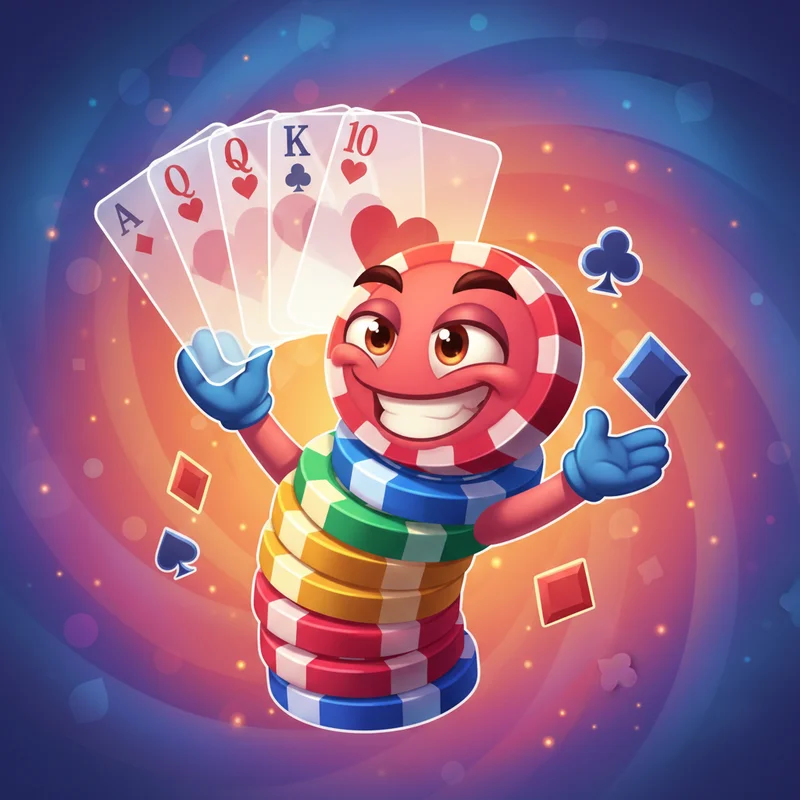
Topic Battle

Where Everything Fights Everything

Dog

Dog

Loyal canine companion celebrated for unconditional love, tail wagging, and being humanity's best friend for millennia.

VS
Poker

Poker

Card game of skill, luck, and psychological warfare.

The Matchup

In the grand theatre of human pursuits, two entities have mastered the art of reading intention. 471 million dogs worldwide have evolved specifically to interpret human behaviour, whilst 100 million poker players globally dedicate themselves to the identical task for rather different purposes. Both require patience, both reward careful observation, and both can empty your wallet with remarkable efficiency.

The domestic dog represents 15,000 years of selective breeding for human compatibility. Poker represents approximately 200 years of refined psychological warfare disguised as recreation. One greets you with unconditional enthusiasm regardless of your decisions. The other punishes poor decisions with immediate financial consequence. Yet both, ultimately, are games of reading tells and managing expectations.

Battle Analysis

Life lessons Poker Wins
30%
70%
Dog Poker

Dog

Dogs teach what philosophers might term the practice of presence. They exist entirely in the current moment, demonstrating neither regret for past mistakes nor anxiety about future uncertainties. Living with a dog provides daily exposure to this mode of being, a counterpoint to the human tendency toward rumination and anticipation.

Dogs also teach unconditional commitment. They do not calculate whether their owner's current behaviour justifies continued loyalty. This modelling of unwavering dedication regardless of circumstance offers humans a template for relationship behaviour that many struggle to achieve independently.

Poker

Poker teaches the brutal mathematics of consequence. Every decision receives immediate feedback in the form of chips won or lost. The game demonstrates with painful clarity that intentions do not determine outcomes, that good decisions can produce bad results through variance, and that bad decisions will eventually be punished by probability regardless of short-term luck.

Most valuable is poker's instruction in accepting responsibility. Blaming bad luck for losses, while emotionally satisfying, prevents improvement. Successful players learn to analyse their decisions rather than their outcomes, a cognitive discipline applicable to every domain of human activity.

VERDICT

Dogs teach presence and loyalty through passive example. Poker teaches probability and accountability through active, costly feedback that enforces learning.

Financial impact Dog Wins
70%
30%
Dog Poker

Dog

Dog ownership represents a predictable financial commitment with known parameters. The ASPCA estimates annual costs between $1,500 and $4,500, covering food, veterinary care, grooming, and the inevitable replacement of items destroyed during teething or boredom. These costs are substantial but foreseeable, allowing for budget planning and informed decision-making.

Critically, dog ownership costs do not increase based on poor decisions by the owner. A badly trained dog may be more expensive through behavioural consequences, but the financial downside is capped. One cannot lose one's house to a particularly stubborn Labrador.

Poker

Poker's financial profile defies simple characterisation. Skilled players can generate positive expected value, turning recreational activity into income stream. The top one percent of professionals earn seven-figure annual incomes through tournament winnings and cash game profits. Poker represents one of the few games where human skill can consistently overcome house advantage.

However, the distribution of poker outcomes resembles a power law catastrophe. For every professional success story, thousands of players have funded their education through losses. Gambling addiction affects an estimated 2-3 percent of poker players, with life-destroying consequences that extend far beyond the felt. The variance inherent to the game means that even skilled players experience devastating downswings that can last months.

VERDICT

Dogs cost money reliably and predictably. Poker costs money unpredictably and occasionally devastatingly, with theoretical profit potential that most players never achieve.

Stress reduction Dog Wins
70%
30%
Dog Poker

Dog

The physiological effects of canine interaction have been documented with scientific precision. Petting a dog for fifteen minutes produces measurable decreases in cortisol and blood pressure whilst elevating oxytocin and serotonin levels. The mechanism is so reliable that hospitals, universities, and corporations have institutionalised therapy dog programmes specifically to exploit this biochemical response.

Dogs provide what researchers term non-judgmental presence. They do not evaluate human performance, critique decision-making, or remember yesterday's failures. This unconditional acceptance creates a psychological refuge from the assessment-heavy nature of modern existence.

Poker

Poker's relationship with stress operates on an entirely different principle. The game generates substantial stress through its mechanism of risk-reward uncertainty, then rewards players who learn to function effectively within that stress. This is not relaxation; it is stress inoculation training disguised as entertainment.

Regular players report that external stressors feel more manageable after extensive poker experience. Having survived the psychological pressure of pushing significant sums into a pot on a bluff, everyday anxieties appear proportionally smaller. However, this benefit assumes the player can actually afford their losses, a condition that poker's variance frequently violates.

VERDICT

Dogs reliably reduce stress through biological mechanisms that operate automatically. Poker may eventually reduce stress, but first it generates enormous quantities of new stress to practise on.

Skill development Poker Wins
30%
70%
Dog Poker

Dog

Dog ownership develops what psychologists term emotional attunement competencies. Owners learn to interpret non-verbal communication with increasing sophistication, reading the subtle differences between a tail wag indicating joy versus one signalling anxiety. Research from the University of Helsinki demonstrates that experienced dog owners can accurately interpret canine emotional states with 88 percent accuracy, a skill that transfers to improved human interaction.

Training a dog requires patience, consistency, and the ability to provide feedback without verbal explanation. These skills, studies indicate, correlate with improved parenting outcomes and management capabilities. The dog serves as a practice organism for relationship skills applicable across species.

Poker

Poker develops what professional players describe as systematic decision-making under uncertainty. The game demands probability calculation, risk assessment, and the ability to make optimal choices with incomplete information, precisely the conditions under which most consequential human decisions occur. Studies from Yale's cognitive science department indicate that experienced poker players demonstrate superior decision-making in high-stakes business scenarios.

Beyond mathematics, poker cultivates emotional regulation. The ability to absorb losses without visible reaction, to maintain consistent behaviour regardless of hand quality, trains a form of psychological resilience applicable far beyond the card table. Professional players report that poker discipline improves their performance in negotiations, interviews, and crisis management.

VERDICT

Dogs develop emotional intelligence instinctively. Poker develops it deliberately and measurably, with immediate feedback on every miscalculation.

Social connectivity Dog Wins
70%
30%
Dog Poker

Dog

The domestic dog functions as what sociologists term a social catalyst. Research published in PLOS ONE demonstrates that dog owners engage in four times more conversations with strangers than non-owners. Dog parks operate as community hubs where adults who would otherwise have no reason to interact discover common ground through their animals' social preferences.

Dogs also facilitate the maintenance of existing relationships. Couples who acquire dogs together report increased cooperative behaviour and shared activity. The dog creates obligations that must be negotiated, schedules that must be coordinated, and experiences that generate shared memories.

Poker

Poker creates social bonds through the particular intimacy of mutual financial risk. Regular home games establish communities that meet weekly for decades, relationships cemented by shared history around the felt. Professional circuits develop their own social ecosystems, with friendships forged in the particular pressure cooker of tournament competition.

However, poker also strains relationships. The game requires deception as a core mechanic. Players must lie to friends, bluff family members, and extract money from companions with enthusiasm. Studies indicate that approximately 17 percent of regular players report relationship difficulties attributed to their poker involvement, either through financial losses or the psychological distance that strategic deception creates.

VERDICT

Dogs create connections without complication. Poker creates connections whilst simultaneously teaching participants to deceive everyone they meet.

👑

The Winner Is

Dog

55 - 45

This comparison reveals a contest between two entities that have mastered the art of occupying human attention, though through entirely different mechanisms. Dogs offer unconditional companionship, the biological warmth of another consciousness that has evolved specifically to value human presence. Poker offers conditional mastery, the intellectual challenge of a system that rewards study and punishes carelessness with equal precision.

The 55-45 margin in favour of the dog reflects a fundamental asymmetry in risk profile. Dogs deliver their benefits with remarkable consistency; their companionship does not depend on variance, luck, or the behaviour of other players. Poker's benefits, while potentially greater for the skilled minority, come bundled with risks that can spiral beyond control. Most humans are not equipped to manage poker's psychological demands sustainably.

Where poker offers the possibility of mastery, the dog offers the certainty of presence. In a world abundant with uncertainty, that certainty carries considerable weight.

Dog
55%
Poker
45%

Share this battle

More Comparisons