
Topic Battle

Where Everything Fights Everything

Dog

Dog

Loyal canine companion celebrated for unconditional love, tail wagging, and being humanity's best friend for millennia.

VS
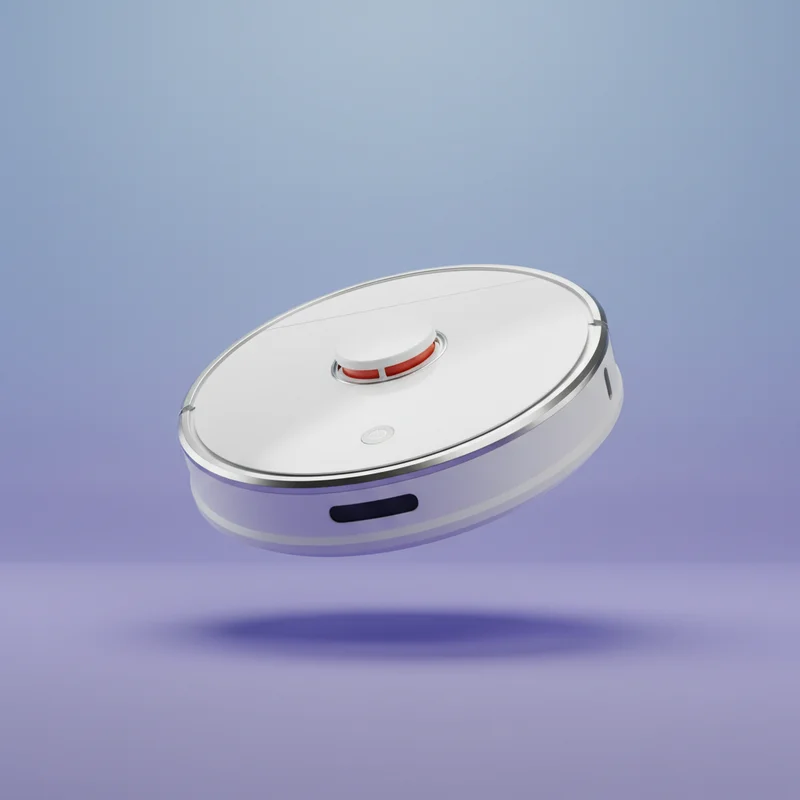
Robot Vacuum

Robot Vacuum

Autonomous cleaning device that terrorizes pets and gets stuck under furniture.

The Matchup

In the modern household, an ancient alliance meets silicon disruption. 471 million domestic dogs currently occupy human homes worldwide, whilst the robot vacuum market has grown to $4.3 billion annually, with devices methodically traversing floors in systematic patterns their canine cohabitants find deeply suspicious. Both claim dominion over the domestic floor space. Both fundamentally alter the texture of household life. Yet they approach their duties through mechanisms separated by approximately 15,000 years of evolutionary divergence.

The domestic dog offers loyalty forged through millennia of co-evolution, a partnership so successful that dogs have developed unique musculature specifically for communicating with humans through facial expressions. The robot vacuum offers LiDAR navigation and app-based scheduling, innovations that have existed for approximately two decades. One responds to its name with enthusiasm. The other responds to voice commands with the efficiency of a machine that has never experienced joy or disappointment.

Battle Analysis

Home security contribution Dog Wins
70%
30%
Dog Robot Vacuum

Dog

Dogs have served as home security systems since humans first constructed homes worth securing. The average dog can detect approaching visitors three to five minutes before doorbell activation, providing early warning through vocalisations that researchers classify as threat-proportionate alerting. Larger breeds present physical deterrence that security surveys indicate reduces burglary risk by up to 300 percent.

The psychological impact extends beyond mere detection. Intruders surveyed in prison studies consistently report that barking dogs represent their primary concern when selecting targets. A dog's presence signals unpredictability, potential physical confrontation, and certain noise that attracts neighbourhood attention.

Robot Vacuum

The robot vacuum provides no intentional security function whatsoever. It cannot distinguish between household members and intruders. It will clean around a burglar's feet with the same dedication it applies to family members. Its response to home invasion is continued floor maintenance.

However, some owners report that the unexpected activation of a robot vacuum in a dark room has startled delivery personnel and visitors to the point of elevated heart rate. This inadvertent psychological disruption provides security benefits its manufacturers never intended and would likely discourage consumers from relying upon.

VERDICT

Dogs provide millennia-proven security services. Robot vacuums provide floor cleaning that happens to occasionally startle pizza delivery drivers.

Floor maintenance capability Robot Vacuum Wins
30%
70%
Dog Robot Vacuum

Dog

The domestic dog's relationship with floor cleanliness exists in a state of profound contradiction. Dogs deposit approximately 50 to 100 grams of fur daily on household surfaces, depending on breed and season. They transport outdoor debris indoors with the enthusiasm of archaeologists sharing discoveries. Muddy paws create abstract expressionist works across hardwood and carpet alike.

However, dogs also provide biological waste disposal services of remarkable efficiency. Dropped food never reaches the floor long enough to require cleaning. Crumbs cease to exist within milliseconds of their creation. This selective cleaning approach, whilst not comprehensive, addresses the specific category of mess that humans find most objectionable: evidence of their own culinary carelessness.

Robot Vacuum

The robot vacuum approaches floor maintenance with methodical comprehensiveness unknown to biological entities. Modern units employ simultaneous localisation and mapping algorithms to ensure complete coverage of navigable floor space. They operate on schedules, returning to charging docks with the reliability of astronomical phenomena. No emotional state affects their performance. No squirrel sighting outside the window interrupts their mission.

Yet these devices face limitations their marketing materials diplomatically omit. Stairs represent existential boundaries. Cables become entanglement hazards. The robot vacuum that encounters a fresh biological deposit from an inadequately housetrained puppy will, with algorithmic dedication, distribute that deposit across every accessible surface in the home before its owner returns from work.

VERDICT

Despite dogs' efficient crumb elimination, robot vacuums provide net positive floor cleanliness. Dogs, by contrast, create more mess than they resolve.

Emotional companionship value Dog Wins
70%
30%
Dog Robot Vacuum

Dog

The domestic dog represents evolution's most successful companionship experiment. Research from multiple institutions confirms that dog interaction triggers oxytocin release in human brains, the same neurochemical associated with maternal bonding and romantic attachment. Dogs provide what psychologists term unconditional positive regard, a form of acceptance that human relationships rarely achieve and therapists charge considerable fees to approximate.

Dogs respond to human emotion with behavioural modifications that suggest genuine empathy. They position themselves closer during periods of owner distress. They modify their activity levels to match household energy. A study published in Animal Cognition demonstrated that dogs will abandon food rewards to comfort their distressed owners, a sacrifice that reveals remarkable prioritisation of relationship over personal benefit.

Robot Vacuum

The robot vacuum provides no emotional companionship in any meaningful sense. It does not recognise its owner. It cannot distinguish between a child's cry for help and normal household noise. It will bump into furniture with the same dedication whether its owner has received wonderful news or terrible diagnosis.

Some owners report developing anthropomorphic attachment to their robot vacuums, naming them and expressing concern when they become stuck beneath furniture. This says considerably more about human psychology than about robot vacuum capabilities. The device itself remains profoundly indifferent to whether it is beloved or merely tolerated.

VERDICT

Dogs offer bidirectional emotional relationships supported by neurochemistry. Robot vacuums offer surfaces free of debris, which some humans mistake for love.

Household integration harmony Dog Wins
70%
30%
Dog Robot Vacuum

Dog

Dogs integrate into households as full family members, with all the complexity that membership implies. They develop relationships with each household inhabitant, often displaying preference hierarchies that create interpersonal dynamics requiring management. They establish territories, routines, and behavioural patterns that shape how households function at fundamental levels.

This integration extends to other household technology. Dogs and robot vacuums share floor space with varying degrees of success. Approximately 47 percent of dog owners with robot vacuums report their dogs have learned to ignore the devices, whilst the remainder describe ongoing campaigns of barking, stalking, or attempts at physical intervention that researchers classify as territory defence behaviour.

Robot Vacuum

Robot vacuums integrate into households as automated appliances, occupying the same conceptual category as dishwashers and washing machines. They require no introduction to existing family members. They create no interpersonal dynamics. They simply activate on schedule, perform designated functions, and return to their charging stations without demanding acknowledgment or appreciation.

This integration simplicity carries corresponding limitations. Robot vacuums cannot participate in family activities. They cannot greet returning family members. They cannot provide the sense of household animation that dogs create through their mere presence, the feeling that a home contains life rather than merely furniture.

VERDICT

Dogs transform houses into homes through active participation in family life. Robot vacuums transform dusty floors into clean floors. The scope differs considerably.

Maintenance burden assessment Robot Vacuum Wins
30%
70%
Dog Robot Vacuum

Dog

Dog ownership constitutes a comprehensive life commitment. The ASPCA estimates annual costs between $1,500 and $4,500, encompassing veterinary care, nutrition, grooming, training, and the endless replacement of items destroyed through enthusiastic chewing. Time requirements prove equally demanding: walks regardless of weather, feeding schedules that cannot accommodate human spontaneity, and attention needs that intensify precisely when owner energy reaches its nadir.

Dogs require physical presence. They cannot be left for weekends whilst owners travel. They demand daily interaction that cannot be postponed, rescheduled, or delegated to algorithms. The maintenance burden is, in purely practical terms, extraordinarily substantial.

Robot Vacuum

The robot vacuum requests remarkably little from its owner. Periodic dustbin emptying, occasional brush cleaning, and the removal of obstacles from floor space constitute its complete maintenance portfolio. Modern units empty their own dustbins into larger receptacles, reducing human interaction to monthly rather than daily frequencies. They charge themselves, schedule themselves, and require no emotional investment whatsoever.

When a robot vacuum malfunctions, replacement occurs without grief. No veterinary emergency protocols activate. No household mourning period commences. The transaction is simple: device fails, device is replaced, floor cleaning resumes.

VERDICT

Robot vacuums demand fractional attention compared to dogs. The mathematics of maintenance clearly favour silicon over biology.

👑

The Winner Is

Dog

58 - 42

This analysis reveals competitors operating in fundamentally different categories of household contribution. The robot vacuum excels at task-specific efficiency, delivering measurable floor cleanliness with minimal owner investment. The dog provides relationship-based benefits that extend far beyond any single household function, whilst simultaneously creating the very messes the robot vacuum exists to address.

The 58-42 scoring reflects a nuanced reality. Robot vacuums win decisively on floor maintenance and maintenance burden, categories where their inanimate nature provides genuine advantages. Dogs claim broader victories across security, companionship, and household integration, domains where biological partnership proves irreplaceable despite its considerable demands.

The mathematically optimal household may indeed contain both: the dog that provides security, companionship, and the joy of interspecies friendship, and the robot vacuum that addresses the fur-related consequences of that friendship with algorithmic dedication.

Dog
58%
Robot Vacuum
42%

Share this battle

More Comparisons