
Topic Battle

Where Everything Fights Everything

Dog

Dog

Loyal canine companion celebrated for unconditional love, tail wagging, and being humanity's best friend for millennia.

VS
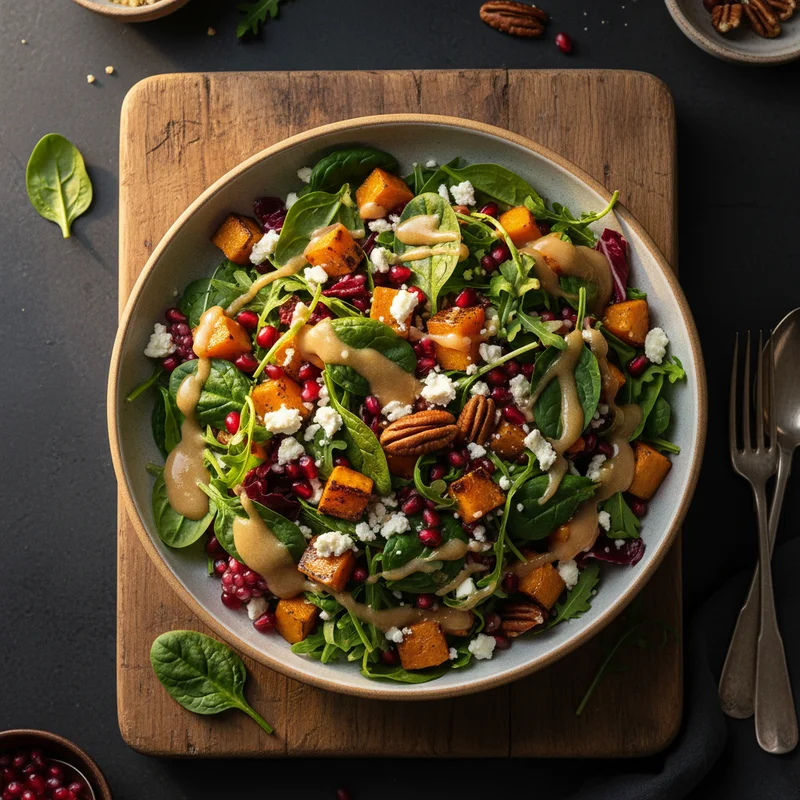
Salad

Salad

Vegetable arrangement that becomes a meal when you add enough toppings.

The Matchup

In the grand taxonomy of things humans claim to love, few pairings seem more absurd than the domestic dog and the leafy salad. 471 million dogs share homes with human families worldwide, whilst approximately 367 million tonnes of salad vegetables are consumed annually. Both are frequently photographed, posted to social media, and declared essential to wellbeing. Yet one will greet you at the door with unbridled enthusiasm after a five-minute absence. The other will wilt reproachfully in the crisper drawer.

The dog, Canis lupus familiaris, represents 15,000 years of deliberate selective breeding designed to create the ultimate human companion. The salad represents several thousand years of humans reluctantly accepting that they should probably eat something green occasionally. One is a warm-blooded mammal capable of forming genuine emotional bonds. The other is technically still alive when you eat it, a fact that vegetarians find reassuring and everyone else finds mildly unsettling.

Battle Analysis

Social enhancement Dog Wins
70%
30%
Dog Salad

Dog

Dogs function as involuntary social catalysts. Research published in PLOS ONE demonstrates that dog owners receive four to five times more social interactions with strangers than non-dog-owners. Dog parks serve as community gathering spaces where humans who share nothing except species and pet ownership find common conversational ground. The dog provides an excuse to approach strangers that social convention would otherwise prohibit.

Furthermore, dogs serve as what sociologists call social credentials. Dog ownership signals reliability, capacity for commitment, and a willingness to prioritise another being's needs. Dating app analyses indicate that profiles featuring dogs receive significantly higher engagement than those without, a phenomenon researchers attribute to perceived warmth rather than actual dog quality.

Salad

Salad offers minimal social enhancement in isolation. Announcing that you had a salad for lunch generates responses ranging from polite indifference to barely concealed concern about your wellbeing. Salad is not a conversation starter. It is, at best, a conversation continuer when the previous topic has exhausted itself.

However, salad plays a role in social dining. Offering to bring salad to a gathering demonstrates minimal effort combined with plausible contribution. The salad-bringer has technically participated without bearing responsibility for dishes that might fail. This strategy has been successfully employed at potluck events for generations.

VERDICT

Dogs create spontaneous human connections. Salad creates spontaneous questions about whether you are feeling quite alright.

Long term life impact Dog Wins
70%
30%
Dog Salad

Dog

Dog ownership correlates with profound long-term health benefits. A comprehensive Swedish study tracking 3.4 million participants over twelve years found dog ownership associated with a 33 percent reduction in mortality risk for individuals living alone. The mechanisms include enforced physical activity through mandatory walks, reduced blood pressure through companionship-induced stress reduction, and the establishment of daily routines that impose structure on otherwise formless human existence.

Beyond physical health, dogs provide what psychologists term purpose and meaning. The responsibility of caring for a dependent being creates a reason to continue functioning even when depression or isolation might otherwise permit withdrawal. A dog needs walking whether you feel like walking or not.

Salad

Regular salad consumption contributes to reduced disease risk across multiple categories. The Mediterranean diet, which features salads prominently, correlates with reduced cardiovascular disease, type 2 diabetes, and certain cancers. However, these benefits derive from cumulative dietary patterns rather than salad specifically, and can be achieved through other vegetable consumption methods.

Salad cannot provide purpose. It cannot require your presence. It cannot make you feel needed. The wilted remains of uneaten salad may, in fact, contribute to ambient guilt rather than wellbeing, serving as a refrigerated reminder of aspirations unfulfilled.

VERDICT

Dogs reduce mortality risk by making life worth living. Salad reduces mortality risk by providing vitamins. One addresses existence itself; the other addresses nutrient deficiency.

Emotional availability Dog Wins
70%
30%
Dog Salad

Dog

The domestic dog has evolved to become, in scientific terms, an emotional support apparatus of unprecedented sophistication. Research from the University of Vienna demonstrates that dogs can distinguish between happy and angry human facial expressions with accuracy exceeding 80 percent. They respond to detected distress by increasing physical proximity, offering what behavioural scientists describe as unsolicited comfort behaviour.

Dogs produce oxytocin when gazing at their owners, and remarkably, trigger reciprocal oxytocin release in those same owners. This bidirectional hormonal response has been documented only in the dog-human bond and the parent-infant bond. Your dog is, neurochemically speaking, as significant as your offspring.

Salad

Salad provides no emotional availability whatsoever. It cannot detect your mood, respond to your presence, or distinguish between your best and worst days. A salad observed you crying into your pillow at three in the morning with the same bland indifference it observes everything else, which is to say, it observes nothing, being fundamentally incapable of observation.

Some individuals report feeling virtuous after consuming salad, a sensation researchers attribute to cultural conditioning rather than any property of the salad itself. The lettuce does not care whether you eat it or leave it to decompose. It has no preference because it has no consciousness. This is simultaneously its greatest limitation and its most honest quality.

VERDICT

Dogs offer genuine emotional reciprocity. Salads offer fibre. These are not equivalent contributions to human psychological wellbeing.

Maintenance complexity Salad Wins
30%
70%
Dog Salad

Dog

Dog ownership constitutes what economists describe as a significant ongoing resource commitment. Annual costs range from $1,500 to $9,000 depending on breed, health status, and owner standards. Beyond financial outlay, dogs require two to three daily walks totalling 30 to 120 minutes, regular veterinary care, grooming appropriate to coat type, training to prevent antisocial behaviour, and attention that cannot be postponed regardless of human scheduling preferences.

Dogs also impose spatial requirements. They need territory. They produce waste requiring disposal. They shed fur, track mud, and occasionally destroy furniture through mechanisms they clearly believe constitute reasonable behaviour. A dog cannot be switched off when inconvenient.

Salad

Salad maintenance consists primarily of refrigeration and timely consumption. Leafy greens require storage between 1 and 4 degrees Celsius and should be consumed within five to seven days of purchase. Preparation involves washing, which takes approximately ninety seconds, and assembly, which takes approximately two minutes. Total daily time investment: under five minutes.

However, salad's simplicity carries its own burden. Neglected salad becomes a cautionary tale of brown edges and suspicious liquid pooling at the container's base. The guilt of discarding decomposed vegetables exceeds their original nutritional value, creating what psychologists term produce drawer shame.

VERDICT

Salad requires minutes of attention. Dogs require hours of commitment daily for a lifespan of ten to fifteen years. Simplicity has objective value.

Nutritional contribution Salad Wins
30%
70%
Dog Salad

Dog

Dogs provide no nutritional value to their owners in conventional Western contexts. They are, calorically speaking, a net negative, consuming approximately 340 to 1,800 calories daily depending on breed size whilst contributing none to the human diet. The dog food industry represents a $50 billion annual market dedicated entirely to ensuring dogs remain fed rather than feeding anyone else.

Some historical and contemporary cultures have consumed dog meat, a practice that generates significant controversy and falls well outside mainstream Western dietary norms. For the purposes of this analysis, dogs are classified as nutritional dependents rather than nutritional resources.

Salad

Salad excels at delivering essential micronutrients with minimal caloric burden. A typical mixed green salad provides vitamins A, C, K, and folate, alongside minerals including iron, calcium, and potassium. The fibre content supports digestive health, whilst the high water content contributes to hydration. Epidemiological studies consistently associate regular salad consumption with reduced cardiovascular risk and improved weight management.

However, these benefits depend entirely upon what else accompanies the greens. The addition of creamy dressings, bacon bits, croutons, and cheese can transform a nutritional asset into what dietitians diplomatically term a delivery mechanism for saturated fat.

VERDICT

Salad provides measurable nutritional benefits. Dogs provide measurable nutritional expenses. In this narrow domain, vegetation prevails.

👑

The Winner Is

Dog

62 - 38

This analysis reveals what should have been obvious from the outset: comparing a sentient companion animal to a collection of leafy vegetables is an exercise in categorical absurdity. Yet the exercise proves instructive. Salad wins convincingly on nutritional contribution and maintenance simplicity, domains where its vegetable nature represents genuine advantages. Dogs triumph in emotional availability, social enhancement, and long-term life impact, domains where consciousness and companionship prove irreplaceable.

The 62-38 margin reflects the fundamental asymmetry between the competitors. Salad does one thing well: provide nutrients without excessive calories. Dogs do many things, not all of them well, including destroying footwear, producing unfortunate odours, and demanding attention at inconvenient moments, but they do the important things, being present, caring, and compelling their owners to participate in life, in ways that vegetables cannot approximate.

The optimal life almost certainly includes both. The dog that drags you from bed each morning and the salad that attempts to counteract the consequences of everything else you consume. Together, they address different dimensions of human need. Separately, only one can look at you with unconditional love. The other cannot look at all.

Dog
62%
Salad
38%

Share this battle

More Comparisons