
Topic Battle

Where Everything Fights Everything

Dog

Dog

Loyal canine companion celebrated for unconditional love, tail wagging, and being humanity's best friend for millennia.

VS
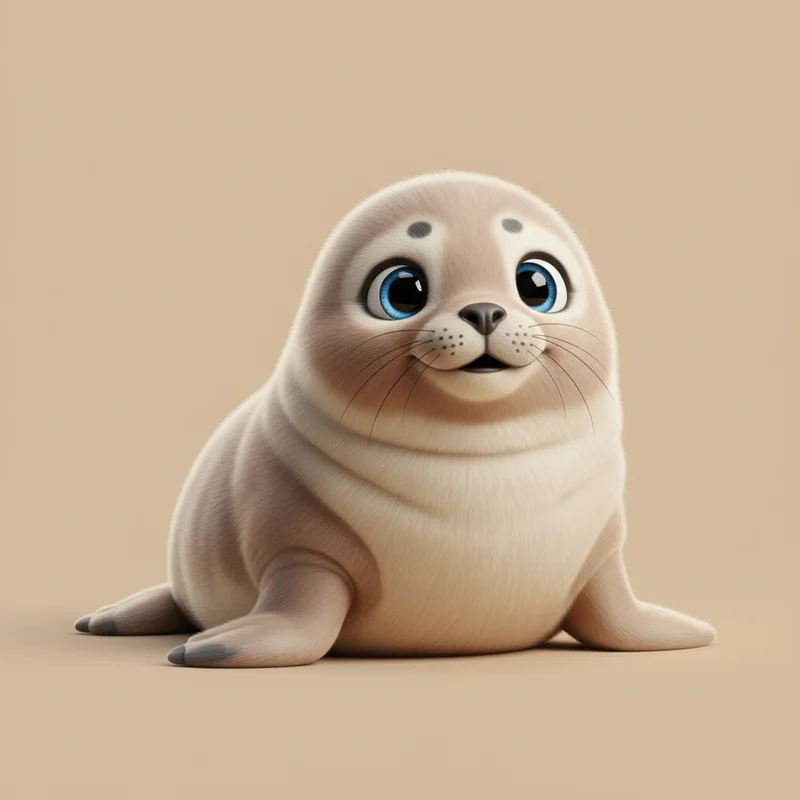
Seal

Seal

Flippered marine mammal equally comfortable on land and sea, known for barking and balancing balls.

The Matchup

In the grand theatre of mammalian evolution, few family reunions would prove more awkward than that between the domestic dog and the common seal. These creatures share a common ancestor from the Miacidae family, carnivorous mammals that roamed the Earth 50 million years ago. Yet somewhere in the Eocene epoch, their paths diverged catastrophically. One lineage looked at the ocean and thought, 'that seems reasonable.' The other stayed on land and eventually learned to fetch slippers.

Today, 471 million dogs occupy human homes worldwide, having successfully convinced an entire species to provide them with shelter, nutrition, and orthopaedic beds. Meanwhile, approximately 40 million pinnipeds continue their ancestors' aquatic experiment, spending their days consuming up to 5% of their body weight in fish and barking at things from rocks. The question of which evolutionary strategy proved superior is not merely academic. It speaks to fundamental choices about adaptability, companionship, and whether growing flippers was really worth abandoning the possibility of belly rubs.

Battle Analysis

Adaptability Dog Wins
70%
30%
Dog Seal

Dog

The domestic dog represents what biologists term an evolutionary masterpiece of flexibility. From the 4-kilogram Chihuahua trembling in a handbag to the 90-kilogram English Mastiff requiring its own postcode, dogs have demonstrated morphological plasticity unmatched in mammalian history. Over 15,000 years of selective breeding, they have developed into more than 340 recognised breeds, each optimised for specific human requirements: herding, guarding, hunting, or simply existing as a 'lap dog' despite weighing considerably more than the available lap.

Dogs thrive in environments ranging from Arctic tundra to Arabian desert. They have accompanied humans to altitudes exceeding 5,000 metres and serve in roles from bomb detection to diabetes monitoring. Their dietary flexibility extends from premium grain-free kibble to whatever fell on the kitchen floor three seconds ago.

Seal

Seals have achieved what engineers call environmental optimisation with characteristic biological single-mindedness. Their bodies represent 25 million years of refinement for a single purpose: being extremely good at swimming whilst remaining technically a mammal. Their flippers, converted from what were once perfectly serviceable legs, provide propulsion exceeding 35 kilometres per hour underwater. Their blubber layer, comprising up to 50% of body mass in some species, permits survival in waters that would kill an unprotected human in minutes.

This optimisation, however, comes at the cost of terrestrial dignity. On land, seals move via what scientists clinically describe as 'galumphing,' a form of locomotion that combines the grace of a filled sandbag with the efficiency of a deflating balloon. They have committed fully to the ocean, and the ocean is not always convenient.

VERDICT

Dogs adapted to serve human needs across all environments. Seals adapted to serve fish-catching needs in one environment. Versatility claims victory over specialisation.

Aquatic capability Seal Wins
30%
70%
Dog Seal

Dog

Dogs can swim. This represents the fullest extent of positive statements possible regarding canine aquatic ability. Most dogs paddle using what hydrodynamic researchers generously term the inefficient quadrupedal surface stroke, a technique that generates forward movement whilst keeping the head elevated in an expression of barely concealed concern. Certain breeds, such as the Labrador Retriever and Portuguese Water Dog, have developed webbed feet and water-resistant coats, allowing them to retrieve objects from water without appearing to question every life choice that led to this moment.

However, dogs are fundamentally terrestrial creatures operating in an alien medium. Their maximum swimming speed rarely exceeds 5 kilometres per hour. Extended immersion leads to fatigue, hypothermia, and the sort of wet-dog smell that persists despite industrial cleaning efforts.

Seal

Seals exist in water with the casual competence of creatures who made a 25-million-year commitment to the medium. Their fusiform bodies reduce drag to levels that engineering teams study for submarine design. Their oxygen-conserving physiology permits dives exceeding 600 metres in elephant seals, depths at which humans would be crushed into a biological inconvenience. Their hunting technique involves three-dimensional manoeuvring that exploits every advantage their streamlined form provides.

In water, seals achieve predatory perfection. They can adjust their buoyancy with precision, execute turns that would disorient their prey, and consume fish underwater without swallowing seawater. This is their environment. This is where evolution intended them to be.

VERDICT

Dogs paddle with admirable determination. Seals operate in water with absolute mastery. This criterion was never seriously competitive.

Social intelligence Dog Wins
70%
30%
Dog Seal

Dog

Research from Eotvos Lorand University has established that dogs possess social cognitive abilities rivalling those of human toddlers. They understand pointing gestures, follow human eye gaze, and demonstrate what appears to be genuine empathy during human distress. Dogs can learn over 250 words, understand concepts like 'fetch the blue ball, not the red one,' and somehow always know when you're about to take them to the veterinarian.

This social intelligence evolved specifically through cohabitation with humans. Dogs learned to read human facial expressions, interpret human tone of voice, and produce the precise whimpering sound that makes refusing them a treat feel like a war crime.

Seal

Seals possess social structures that scientists describe as pragmatically hierarchical. Bull elephant seals maintain harems through a combination of aggressive vocalisation and physical combat that leaves participants with significant facial scarring. Females congregate in colonies not for companionship but for predator dilution, a strategy wherein being surrounded by others reduces individual predation risk. The emotional depth of these relationships remains, charitably, limited.

However, seals demonstrate remarkable intelligence in hunting contexts. They can track prey using vibrations detected through their whiskers, navigate using Earth's magnetic field, and hold their breath for up to two hours in pursuit of fish. This intelligence, whilst impressive, has not translated into an ability to understand human pointing gestures or look guilty after eating something they shouldn't have.

VERDICT

Dogs evolved to understand human social cues with remarkable precision. Seals evolved to understand fish. For purposes of cross-species cooperation, this represents a significant disparity.

Survival efficiency Dog Wins
70%
30%
Dog Seal

Dog

The domestic dog has achieved what evolutionary biologists recognise as peak parasitic optimisation. By forming symbiotic relationships with humans, dogs have eliminated the need to hunt, find shelter, or make any decisions whatsoever about their own survival. The global dog population has increased from approximately 400 million in 1990 to nearly half a billion today, a growth rate achieved without dogs developing any new survival skills beyond 'being endearing.'

In return for basic obedience and companionship, dogs receive climate-controlled housing, veterinary care that exceeds the healthcare available to much of humanity, and food that arrives in bowls at predictable intervals. From an evolutionary standpoint, this arrangement represents extraordinary efficiency.

Seal

Seals must work for their survival with what can only be described as relentless aquatic diligence. A harbour seal consumes between 4 and 6 kilograms of fish daily, requiring hours of hunting in frigid waters while avoiding predators including orcas, great white sharks, and polar bears. Their hauling-out behaviour, while necessary for thermoregulation and rest, exposes them to terrestrial threats they can barely outrun.

The energy expenditure required for seal survival is substantial. Maintaining body temperature in sub-zero waters demands constant caloric intake. Breeding colonies involve aggressive competition that frequently results in injury. Life expectancy in the wild averages 25-30 years for those who survive the 75% infant mortality rate. This is not, by any measure, an easy existence.

VERDICT

Dogs convinced another species to handle their survival requirements entirely. Seals must catch their own dinner whilst avoiding being dinner themselves. The scoreboard favours outsourcing.

Human value contribution Dog Wins
70%
30%
Dog Seal

Dog

The value dogs provide to human society defies simple quantification. Service dogs guide the blind, detect seizures before they occur, and provide therapeutic intervention for PTSD sufferers. Police dogs locate explosives, narcotics, and missing persons. Herding dogs manage livestock across terrain that would defeat human shepherds. And ordinary pet dogs provide cardiovascular benefits, mental health improvements, and the sort of unconditional positive regard that therapists spend careers trying to replicate.

The global pet dog industry exceeds $100 billion annually, supporting manufacturers, veterinarians, groomers, trainers, and the emerging sector of dog influencer management. Dogs have integrated themselves into human economic and emotional infrastructure so thoroughly that their removal would constitute a civilisational disruption.

Seal

Seals contribute to human welfare primarily through ecosystem services that most humans never consciously appreciate. They regulate fish populations, provide nutrients to coastal environments through their waste, and support ecotourism industries that generate billions in revenue. Seal watching in locations from San Diego to the Scottish Highlands draws visitors willing to pay for the privilege of observing animals that remain entirely indifferent to their presence.

Historically, seals provided indigenous communities with food, oil, and materials for clothing and tools. This utility diminished with industrialisation, though limited sustainable harvesting continues in some regions. Modern human-seal interaction primarily involves conservation efforts, marine research, and the occasional viral video of a seal slapping a kayaker with an octopus.

VERDICT

Dogs actively participate in human society across hundreds of functional roles. Seals participate in human society primarily by existing photogenically at a distance.

👑

The Winner Is

Dog

55 - 45

This analysis reveals a competition between divergent evolutionary strategies, each successful within its chosen domain. The dog pursued symbiotic integration with humanity's dominant species, trading independence for security and wild hunting prowess for the ability to look appropriately ashamed after eating a shoe. The seal pursued environmental mastery, sacrificing terrestrial competence for aquatic excellence and the ability to hold its breath longer than any yoga instructor.

The 55-45 scoreline reflects genuine respect for both approaches. Dogs claim victory in adaptability, social intelligence, survival efficiency, and human value contribution, four criteria that reward their choice to align with human civilisation. Seals claim decisive victory in aquatic capability, the one domain where their specialisation proves unassailable, and remain competitive through their ecological importance and genuine evolutionary impressiveness.

The margin acknowledges that dog success depends entirely on human success. Should human civilisation falter, dogs would face immediate existential crisis whilst seals would continue catching fish, blissfully unaware that anything had changed on land.

Dog
55%
Seal
45%

Share this battle

More Comparisons