
Topic Battle

Where Everything Fights Everything

Dog

Dog

Loyal canine companion celebrated for unconditional love, tail wagging, and being humanity's best friend for millennia.

VS
Solar Panel

Solar Panel

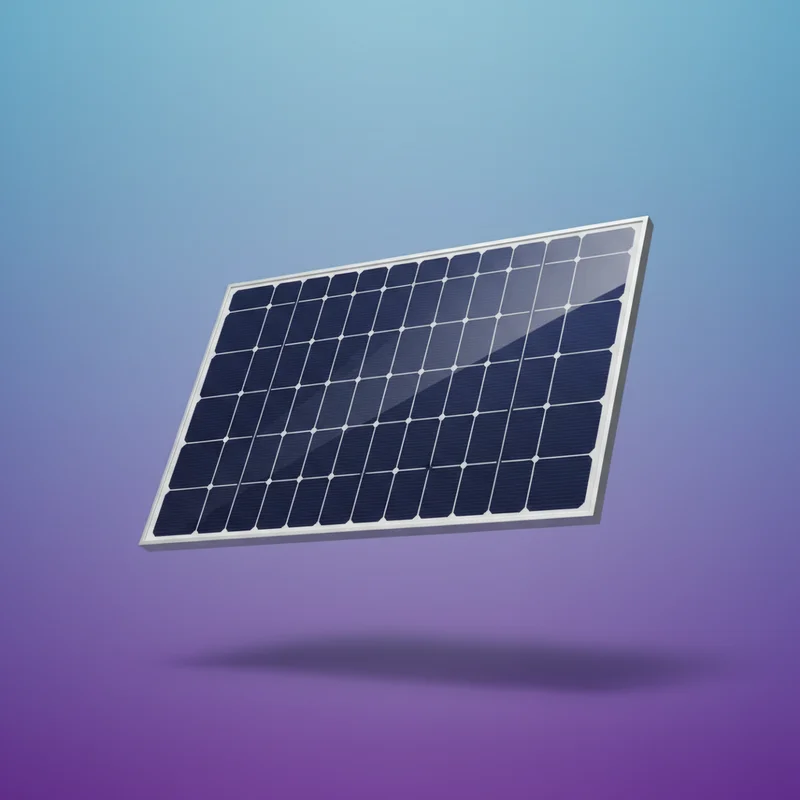
Photovoltaic technology harvesting the sun's energy.

The Matchup

The modern homeowner faces investment decisions of unprecedented complexity. Among these, two options stand in peculiar opposition: the domestic dog, a companion species refined through 15,000 years of selective breeding, and the photovoltaic solar panel, a technology that converts stellar radiation into usable electricity at efficiencies approaching 22 percent. Both represent significant capital outlays. Both promise returns spanning decades. Yet their operational methodologies could not be more different.

The global solar panel market exceeds $200 billion annually, whilst expenditure on pet dogs approaches similar figures when veterinary care, nutrition, and the mysterious economy of squeaky toys are factored into calculations. Both industries benefit from fierce brand loyalty and claims of transformative household improvement. One operates silently on rooftops, converting photons into electrons through semiconductor physics. The other operates noisily at ankle level, converting household resources into tail-wagging demonstrations of evolutionary success.

Battle Analysis

Household security Dog Wins
70%
30%
Dog Solar Panel

Dog

The domestic dog served security functions for millennia before electronic alternatives existed. Even small dogs provide auditory deterrence through barking that studies indicate deters 34 percent of potential intruders before entry attempts occur. Larger breeds offer physical deterrence that home insurance actuaries factor into premium calculations.

Dogs patrol perimeters, investigate disturbances, and alert to anomalies with a vigilance no electronic system matches. They do not require passwords, suffer no software vulnerabilities, and cannot be defeated by cutting power cables. Their security contribution operates 24 hours daily, including periods when their owners believe them to be sleeping.

Solar Panel

Solar panels contribute to household security primarily through economic resilience. Homes with solar installations reduce dependence on external energy infrastructure, maintaining function during grid failures that leave neighbours in darkness. Battery-paired systems can operate essential services for days without external power.

However, solar panels cannot bark at suspicious individuals. They cannot investigate strange sounds. They present no deterrent to anyone who does not fear renewable energy on principle. Their security contribution is entirely passive and economic rather than physical.

VERDICT

A dog will position itself between its owner and perceived threats. A solar panel will continue generating electricity with complete neutrality regardless of who enters the property.

Energy contribution Solar Panel Wins
30%
70%
Dog Solar Panel

Dog

The domestic dog represents what thermodynamicists classify as a net energy consumer. A medium-sized dog requires approximately 1,000 calories daily, energy that must be procured, transported, and dispensed according to schedules the dog itself determines non-negotiable. The production of commercial dog food generates carbon emissions equivalent to 64 million tonnes annually worldwide, a figure that solar advocates cite with some frequency.

Dogs do generate heat, approximately 100 watts when at rest, though this thermal output proves difficult to harness for practical applications and tends to relocate itself to furniture where it is least needed.

Solar Panel

A standard residential solar array generates between 250 and 400 watts per panel, with typical installations comprising 15 to 25 panels. Over a 25-year operational lifespan, a single panel produces approximately 10,000 kilowatt-hours of electricity, sufficient to power a refrigerator continuously for a decade or charge a smartphone 900,000 times. The mathematics are unambiguous.

Solar panels require no feeding, no walking, and no negotiation regarding acceptable sleeping locations. They simply perform their photovoltaic function with the quiet efficiency of technology that lacks opinions about dinner timing.

VERDICT

The solar panel's capacity to generate rather than consume energy represents an advantage so categorical that dogs cannot contest it through any amount of enthusiasm.

Maintenance complexity Solar Panel Wins
30%
70%
Dog Solar Panel

Dog

Dogs require comprehensive biological support infrastructure. Veterinary interventions averaging $400 to $2,000 annually. Nutritional provision calculated to the gram. Exercise regimens that operate regardless of weather conditions or the owner's preference for remaining horizontal. Grooming schedules. Training programmes. The procurement of toys engineered to withstand exactly 72 hours of determined assault.

Beyond financial costs, dogs demand temporal investment. The ASPCA estimates owners spend two to three hours daily on dog-related activities, time that compounds across a typical 10 to 13 year canine lifespan into months of dedicated service.

Solar Panel

Solar panel maintenance approaches the philosophical ideal of minimal intervention. Annual cleaning, ideally performed by rain. Inverter inspection every few years. Occasional professional assessment. Total maintenance time across a 25-year lifespan rarely exceeds 40 hours, equivalent to a single long weekend of dog ownership.

Solar panels do not develop separation anxiety. They do not require boarding during holidays. They cannot be trained poorly by well-meaning but inconsistent owners. They simply remain on rooftops, converting sunlight into savings with mechanical reliability.

VERDICT

Solar panels demand attention measured in hours per decade. Dogs demand attention measured in hours per day. The differential is approximately three orders of magnitude.

Long term financial return Solar Panel Wins
30%
70%
Dog Solar Panel

Dog

Dogs represent what accountants classify as a depreciating asset with ongoing operational costs. Lifetime expenses for dog ownership range from $15,000 to $45,000 depending on breed, health conditions, and owner susceptibility to premium treats. Dogs generate no income, appreciate in no financial sense, and provide tax benefits only in narrow circumstances involving certified service animal status.

Economic analysis reveals dogs as investments with guaranteed negative monetary returns. Their value proposition exists entirely outside financial metrics, in territories accountants struggle to audit.

Solar Panel

Solar installations typically achieve payback periods between 6 and 10 years, after which they generate free electricity for the remaining 15 to 19 years of their warranted lifespan. A $20,000 installation commonly returns $40,000 to $80,000 in lifetime electricity savings, representing annual returns exceeding most conservative investment portfolios.

Additional value accrues through increased property values, with studies indicating homes with solar installations command 4.1 percent premiums in resale markets. The financial case is documented, replicable, and defensible to the most sceptical accountant.

VERDICT

Solar panels return investment and generate profit. Dogs return affection and generate veterinary bills. Financial analysis favours photovoltaics by margins too wide for sentiment to bridge.

Emotional return on investment Dog Wins
70%
30%
Dog Solar Panel

Dog

Dogs deliver what economists struggle to quantify: unconditional positive regard manifested through tail velocity, proximity-seeking behaviour, and vocalisations of greeting that suggest the owner's return from a five-minute bin expedition constitutes the most significant event since the domestication of fire. Research from the Human-Animal Bond Research Institute indicates that 74 percent of pet owners report mental health improvements attributed to their animals.

The hormone oxytocin, associated with bonding and trust, increases in both humans and dogs during positive interactions. This bidirectional chemical response creates measurable neurological benefits that financial instruments cannot replicate regardless of their yield.

Solar Panel

Solar panels provide emotional satisfaction of a distinctly different character. The homeowner experiences what researchers term virtuous consumption pleasure, the gratification derived from environmental responsibility visibly mounted upon one's roof. Watching electricity meters run backwards generates documented satisfaction among panel owners, though studies suggest this excitement diminishes after the first billing cycle.

Solar panels cannot detect human mood states. They offer identical performance whether their owner has received a promotion or a parking ticket. Their emotional contribution remains stable precisely because it is entirely absent.

VERDICT

A dog notices when you return home. A solar panel continues harvesting photons with complete indifference to your presence or absence.

👑

The Winner Is

Dog

55 - 45

This analysis reveals a competition between entities that optimise for fundamentally different outcomes. Solar panels excel in categories where quantifiable returns determine victory: energy production, maintenance simplicity, and financial performance. Dogs claim superiority in domains where qualitative experience matters: emotional support, active security, and the ineffable benefits of companionship that economic models struggle to capture.

The 55-45 margin favouring dogs reflects a philosophical position that household investments serve purposes beyond balance sheet optimisation. Solar panels will reduce electricity bills with mathematical certainty. Dogs will greet their owners at the door with enthusiasm that defies mathematical modelling entirely. Both represent legitimate household improvements. Only one will notice if you fail to come home.

The optimal household may indeed accommodate both: the solar panels that quietly convert sunlight into savings, and the dog that loudly converts that savings into premium kibble whilst providing returns no photovoltaic cell can generate.

Dog
55%
Solar Panel
45%

Share this battle

More Comparisons