
Dog
The domestic dog provides zero direct nutritional value to its owner under standard Western ethical frameworks. Indeed, the relationship operates in reverse: the dog represents a net consumer of resources, requiring approximately 340 to 1,200 kilocalories daily depending upon size and activity level. In economic terms, the dog functions as a nutritional liability rather than an asset.
Indirectly, dogs may contribute to owner nutrition by enforcing physical activity that improves metabolic function and appetite regulation. However, this secondary effect cannot compensate for the fundamental reality that dogs consume food rather than providing it.
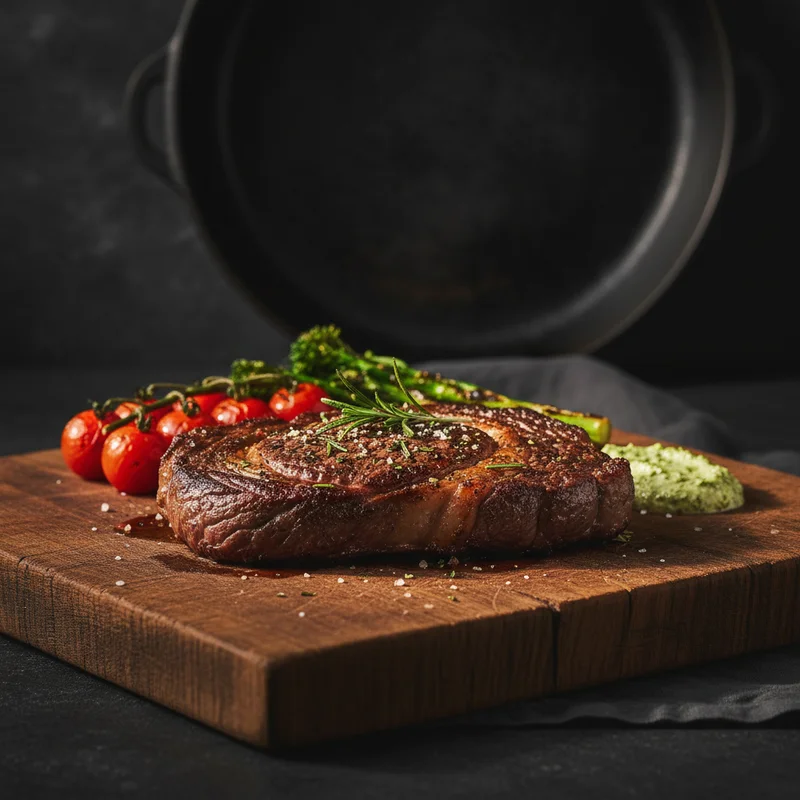
Steak
A standard 225-gram ribeye delivers approximately 580 kilocalories, including 46 grams of protein essential for muscle maintenance and cellular repair. The steak provides complete protein containing all nine essential amino acids, along with bioavailable iron, zinc, and vitamin B12. From a purely nutritional standpoint, steak represents one of humanity's most efficient methods for obtaining critical micronutrients.
The Maillard reaction that occurs during proper preparation creates compounds that trigger profound neurological reward responses, ensuring that this nutritional delivery mechanism also functions as a source of significant pleasure. Evolution has, in this instance, aligned necessity with desire.
VERDICT
On the criterion of nutritional provision, the steak's victory is absolute and unchallengeable. One cannot sustain human life through affection alone, however enthusiastically delivered by wagging tails.