
Topic Battle

Where Everything Fights Everything

Dog

Dog

Loyal canine companion celebrated for unconditional love, tail wagging, and being humanity's best friend for millennia.

VS
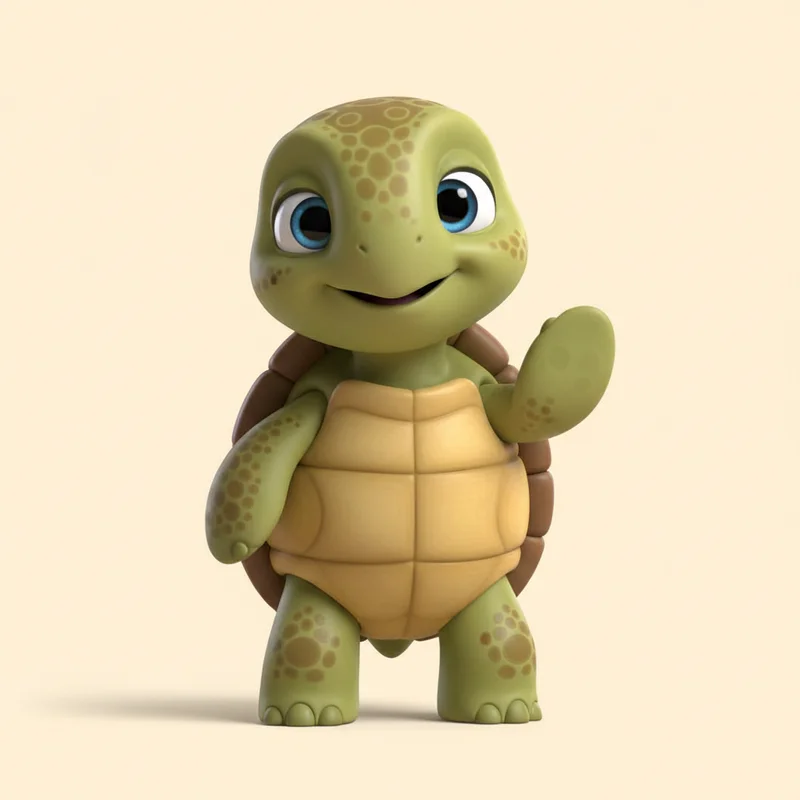
Turtle

Turtle

Shelled reptile living at deliberately slow pace, with some species surviving over 100 years.

Battle Analysis

Adaptability turtle Wins
30%
70%
Dog Turtle

Dog

Despite millennia of domestication, dogs retain significant contextual limitations. Most rental properties restrict or prohibit canine residents. International travel requires vaccination records, health certificates, and considerable expense. Dogs cannot accompany owners to workplaces, restaurants, or most public venues. Certain breeds face outright bans in various jurisdictions. The dog's adaptability, whilst impressive within familiar settings, encounters frequent institutional barriers that complicate modern lifestyles.

Turtle

The turtle, by contrast, adapts to circumstances through strategic irrelevance. It occupies minimal space, generates negligible noise, and provokes no allergies. Landlords rarely specify turtle prohibitions in lease agreements. The turtle requires no outdoor access, no emergency veterinary visits at midnight, and no kennel arrangements during holidays. It simply exists, quietly, in whatever corner proves convenient. Its adaptability stems not from flexibility but from making so few demands that accommodation becomes trivial.

VERDICT

Turtles face no housing restrictions, travel barriers, or institutional prohibitions through sheer inconspicuousness.
Maintenance demands turtle Wins
30%
70%
Dog Turtle

Dog

Canine stewardship requires substantial daily investment. The average dog demands two feeding sessions, multiple outdoor excursions regardless of weather conditions, regular grooming, and consistent emotional engagement. Annual costs in developed nations average $1,500-3,000, encompassing food, veterinary care, insurance, and accessories. Dogs develop separation anxiety, require training to achieve acceptable behaviour, and produce waste requiring immediate collection. The commitment spans 10-15 years with intensity that never meaningfully diminishes.

Turtle

The turtle presents a remarkably modest maintenance profile. Feeding occurs every two to three days. Cleaning involves periodic tank maintenance. The turtle requires no walks, no training, no emotional validation, and no expensive insurance policies. Annual costs typically range from $100-400. More significantly, many turtle species live 30-50 years, with some exceeding a century, yet their daily demands remain essentially constant. The turtle asks nothing of you except basic habitat maintenance and the occasional lettuce leaf.

VERDICT

Turtles require approximately 10% of canine maintenance costs and zero weather-dependent obligations.
Social facilitation dog Wins
70%
30%
Dog Turtle

Dog

The dog functions as an exceptionally efficient social catalyst. Research indicates dog owners engage in spontaneous conversation with strangers approximately three times more frequently than non-owners. Walking a dog signals approachability, provides immediate conversation topics, and creates organic community connections. Dog parks serve as unlikely social hubs where otherwise isolated individuals form lasting friendships. The dog, through no conscious effort, dramatically expands its owner's social network.

Turtle

The turtle's contribution to social facilitation proves decidedly limited. One cannot walk a turtle through public spaces to generate spontaneous interactions. Turtle parks do not exist. Conversation starters involving turtle ownership tend toward the esoteric: 'Yes, it's been in that corner for three hours; no, it isn't deceased.' The turtle may provide an interesting anecdote at dinner parties, but it cannot attend those parties. It remains, as it has for millions of years, fundamentally antisocial by design.

VERDICT

Dogs generate spontaneous social connections; turtles generate confusion about whether they're still alive.
Emotional engagement dog Wins
70%
30%
Dog Turtle

Dog

The domestic canine has developed what researchers describe as a hypersocial phenotype, specifically adapted for human interaction. Dogs possess the remarkable ability to follow human pointing gestures, interpret facial expressions with 88% accuracy, and produce oxytocin responses in their owners through sustained eye contact. The greeting ritual alone, involving full-body enthusiasm and occasionally airborne behaviour, provides measurable psychological benefits. Studies published in Science confirm that dog ownership correlates with 24% reduced all-cause mortality.

Turtle

The turtle's approach to emotional engagement might charitably be described as minimalist. These creatures demonstrate limited recognition of their owners, typically responding to human presence with the same measured indifference they reserve for furniture. Research suggests turtles may learn to associate their keeper with food delivery, which some enthusiasts interpret as affection. The turtle does not greet; it merely acknowledges. It does not celebrate your return from work; it continues whatever internal contemplation occupies its prehistoric consciousness.

VERDICT

Dogs demonstrate measurable emotional reciprocity; turtles demonstrate measurable existence.
Longevity and commitment turtle Wins
30%
70%
Dog Turtle

Dog

The domestic dog presents a medium-term commitment of approximately 10-15 years, depending on breed. This timeline creates intense but finite bonds, followed inevitably by grief. Many owners report dog loss as emotionally equivalent to losing a family member. The relationship, whilst profound, carries the certainty of eventual termination within the owner's lifetime. Replacement, whilst common, never fully replicates the specific bond lost.

Turtle

The turtle offers something genuinely remarkable: the possibility of multigenerational companionship. A turtle acquired in one's youth may well survive to be inherited by one's grandchildren. Some species routinely exceed 100 years, transforming pet ownership into a family legacy. The turtle purchased today may attend your funeral, then quietly continue existing for several more decades. This longevity creates unique estate planning considerations rarely associated with pet ownership.

VERDICT

Turtles may outlive multiple generations of owners, creating enduring family companions.
👑

The Winner Is

Dog

58 - 42

This investigation reveals two fundamentally incompatible philosophies of animal companionship. The dog offers intense, reciprocal emotional engagement demanding substantial investment of time, money, and cardiovascular exertion. The turtle offers quiet persistence, requiring little whilst providing correspondingly modest returns. Neither approach is objectively superior; they serve different human needs.

Yet the data ultimately favours the canine. The turtle's victories in maintenance, longevity, and adaptability represent passive achievements, earned primarily through requiring nothing. The dog's dominance in emotional engagement and social facilitation reflects active contribution to human wellbeing. The turtle exists alongside you; the dog exists for you. This distinction, whilst perhaps unfair to creatures who have successfully existed since before the dinosaurs, proves decisive in the context of companionship.

Dog
58%
Turtle
42%

Share this battle

More Comparisons