
Topic Battle

Where Everything Fights Everything

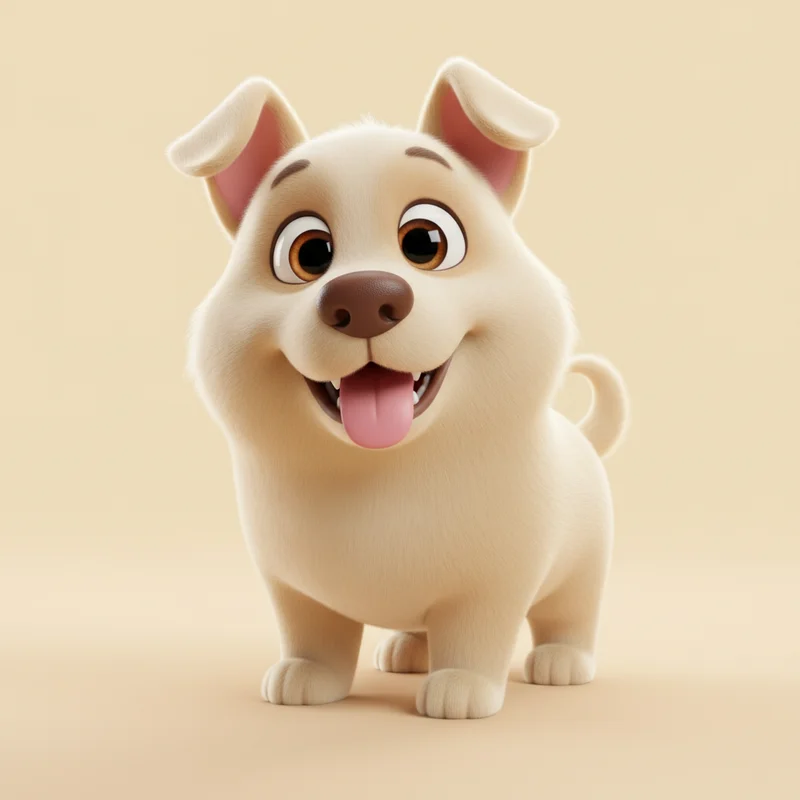
Dog

Dog

Loyal canine companion celebrated for unconditional love, tail wagging, and being humanity's best friend for millennia.

VS
Wolverine

Wolverine

Clawed mutant with regeneration and anger issues.

Battle Analysis

Durability Wolverine Wins
30%
70%
Dog Wolverine

Dog

Domestic dog durability varies considerably by breed, with some specimens requiring constant veterinary intervention and others surviving well into their second decade with minimal maintenance. The species has, unfortunately, traded some physical robustness for aesthetic modifications of questionable utility. Flat-faced breeds struggle to breathe; elongated breeds develop spinal complications; miniaturised breeds shiver perpetually. The average mixed-breed dog, however, demonstrates reasonable durability under typical domestic conditions, provided those conditions exclude chocolate, grapes, and onions.

Wolverine

The wolverine has evolved durability as a core survival mechanism. Its skeletal structure withstands impacts that would hospitalise larger predators. Its metabolism allows sustained travel across fifty kilometres of frozen terrain daily. Its immune system apparently shrugs off infections that would prove fatal to other mustelids. Perhaps most remarkably, the wolverine's psychological durability remains unmatched. No documented evidence suggests a wolverine has ever experienced self-doubt, hesitation, or the sensation of being intimidated. This mental fortitude may represent its most durable characteristic.

VERDICT

Evolved specifically for survival in Earth's harshest environments with apparent immunity to discouragement.
Adaptability Dog Wins
70%
30%
Dog Wolverine

Dog

The domestic dog represents perhaps the most successful example of adaptive radiation in recent mammalian history. From the Chihuahua, weighing less than a bag of sugar, to the Great Dane, capable of making eye contact with standing humans, the species has modified itself to occupy virtually every conceivable domestic niche. Dogs have learned to interpret human facial expressions, respond to pointing gestures, and feign innocence while standing directly beside destroyed furniture. This behavioural plasticity extends to climate tolerance, dietary flexibility, and an almost supernatural ability to sense when cheese is being unwrapped.

Wolverine

The wolverine has adapted with brutal efficiency to environments that would kill most mammals within hours. Equipped with semi-retractable claws, a bite force capable of crushing frozen bone, and fur so dense it resists frost accumulation, Gulo gulo thrives where temperatures plummet to minus forty degrees. Its adaptation strategy, however, remains narrowly focused. The wolverine cannot be taught to fetch, refuses to live indoors, and has shown no inclination whatsoever to learn tricks in exchange for treats. Its adaptability, whilst impressive, operates within strict parameters.

VERDICT

Occupying every domestic niche from handbag to working farm demonstrates superior adaptive range.
Daily utility Dog Wins
70%
30%
Dog Wolverine

Dog

The domestic dog provides utility across an extraordinary range of human activities. Guide dogs navigate complex urban environments for visually impaired handlers. Detection dogs identify explosives, narcotics, and agricultural contraband with accuracy exceeding mechanical sensors. Therapy dogs reduce cortisol levels in hospital patients. Herding dogs manage livestock across thousands of hectares. Even dogs lacking formal training provide measurable utility through companionship, exercise motivation, and home security. The species has essentially created an economy based on usefulness to humans.

Wolverine

The wolverine's utility to human daily life approaches zero. The species cannot be trained, domesticated, or reasoned with. It does not herd, retrieve, or provide emotional support. Historical fur trading represented its primary economic contribution, an arrangement the wolverine did not enter voluntarily. In regions where wolverines reside, their daily utility consists primarily of preventing cabin fever by giving residents something to worry about. Some indigenous cultures utilised wolverine fur for frost-resistant parka trim, though this required first obtaining the wolverine's cooperation through methods the wolverine vigorously opposed.

VERDICT

Utility spanning guidance, detection, therapy, and companionship versus fur trim applications.
Global recognition Dog Wins
70%
30%
Dog Wolverine

Dog

The domestic dog achieves near-universal recognition across human cultures. Children in Tokyo, farmers in Peru, and pensioners in Birmingham can all identify and name dozens of breeds. Dogs feature in every major religion's texts, appear on currency, and have been immortalised in art from ancient Egypt to contemporary internet memes. The species maintains embassies in virtually every human household, with an estimated four hundred million individuals serving as companion animals worldwide. Brand recognition specialists would describe this as market saturation.

Wolverine

Global recognition of the wolverine remains confined primarily to residents of northern latitudes and consumers of Marvel entertainment products. Whilst the latter association has significantly raised awareness, many individuals remain confused about whether the animal exists or was invented for comic books. Those living outside boreal and Arctic regions may live entire lives without encountering a wolverine reference. The animal's reclusiveness has prevented the development of any meaningful public relations strategy.

VERDICT

Four hundred million ambassadors in human homes ensures unmatched species recognition globally.
Intimidation factor Wolverine Wins
30%
70%
Dog Wolverine

Dog

Whilst certain breeds have cultivated formidable reputations, the average domestic dog struggles to maintain genuine intimidation. Even the most fearsome guard dog can be reduced to tail-wagging submission by the appearance of a tennis ball or the promise of ear scratches. The species has, through millennia of selective breeding, largely traded intimidation for approachability. A Labrador Retriever, despite weighing forty kilograms, inspires approximately the same level of fear as a particularly enthusiastic cushion.

Wolverine

The wolverine occupies a unique position in the intimidation hierarchy: creatures vastly larger than itself actively avoid confrontation. Documented accounts describe wolves abandoning kills, bears retreating from dens, and mountain lions choosing alternative routes rather than engage a forty-pound mustelid with anger management difficulties. The wolverine's intimidation derives not from size but from a combination of relentless aggression, apparent immunity to pain, and a complete absence of survival instinct regarding opponents. It has been known to challenge moving vehicles.

VERDICT

The only creature that makes grizzly bears reconsider their life choices commands respect.
👑

The Winner Is

Dog

58 - 42
The domestic dog emerges victorious through a strategy that initially appears counterintuitive: voluntary submission. By choosing to collaborate with humanity, Canis lupus familiaris secured guaranteed meals, shelter, medical care, and an audience that finds its every behaviour endearing. The wolverine, maintaining its independence, must hunt caribou in blizzards, defend territories against bears, and spend winters in conditions that would constitute criminal neglect if imposed upon a dog. Whilst the wolverine's ferocity commands genuine respect, the dog's strategic domestication has proven remarkably effective. Four hundred million individuals living in climate-controlled comfort represent a compelling argument for the collaborative approach.
Dog
58%
Wolverine
42%

Share this battle

More Comparisons