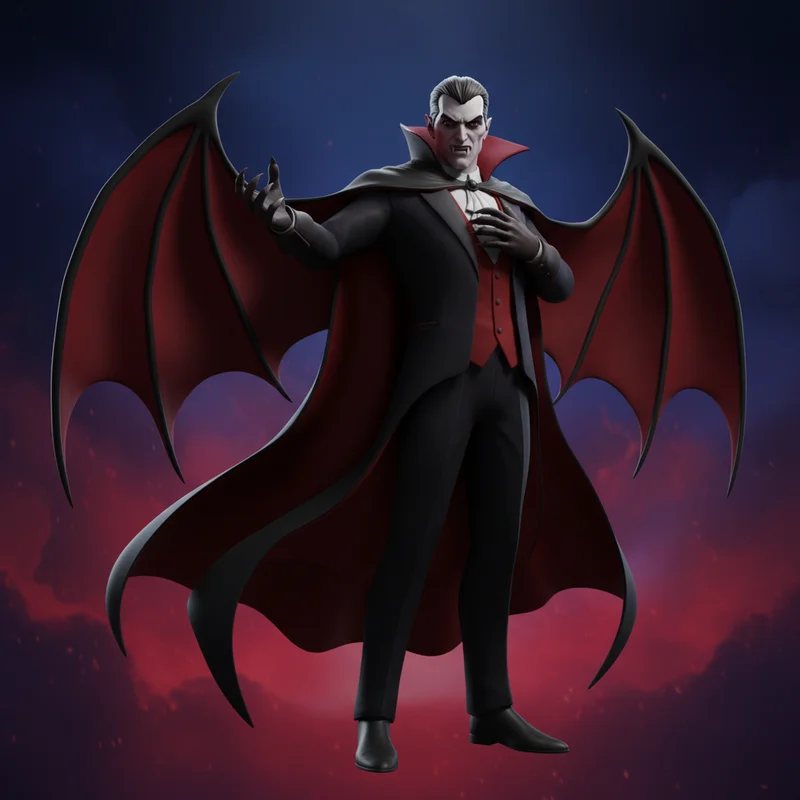

Dracula
Dracula's economic footprint extends across the global entertainment industry in ways that would impress even the most ambitious venture capitalists. The Count has generated billions in revenue through theatrical productions, major motion pictures, television series, merchandise, and tourism to Transylvanian destinations.
The 1931 Universal Pictures adaptation alone has spawned a franchise empire worth hundreds of millions. Subsequent iterations including Hammer Horror productions, Francis Ford Coppola's 1992 extravaganza, and countless others have collectively established Dracula as one of the most valuable intellectual properties in horror entertainment.
Romanian tourism has benefited substantially from Dracula's cultural cachet, with Bran Castle receiving hundreds of thousands of visitors annually despite only tenuous connections to the historical Vlad the Impaler. This represents an impressive return on Stoker's original creative investment.
Mario
Mario's economic impact operates on a scale that renders most entertainment franchises irrelevant by comparison. As of 2024, the Mario franchise has generated over $40 billion in lifetime revenue, establishing it as one of the most commercially successful entertainment properties in human history.
Individual titles routinely achieve sales figures in the tens of millions. Super Mario Bros. (1985) is credited with single-handedly rescuing the North American video game industry from the crash of 1983. The 2023 animated film grossed $1.36 billion at the global box office, becoming the second-highest-grossing animated film ever produced.
Beyond direct sales, Mario's influence permeates Nintendo's entire corporate valuation. The company's market capitalisation of approximately $80 billion rests substantially upon the continued appeal of a moustachioed plumber and his extensive roster of friends, enemies, and kart-racing companions.