
Topic Battle

Where Everything Fights Everything

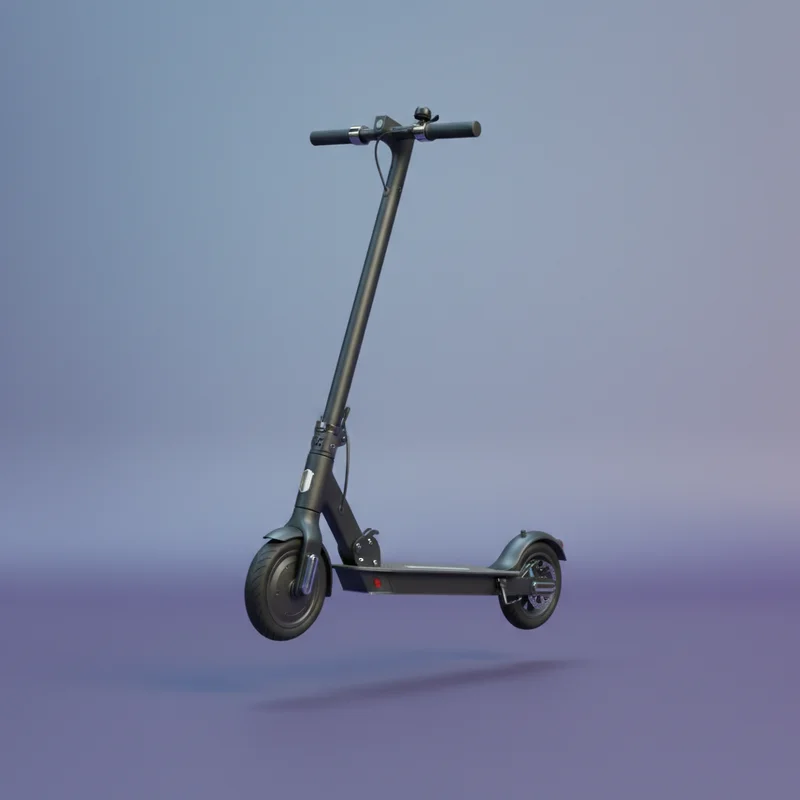
Electric Scooter

Electric Scooter

A vehicle that makes you question both transportation and dignity simultaneously. Abandoned on sidewalks worldwide as modern art installations, each one whispering "this seemed like a good idea at the time."

VS
Bicycle

Bicycle

Two-wheeled human-powered transportation and fitness device.

Battle Analysis

Speed electric-scooter Wins
30%
70%
Electric Scooter Bicycle

Electric Scooter

Bicycle

The bicycle's velocity depends entirely upon its operator - a concerning proposition for some, but rather the point for others. A fit cyclist on flat terrain can sustain 15-20 miles per hour indefinitely, with sprints exceeding 30 miles per hour entirely achievable. On descents, bicycles regularly surpass any legal electric scooter speed.

Yet this potential comes with caveats. Hills extract their toll. Headwinds slow progress. The final miles of a long journey may see speeds collapse as fatigue accumulates. The bicycle's speed is earned rather than given, subject to the glorious variability of human physiology.

VERDICT

Effortless consistency across all terrain conditions gives the scooter a practical speed advantage for the average commuter.
Durability bicycle Wins
30%
70%
Electric Scooter Bicycle

Electric Scooter

Bicycle

The bicycle's durability borders on the legendary. Steel frames from the 1950s continue to serve their owners faithfully. The mechanical components - chains, gears, brakes - wear gradually and can be replaced individually at modest cost. A skilled owner can maintain the same bicycle for a lifetime, simply replacing worn parts as necessary.

More importantly, the bicycle's failure modes are typically graceful rather than catastrophic. A puncture immobilises but does not destroy. A broken spoke can be ridden, carefully, to a repair shop. Water poses no threat whatsoever. The bicycle has been engineered, through a century of refinement, to endure the full spectrum of human carelessness and environmental hostility.

VERDICT

A century of refinement has produced a machine that can outlast its owner; the scooter's electronics cannot compete.
Convenience electric-scooter Wins
30%
70%
Electric Scooter Bicycle

Electric Scooter

Bicycle

The bicycle demands something of its rider. It requires physical exertion, particularly when confronting hills or headwinds. The rider may arrive at their destination flushed and breathing heavily, requiring a moment of recovery before appearing in polite company. This is, by some measures, inconvenient.

Yet the bicycle offers conveniences the scooter cannot match. There is no battery to charge, no range anxiety to calculate, no finding oneself stranded fifteen miles from home with a depleted power cell. Storage is simpler - bicycles fit into racks, sheds, and hallways without demanding electrical outlets. The bicycle's convenience is that of self-sufficiency, the assurance that one's transport will function regardless of infrastructure.

VERDICT

The effortless, sweat-free commute and minimal learning curve give the scooter a clear advantage in pure convenience.
Affordability bicycle Wins
30%
70%
Electric Scooter Bicycle

Electric Scooter

Bicycle

The bicycle represents one of the most economical transport investments available to humanity. A serviceable machine can be acquired second-hand for under one hundred pounds. Annual maintenance costs - chains, brake pads, occasional tyre replacement - rarely exceed fifty pounds for the conscientious owner.

The fuel cost is precisely zero, or rather, it is absorbed into one's existing food budget. There are no registration fees, no insurance requirements in most jurisdictions, no charging electricity to pay for. Over a decade of ownership, the total cost of bicycle transport is orders of magnitude lower than any motorised alternative. It is the poor person's chariot and the miser's delight.

VERDICT

With minimal acquisition cost and near-zero running expenses, the bicycle remains the ultimate economical transport choice.
Environmental impact bicycle Wins
30%
70%
Electric Scooter Bicycle

Electric Scooter

Bicycle

The bicycle stands as perhaps humanity's most environmentally benign transport invention. Its construction requires modest amounts of steel, aluminium, or carbon fibre - materials that can be recycled indefinitely. A well-maintained bicycle can serve its owner for decades, some specimens remaining roadworthy after a century of use.

The energy source is renewable by definition: human metabolism, fuelled by food that would be consumed regardless. No batteries to dispose of, no precious metals to mine, no charging infrastructure to construct. The bicycle's environmental credentials are not merely acceptable - they are exemplary, a benchmark against which all other transport modes are measured and found wanting.

VERDICT

The bicycle's century-long lifespan and human-powered operation comprehensively outclass the scooter's battery disposal challenges.
👑

The Winner Is

Bicycle

45 - 55

After rigorous examination across five fundamental criteria, the bicycle emerges victorious with a score of 55 to 45. This is not a crushing defeat for the electric scooter, but rather a recognition of certain immutable truths about human transport.

The electric scooter excels at removing friction from urban movement. It asks nothing of its rider beyond the capacity to stand upright and operate a throttle. For those who prize convenience above all else - the office worker in pressed trousers, the elderly commuter, the determinedly unsporty - it represents genuine progress.

Yet the bicycle's advantages are more profound. Its environmental credentials are unimpeachable. Its durability spans generations. Its economics favour the patient over decades of use. These are not marginal victories but fundamental differences in the relationship between human and machine.

The bicycle demands more but returns more. It strengthens the body while serving it, creates independence while providing mobility, and connects its rider to a centuries-old tradition of human-powered exploration. The electric scooter is a product; the bicycle is a companion.

Electric Scooter
45%
Bicycle
55%

Share this battle

More Comparisons