
Topic Battle

Where Everything Fights Everything

Electric Scooter

Electric Scooter

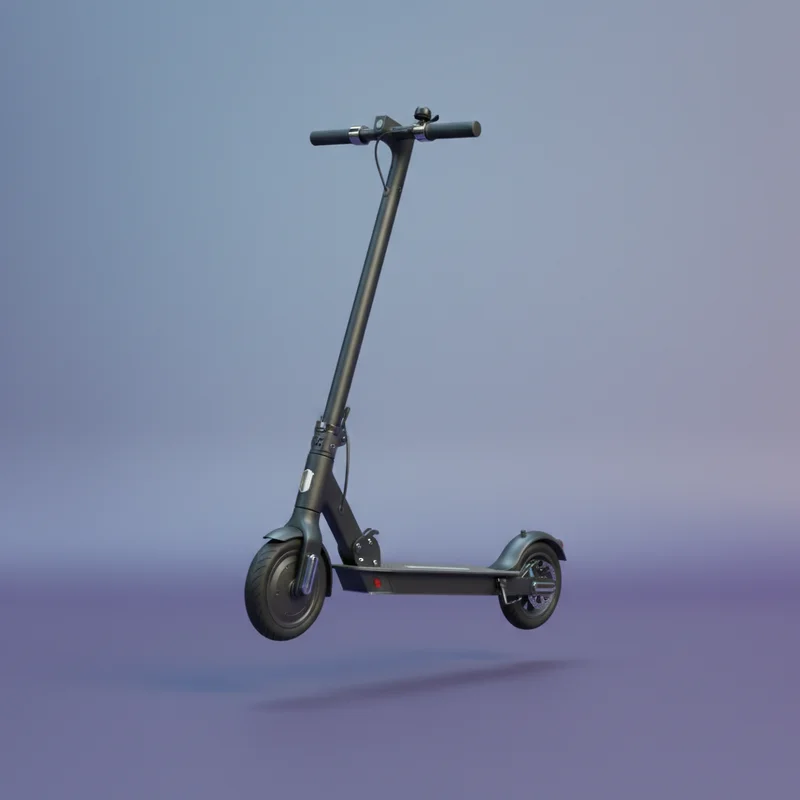
A vehicle that makes you question both transportation and dignity simultaneously. Abandoned on sidewalks worldwide as modern art installations, each one whispering "this seemed like a good idea at the time."

VS
IKEA Furniture

IKEA Furniture

Swedish flat-pack relationship tests sold as affordable home goods. Comes with 47 pieces, one Allen key, and instructions that assume you have transcended the need for words. Marriages have ended over fewer screws.

The Matchup

In the grand theatre of modern consumer existence, two forces have emerged to reshape how humanity moves and sits. The electric scooter, that whirring emissary of urban mobility, promises freedom at fifteen miles per hour. IKEA furniture, the flat-packed Swedish enigma, offers the dream of domestic order for those willing to decode hieroglyphic instruction manuals. Both have conquered the globe through remarkably similar strategies: making their customers do most of the work.

Battle Analysis

Durability ikea_furniture Wins
30%
70%
Electric Scooter IKEA Furniture

Electric Scooter

The electric scooter occupies an interesting position in the durability spectrum—somewhere between a mayfly and a moderately motivated appliance. Personal scooters, when treated with the reverence typically reserved for firstborn children, can survive 3,000 to 10,000 miles before requiring significant intervention. The battery, that temperamental heart of the device, typically maintains acceptable performance for 2-4 years before beginning its inevitable decline.

Rental scooters exist in a parallel universe where durability is measured in weeks rather than years. These communal vehicles endure a level of abuse that would make a war correspondent wince. They are hurled into rivers, left in trees, and ridden off kerbs by individuals who approach them with the care one might show a borrowed umbrella. Early rental fleet operators reported average lifespans of just 28 days, though improved designs have extended this to several months.

The fundamental challenge is that electric scooters combine electrical complexity with exposure to the elements and enthusiastic misuse. Water ingress, battery degradation, and the accumulated stress of ten thousand potholes conspire to ensure that no scooter dies of old age.

IKEA Furniture

IKEA furniture durability operates on a principle best described as optimistic temporary permanence. A BILLY bookcase, properly assembled and left undisturbed, can survive for decades. The same bookcase, subjected to a single house move, may emerge from the experience as little more than an expensive jigsaw puzzle and a sense of betrayal.

The core issue is structural philosophy. IKEA furniture is engineered to be assembled once, ideally twice, but certainly not the four or five times that modern nomadic living demands. Cam locks and dowels lose their grip with each disassembly, particleboard develops stress fractures around screw holes, and the whole edifice gradually transitions from furniture to suggestion. Studies have found that IKEA furniture loses up to 40% of structural integrity with each reassembly cycle.

And yet, in situ, the stuff simply persists. That MALM dresser you bought in 2007 still holds clothes perfectly adequately. The LACK coffee table, despite costing less than a modest lunch, continues to support beverages and remote controls with quiet dignity. It is furniture that knows its limitations and operates confidently within them.

VERDICT

When left unmolested, IKEA furniture can outlast multiple scooter generations. The electric scooter, battling batteries, weather, and the accumulated indignities of urban infrastructure, faces a more challenging path to longevity.
Portability electric_scooter Wins
70%
30%
Electric Scooter IKEA Furniture

Electric Scooter

The electric scooter represents perhaps the purest expression of portable transportation yet devised by non-collapsible means. A typical folding scooter transforms from vehicle to awkward rectangle in approximately three seconds, reducing to dimensions that technically qualify as carry-on luggage on airlines that have not yet explicitly banned them.

At 25-35 pounds for most consumer models, the scooter occupies that uncomfortable middle ground between effortlessly portable and genuinely burdensome. It is light enough to carry up a flight of stairs while cursing, but heavy enough that one begins seeking alternatives by the second landing. The folded form factor permits storage under desks, in cupboards, and in the boots of surprisingly small cars.

The true genius of scooter portability lies in the last mile problem it solves. One can ride to the train, fold, board, unfold, and continue—a multimodal commute that would have seemed impossibly futuristic to anyone who remembers waiting for buses in the rain. The scooter transforms its user into a kind of urban amphibian, equally comfortable on pavement and public transport.

IKEA Furniture

IKEA furniture achieves portability through perhaps the most counterintuitive method possible: by not being furniture until you make it furniture. A wardrobe that would require professional movers in assembled form can be transported in a hatchback as a collection of optimistically thin boxes. This is the flat-pack revolution—the transformation of the furniture industry through the radical notion that customers might enjoy spending their weekends as unpaid assembly workers.

The average IKEA product achieves an 80% reduction in shipping volume compared to pre-assembled equivalents. This geometric efficiency cascades through the supply chain: more units per truck, more trucks per warehouse, lower costs per customer, and a planet marginally less encumbered by the transportation of air.

However, the portability of IKEA furniture comes with significant temporal costs. The HEMNES dresser is portable in the same sense that a house is portable if you are willing to disassemble it brick by brick. The cumulative assembly time of IKEA furniture purchased by the average customer over a lifetime has been estimated at approximately 100 hours—the equivalent of more than two working weeks spent deciphering wordless instructions and discovering missing dowels.

VERDICT

The scooter offers immediate, practical portability that enhances daily mobility. IKEA furniture is portable only in the philosophical sense that all matter is technically portable given sufficient effort and disregard for one's evening plans.
Global reach ikea_furniture Wins
30%
70%
Electric Scooter IKEA Furniture

Electric Scooter

The electric scooter has achieved a form of urban colonisation that would make the British Empire raise an eyebrow in grudging respect. Over 300 million electric scooters are estimated to be in operation worldwide, with China alone accounting for the vast majority. From the boulevards of Paris to the bike lanes of Copenhagen to the pavements of San Jose, the scooter has established beachheads on every inhabited continent.

The rental scooter phenomenon, pioneered by companies with names suggesting they were founded during a particularly energetic brainstorming session, has deposited these vehicles in over 600 cities globally. They appear overnight like mushrooms after rain, clustering around transport hubs and tourist attractions with the inevitability of pigeons at a sandwich.

What distinguishes the electric scooter's conquest is its remarkable adaptability to local regulations, or more accurately, its tendency to arrive before anyone has thought to create regulations. This ask forgiveness rather than permission approach has proven remarkably effective, if occasionally litigious.

IKEA Furniture

IKEA has achieved something arguably more impressive: the complete homogenisation of global interior aesthetics. With 471 stores across 64 countries, the Swedish furniture giant has ensured that a KALLAX shelf unit looks identical whether purchased in Wembley, Warsaw, or Wuhan. The company serves approximately one billion customers annually, which represents roughly one in eight humans on Earth engaging with flat-pack furniture each year.

The IKEA catalogue, once the most widely distributed publication in the Western world, was translated into 32 languages before its discontinuation in 2021. This sacred text of affordable Scandinavian design reached more households than most religious materials, spreading the gospel of particle board and Allen keys to every corner of the civilised world.

Perhaps most tellingly, IKEA has exported not merely furniture but an entire philosophy of living. The concept of democratic design—the notion that attractive, functional objects should be accessible to all—has fundamentally altered expectations about what middle-class domestic life should look like. One cannot underestimate the cultural impact of a company that has convinced billions of people that self-assembly is somehow empowering.

VERDICT

While electric scooters have proliferated impressively, IKEA has achieved deeper cultural penetration, fundamentally reshaping global expectations about home furnishing and spawning an entire subgenre of relationship-testing assembly experiences.
Social impact ikea_furniture Wins
30%
70%
Electric Scooter IKEA Furniture

Electric Scooter

The electric scooter has become an unlikely protagonist in the culture wars of urban space. These modest vehicles have provoked municipal council meetings of unusual passion, inspired legislation in dozens of jurisdictions, and generated newspaper columns of remarkable vehemence. Few consumer products have been simultaneously celebrated as transport solutions and condemned as pavement-mounted hazards to civilisation.

For proponents, scooters represent democratised mobility—affordable, accessible transportation that liberates users from bus schedules and parking difficulties. Studies suggest rental scooter users include higher proportions of lower-income individuals than many assume, challenging the stereotype of scooters as toys for tech workers. For those with mobility constraints that make walking difficult but do not require wheelchairs, scooters can provide genuine freedom.

For opponents, scooters symbolise the triumph of private convenience over public space. Abandoned units obstruct pavements, riders weave unpredictably through pedestrians, and the injuries—primarily to riders, but occasionally to bystanders—accumulate in emergency department statistics. Scooter-related injuries increased by over 200% in many cities following rental fleet deployment. The debate continues, and will likely continue for as long as humans disagree about how streets should be shared.

IKEA Furniture

IKEA's social impact operates more subtly but arguably more profoundly. The company has fundamentally altered class signifiers around home furnishing. Where once affordable furniture looked obviously cheap, IKEA proved that Scandinavian design principles could be mass-produced at price points accessible to students and young families. The democratisation of design aesthetics means that a graduate's first apartment can now achieve a coherent look once available only to those with interior decorators.

The cultural phenomenon of IKEA shopping has become a relationship milestone, a source of internet humour, and a shared experience that transcends borders. "We need to go to IKEA" has entered the lexicon as a phrase capable of inspiring both dread and anticipation. The store experience—the showroom maze, the pencils, the meatballs, the warehouse conclusion—has been studied by anthropologists as a form of consumer ritual.

More concretely, IKEA has contributed to housing affordability in unexpected ways. By dramatically reducing furniture costs, the company has effectively increased disposable income for millions of households. The average IKEA customer saves an estimated 30-50% compared to traditional furniture retailers, money that can be directed toward rent, education, or retirement savings. Whether this has contributed to a throwaway culture or enabled financial flexibility for the economically constrained depends on perspective.

VERDICT

IKEA's transformation of furniture accessibility and home aesthetics across economic classes represents deeper, more enduring social change than the scooter's contested reshaping of urban mobility.
Sustainability ikea_furniture Wins
30%
70%
Electric Scooter IKEA Furniture

Electric Scooter

The environmental credentials of the electric scooter exist in a state of quantum uncertainty, simultaneously better and worse than alternatives depending on which study one chooses to believe. Zero direct emissions during operation sounds impressive until one considers the manufacturing footprint, battery production, and the inconvenient fact that most trips replace walking or cycling rather than driving.

Early lifecycle analyses painted a grim picture: rental scooters, with their abbreviated lifespans and nightly collection by petrol-powered vans, often produced more carbon per mile than the cars they theoretically replaced. Subsequent generations have improved substantially, with durable designs, swappable batteries, and solar-charged stations shifting the equation.

The battery question looms large. Lithium-ion production carries significant environmental costs, and battery recycling infrastructure remains inadequate to handle the coming tsunami of depleted cells. Responsible manufacturers have begun implementing second-life programmes, repurposing scooter batteries for stationary storage, but the industry as a whole has yet to solve its end-of-life challenge.

IKEA Furniture

IKEA has made sustainability a central brand pillar, which is either commendable environmental leadership or the most successful greenwashing campaign in retail history, depending on one's level of cynicism. The company has committed to becoming climate positive by 2030, using only renewable and recycled materials, and has already achieved 100% renewable energy in its operations.

The flat-pack model, whatever its assembly frustrations, represents genuine efficiency gains. Reduced shipping volumes mean reduced transport emissions. The company plants more trees than it harvests. Cotton, wood, and plastics increasingly come from recycled or sustainably certified sources. By 2023, over 60% of IKEA products were made from renewable materials, and 99.5% of waste from stores and distribution centres was recycled.

Yet the elephant in the showroom remains the fundamental business model: selling enormous quantities of relatively disposable furniture. A truly sustainable approach might involve buying one excellent wardrobe that lasts fifty years, not three adequate wardrobes that each last fifteen. IKEA has begun offering furniture leasing and buyback programmes to address this tension, though critics note these initiatives represent a tiny fraction of total sales.

VERDICT

IKEA's comprehensive sustainability commitments, combined with the inherent efficiency of flat-pack design, give it the edge. Electric scooters face unresolved battery lifecycle challenges that complicate their environmental narrative.
👑

The Winner Is

IKEA Furniture

45 - 55

In this confrontation between mobile machine and stationary storage, IKEA furniture emerges as the marginally more consequential force in contemporary life. While the electric scooter promises and occasionally delivers transport liberation, it remains a technology in search of stable regulatory acceptance, adequate infrastructure, and a convincing answer to its battery lifecycle challenges.

IKEA furniture, for all its particleboard impermanence and assembly tribulations, has achieved something remarkable: the wholesale transformation of global expectations about affordable design. It has made decent aesthetics accessible to billions, created a shared cultural experience that transcends language barriers, and proven that flat-packing is a viable solution to distribution challenges across industries.

The scooter zips; the bookshelf persists. One offers the thrill of wind in hair and the horror of unexpected potholes. The other offers the satisfaction of completed assembly and the perpetual threat of moving day. Both, in their ways, have made modern life marginally more manageable. But only one has furnished the apartments of the world with standardised Swedish optimism, and that counts for something in an increasingly chaotic existence.

Electric Scooter
45%
IKEA Furniture
55%

Share this battle

More Comparisons