
Topic Battle

Where Everything Fights Everything

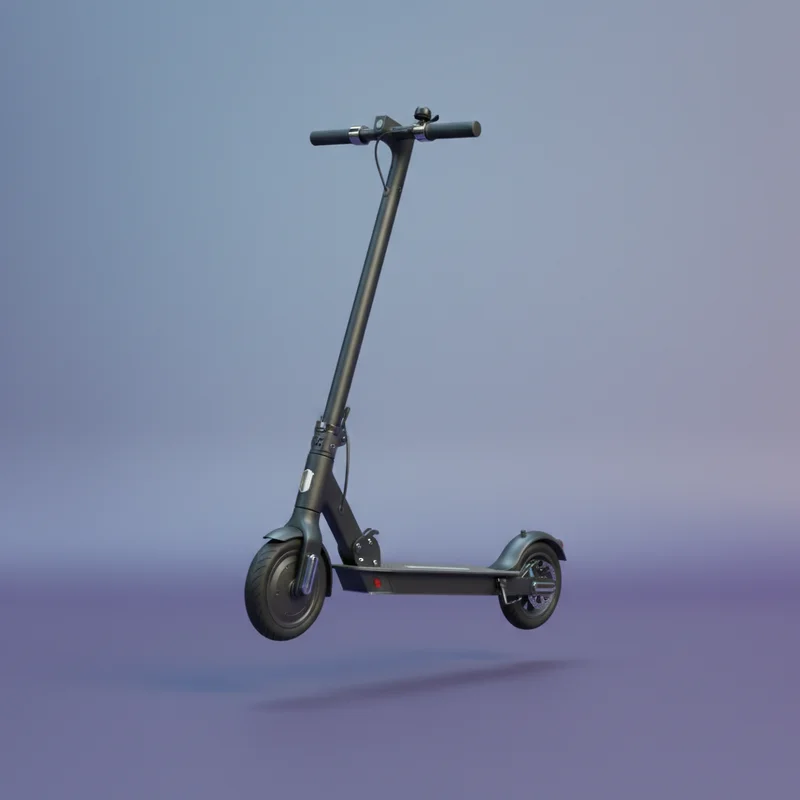
Electric Scooter

Electric Scooter

A vehicle that makes you question both transportation and dignity simultaneously. Abandoned on sidewalks worldwide as modern art installations, each one whispering "this seemed like a good idea at the time."

VS
Lion

Lion

Apex predator and king of the savanna, known for majestic manes and surprisingly lazy daytime habits.

Battle Analysis

Speed lion Wins
30%
70%
Electric Scooter Lion

Electric Scooter

Lion

The lion, Panthera leo, achieves burst speeds of up to 80 kilometres per hour—more than three times the scooter's maximum. This velocity, however, comes with significant terms and conditions. A lion can only maintain such speeds for approximately 100 metres before the biological equivalent of thermal throttling kicks in. Their approach to speed mirrors their approach to life: brief, intense bursts of extraordinary effort followed by up to 20 hours of aggressive napping.

What the lion lacks in endurance, it compensates for in sheer dramatic impact. There is no 'gentle acceleration' phase. A stationary lion transforms into a ballistic carnivore in approximately 0.5 seconds, achieving speeds that would earn it several points on a driving licence if such things applied to apex predators.

VERDICT

Peak velocity of 80 km/h versus 25 km/h renders this category rather conclusive, burst limitations notwithstanding.
Reliability lion Wins
30%
70%
Electric Scooter Lion

Electric Scooter

Lion

The lion operates on a rather more ancient and proven operating system. Its reliability stems from two million years of evolutionary debugging, resulting in a creature remarkably consistent in its outputs: intimidation, territorial enforcement, and occasional dramatic documentary footage. The lion requires no charging stations, software updates, or Bluetooth pairing—merely a regular supply of protein and the occasional mud wallow for temperature regulation.

Drawbacks to leonine reliability include vulnerability to disease, injury from prey that fights back, and the inconvenient tendency to age. A pride's dynamics can shift without warning, introducing variables that no algorithm could predict. The lion's operational lifespan of 10-14 years in the wild represents roughly 100,000 hours of largely maintenance-free apex predation.

VERDICT

Two million years of field testing versus 15 years of development produces a clear reliability champion.
Affordability electric-scooter Wins
30%
70%
Electric Scooter Lion

Electric Scooter

Lion

The lion is, in practical terms, completely unaffordable. Legal private ownership requires extensive licensing, specialist facilities costing upwards of £50,000, and annual feeding costs approaching £10,000—assuming one can source appropriate prey animals ethically and legally, which one largely cannot in suburban environments.

Insurance for lion ownership, where obtainable, reflects underwriters' reasonable concerns about 190-kilogram carnivores residing among the general population. Veterinary care requires exotic animal specialists charging accordingly. The full cost of responsible lion ownership exceeds £100,000 annually, before accounting for the inevitable property damage when one's lion expresses dissatisfaction with the afternoon arrangements. Most lions, wisely, remain in the wild or in accredited facilities.

VERDICT

£500 versus £100,000+ annually creates mathematics even the most committed lion enthusiast cannot ignore.
Intimidation factor lion Wins
30%
70%
Electric Scooter Lion

Electric Scooter

Lion

The lion has been the universal symbol of intimidation for the entirety of recorded human history, and for excellent reason. A fully grown male lion weighs approximately 190 kilograms, possesses canines measuring up to 10 centimetres, and can produce a roar audible from 8 kilometres away—a distance at which the electric scooter's battery would have expired thrice over.

The mere silhouette of a lion triggers ancient fight-or-flight responses hard-coded into human neurology over millennia of cohabitation. This intimidation operates on multiple levels: visual (enormous size, magnificent mane), auditory (the roar), and olfactory (territorial marking that announces 'this area belongs to something that could eat you'). 42 facial muscles allow for expressions ranging from 'mildly displeased' to 'you have made a catastrophic error in judgement.'

VERDICT

8-kilometre roar radius versus toothbrush-adjacent whirring defines a clear victor in threat projection.
Environmental impact lion Wins
30%
70%
Electric Scooter Lion

Electric Scooter

Lion

The lion's environmental impact is, quite literally, the definition of natural. As an apex predator, Panthera leo provides essential ecosystem services: population control of herbivores, prevention of overgrazing, and the creation of carrion that supports entire food webs. The lion is not merely carbon neutral—it is an integral component of the savannah's ecological balance, a role it has performed since long before humans discovered the concept of sustainability.

The lion's carbon footprint consists entirely of respiration and the occasional territorial roar, which admittedly carries for up to 8 kilometres but produces no greenhouse gases beyond ordinary mammalian output. Its diet is entirely local, seasonal, and requires no refrigeration, packaging, or transcontinental shipping—a locavore lifestyle that farmers' market enthusiasts can only dream of.

VERDICT

Millions of years of ecological integration versus questionable e-waste management presents no contest.
👑

The Winner Is

Lion

42 - 58

The electric scooter and the lion represent fundamentally different solutions to life's central question: how does one move through the world whilst maintaining dignity? The scooter answers with silicon-valley pragmatism—efficiently, quietly, and with minimal ecological disruption (software bugs notwithstanding). The lion answers by being so magnificently terrifying that the world moves around it.

Our analysis reveals the lion prevailing in four of five categories, falling short only in affordability—a criterion that, one suspects, bothers the lion not at all. The 58-42 victory for Panthera leo reflects not merely quantitative superiority but a qualitative truth: there is something profoundly unignorable about 190 kilograms of apex predator that no amount of clever engineering can replicate.

The electric scooter excels within its intended parameters: urban transportation, last-mile connectivity, and the eternal human quest to avoid walking. But when measured against a creature that has commanded reverence since humanity first daubed cave walls with ochre, the scooter reveals itself as what it is—a very good tool, but merely a tool nonetheless. The lion is not a tool. The lion is a force of nature that happens to have a face.

Electric Scooter
42%
Lion
58%

Share this battle

More Comparisons