
Topic Battle

Where Everything Fights Everything

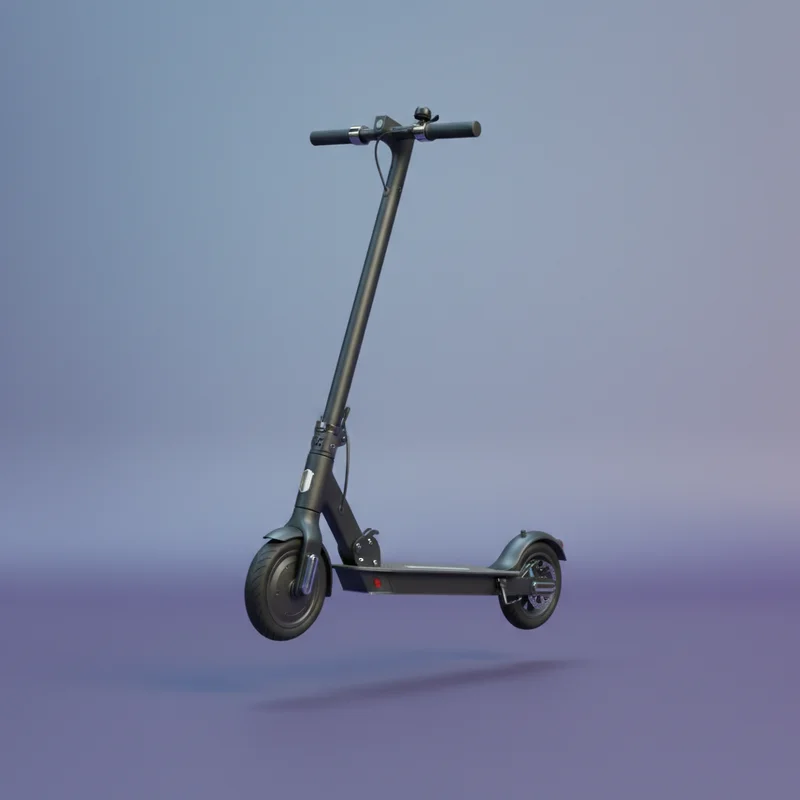
Electric Scooter

Electric Scooter

A vehicle that makes you question both transportation and dignity simultaneously. Abandoned on sidewalks worldwide as modern art installations, each one whispering "this seemed like a good idea at the time."

VS
Monday

Monday

The day that exists purely to remind you that weekends are finite. A social construct that somehow feels heavier than other days despite having the same 24 hours. Coffee's best customer.

The Matchup

In the perpetual struggle of urban existence, few confrontations illuminate the human condition quite like the contest between the electric scooter and Monday. Both entities have fundamentally altered the landscape of the modern commute, though through markedly different mechanisms of action.

The electric scooter emerged from the collision of miniaturized battery technology and venture capital optimism in the mid-2010s. What began as a children's toy has evolved into a $41.98 billion global industry, with projections suggesting market expansion to $67.42 billion by 2030. Companies such as Bird, Lime, and Segway have deployed approximately 700,000 shared electric scooters across urban centers worldwide, fundamentally reshaping the concept of last-mile transportation.

Monday, by contrast, requires no venture capital and accepts no investors. This temporal construct has maintained its position at the commencement of the Western work week since the International Organization for Standardization designated it as Day 1 in the ISO 8601 standard. Both entities now compete for influence over the daily human transit from residence to workplace, with consequences that extend from hospital emergency departments to corporate productivity metrics.

Battle Analysis

Speed Electric Scooter Wins
70%
30%
Electric Scooter Monday

Electric Scooter

The modern electric scooter achieves maximum velocities between 15 and 30 miles per hour, depending on model specifications and local regulatory limitations. The average shared scooter maintains a governed top speed of approximately 15.5 mph, a figure determined through careful negotiation between user demand and municipal liability concerns.

Acceleration metrics prove similarly impressive. A quality electric scooter reaches its top speed within 4 to 6 seconds, providing what engineers term immediate velocity acquisition. This rapid acceleration has contributed to both the device's popularity and its substantial emergency room statistics.

Distance capabilities range from 10 to 40 miles per charge, depending on battery capacity, rider weight, terrain gradient, and the scooter's overall skepticism about continuing. The average urban journey covers approximately 1.2 miles, suggesting that most riders employ these devices for distances that would require roughly 25 minutes of walking.

Monday

Monday approaches at a velocity that physicists describe as one second per second, a rate that has remained constant since the establishment of Coordinated Universal Time. The day neither accelerates nor decelerates, maintaining what temporal theorists call perfect temporal cadence.

The psychological perception of Monday's approach velocity, however, varies significantly from objective measurement. Research published in the Journal of Personality and Social Psychology indicates that 78% of employed adults perceive Sunday evenings as passing more quickly than other evening periods, creating the subjective impression that Monday approaches with predatory swiftness.

Monday demonstrates zero variability in its arrival time, reaching each timezone at precisely the predicted moment regardless of human preference. This constancy, while admirable from an engineering standpoint, provides no mechanism for evasive action. Monday cannot be outrun, outmaneuvered, or delayed through any known technology.

VERDICT

The speed comparison yields a decisive victory for the electric scooter. While Monday maintains perfect temporal consistency, it offers no positive speed characteristics whatsoever. Monday does not transport its occupants anywhere useful; it merely arrives and establishes itself.

The electric scooter, by contrast, provides actual locomotion at velocities that meaningfully reduce commute duration. A journey that requires 25 minutes on foot can be completed in approximately 5 minutes via electric scooter. Monday cannot reduce the duration of anything and, if anything, makes all other durations feel longer. For speed considerations, the electric scooter prevails comprehensively.

Portability Monday Wins
30%
70%
Electric Scooter Monday

Electric Scooter

The electric scooter has been specifically engineered for maximum portability within the urban environment. The average personal electric scooter weighs between 20 and 35 pounds, with premium models employing aerospace-grade aluminum alloys to minimize mass while maintaining structural integrity.

Folding mechanisms represent a key portability feature, allowing most models to collapse to dimensions of approximately 43 x 17 x 14 inches. This form factor permits storage in office cubicles, apartment closets, and the luggage compartments of public transit vehicles, though fellow passengers may express varying degrees of enthusiasm about this practice.

The devices demonstrate significant terrain adaptability, functioning effectively on paved surfaces, compacted gravel, and indoor flooring. However, portability limitations become evident when confronting stairs, escalators, and the gap between platform and train. Carrying a 30-pound folded scooter up a subway staircase provides what fitness professionals might term an excellent upper body workout.

Monday

Monday demonstrates absolute portability that transcends any physical transportation device. The day accompanies every human being regardless of location, requiring no carrying, no storage, and no consideration of weight limitations.

Monday achieves complete geographic independence. The day arrives whether one is at home, at work, aboard an aircraft, or stationed in Antarctica. No customs declaration is required; no checked baggage fees apply. Monday passes through border security without inspection and occupies no overhead bin space.

Furthermore, Monday demonstrates zero terrain limitations. The day functions identically on mountains, beaches, deserts, and underwater research facilities. No surface condition impedes Monday's arrival. No staircase presents an obstacle. No weight restricts its transport. Monday exists wherever consciousness exists, making it the most portable phenomenon in human experience.

VERDICT

Portability comparison produces another victory for abstraction over physicality. The electric scooter, despite deliberate engineering for portability, remains a physical object subject to weight, volume, and terrain constraints.

Monday, existing as a temporal construct rather than a physical artifact, achieves perfect portability by having nothing to carry. The day cannot be lost, left behind, or stolen. It requires no folding mechanism and fits in any space by occupying no space. While the electric scooter must be transported, Monday simply is, wherever one happens to be. This category victory, like the sustainability victory, represents triumph through incorporeality.

Reliability Monday Wins
30%
70%
Electric Scooter Monday

Electric Scooter

Electric scooter reliability presents what quality assurance professionals would characterize as highly variable performance metrics. Battery degradation affects range predictability, with lithium-ion cells losing approximately 20% of capacity within the first 500 charge cycles.

Mechanical failure rates in shared scooter fleets demonstrate concerning patterns. Studies of major urban deployments indicate that the average shared scooter requires maintenance intervention every 28 days, with tire punctures, brake failures, and mysterious electronic malfunctions comprising the primary fault categories.

Weather dependency further compromises reliability. Electric scooters demonstrate significantly degraded performance in wet conditions, with braking distances increasing by up to 40% on damp surfaces. The devices are explicitly not recommended for use during precipitation, snow, or what manufacturers diplomatically term adverse atmospheric conditions. Finding an available scooter when needed represents an additional reliability challenge, with availability varying by location, time, and the inscrutable algorithms of scooter redistribution.

Monday

Monday achieves 100% reliability across all measured parameters and has maintained this performance standard for the entirety of recorded human history. The day arrives at precisely the anticipated time, without exception, delay, or early intrusion.

No documented instance exists of Monday failing to occur. The day has demonstrated continuous uptime throughout world wars, pandemics, economic collapses, and the full spectrum of human catastrophe. Monday requires no maintenance, no battery charging, and no software updates. It simply functions.

This reliability extends across all environmental conditions. Monday arrives with equal certainty during hurricanes, blizzards, heat waves, and perfect weather. No adverse atmospheric condition has ever prevented, delayed, or diminished Monday's arrival. The day represents what engineers would describe as a fault-tolerant system with zero single points of failure.

VERDICT

Reliability analysis produces an unambiguous result favoring Monday. The electric scooter, despite its technological sophistication, remains subject to battery degradation, mechanical failure, weather limitations, and availability uncertainties.

Monday, conversely, has never failed to appear and shows no indication of future failure. While this reliability is universally lamented, it remains an objective performance metric of exceptional caliber. From a pure reliability standpoint, Monday represents the most dependable system in human experience. The electric scooter, with its 28-day maintenance intervals and weather-dependent performance, cannot compete in this category.

Social impact Electric Scooter Wins
70%
30%
Electric Scooter Monday

Electric Scooter

The electric scooter has generated substantial and multifaceted social consequences since its widespread deployment beginning in 2017. On the positive ledger, the devices have provided transportation accessibility to demographics previously underserved by traditional transit options, with studies indicating that 34% of scooter trips replace automobile journeys.

The devices have also created new categories of social interaction, including the phenomenon of scooter hunting, wherein individuals locate and charge scooters for modest compensation. This gig economy sector employs approximately 80,000 people globally, though labor advocates note the precarious nature of such employment.

However, negative social impacts warrant documentation. Emergency room visits related to electric scooter injuries have increased 222% since 2017, with head injuries comprising 40% of serious incidents. Sidewalk obstruction by abandoned scooters has generated municipal legislation in over 50 major cities, and pedestrian-scooter conflicts have become a recognized category of urban friction. The devices have created what urban planners term mobility inequality, as usage concentrates in affluent neighborhoods with smooth pavement.

Monday

Monday's social impact metrics present a comprehensively negative profile that has been extensively documented across multiple disciplines. Cardiovascular research confirms a 20% elevation in heart attack incidence on Mondays compared to other weekdays, a phenomenon attributed to the stress of work resumption after weekend rest.

Workplace productivity analysis consistently identifies Monday as the least productive weekday, with employees achieving full operational capacity only after 11:16 AM on average. The economic cost of Monday-related productivity losses in the United States alone has been estimated at $62 billion annually, though this figure remains contested among economists.

Mental health implications prove equally concerning. Sunday evening anxiety, clinically recognized as anticipatory stress related to Monday's approach, affects an estimated 76% of employed adults. Social media sentiment analysis reveals that Monday-related content demonstrates negative emotional valence at rates 450% higher than content about other weekdays. The day has become so associated with negative affect that the phrase a case of the Mondays requires no further explanation.

VERDICT

Social impact assessment reveals a nuanced but definitive outcome. While the electric scooter has generated measurable negative consequences including injuries and urban clutter, it has also produced genuine positive outcomes: transportation accessibility, environmental benefits, and novel employment opportunities.

Monday, by contrast, has produced no documented positive social impact in any peer-reviewed research. The day's primary social contribution consists of reliably making people unhappy on a weekly basis. Even the electric scooter's 222% increase in emergency room visits pales in comparison to Monday's 20% increase in cardiac events. For social impact considerations, the electric scooter wins by virtue of occasionally being beneficial.

Sustainability Monday Wins
30%
70%
Electric Scooter Monday

Electric Scooter

Electric scooter sustainability presents a complex environmental calculus that resists simple characterization. On the positive ledger, operational emissions register at zero grams of CO2 per mile, a figure that appeals to municipal sustainability objectives and environmental marketing strategies.

However, lifecycle analysis reveals significant complications. The average shared electric scooter demonstrates a functional lifespan of merely 28 to 92 days, depending on usage intensity and vandalism rates. Manufacturing each scooter requires approximately 132 pounds of CO2 equivalent, with lithium-ion battery production accounting for 50% of this carbon footprint.

Transportation and redistribution activities further compromise sustainability metrics. The practice of collecting, charging, and redistributing shared scooters typically employs gasoline-powered vehicles, adding indirect emissions that some analyses suggest exceed the emissions of the trips they replace. A 2019 North Carolina State University study calculated that shared scooters produce 202 grams of CO2 per mile when full lifecycle impacts are considered, compared to 149 grams for an average automobile.

Monday

Monday achieves perfect environmental neutrality. The day requires no manufacturing process, no raw material extraction, no energy input, and no disposal protocol. Monday produces zero emissions throughout its infinite operational lifespan.

No supply chain supports Monday's existence. No factories pollute waterways in its production. No container ships cross oceans to distribute it. No end-of-life waste accumulates in landfills. Monday exists as a purely abstract construct with no physical footprint whatsoever.

From a strict sustainability perspective, Monday represents the theoretical ideal: a fully functional system that operates in perpetuity without consuming any resources or generating any waste. The day could be described as the most sustainable phenomenon in human experience, requiring nothing and producing nothing except a regular schedule of human misery.

VERDICT

Sustainability evaluation yields a surprising result that illustrates the limitations of environmental metrics as sole decision criteria. Monday achieves perfect sustainability scores precisely because it has no physical existence and therefore no environmental impact.

The electric scooter, despite marketing claims of zero-emission operation, demonstrates a lifecycle carbon footprint that often exceeds traditional transportation alternatives. However, Monday's perfect sustainability score produces no actual environmental benefit, as the day does not replace any emission-generating activity. Monday wins this category through technical abstraction rather than practical contribution to environmental improvement.

👑

The Winner Is

Electric Scooter

58 - 42

This analysis concludes with a 58-42 victory for the electric scooter, a result that reflects the fundamental tension between objective metrics and experiential value. Monday has secured victories in reliability, sustainability, and portability, yet these triumphs share a common characteristic: they derive from Monday's lack of physical existence rather than from positive contribution to human welfare.

Monday is reliable because it cannot malfunction. Monday is sustainable because it consumes nothing. Monday is portable because it weighs nothing. These are victories achieved through pure abstraction, offering no practical benefit to the humans who experience Monday's weekly arrival.

The electric scooter, despite its documented limitations in reliability and sustainability, provides something Monday fundamentally cannot: actual utility. The scooter reduces commute times, provides transportation joy, and occasionally delivers its rider to their destination without incident. Monday has never reduced anyone's commute; indeed, Monday creates the commute.

The electric scooter wins not by being more reliable or sustainable, but by being genuinely useful. In the contest between abstract perfection and imperfect utility, the device that actually takes you somewhere prevails over the phenomenon that merely tells you where you must go.

Electric Scooter
58%
Monday
42%

Share this battle

More Comparisons