
Topic Battle

Where Everything Fights Everything

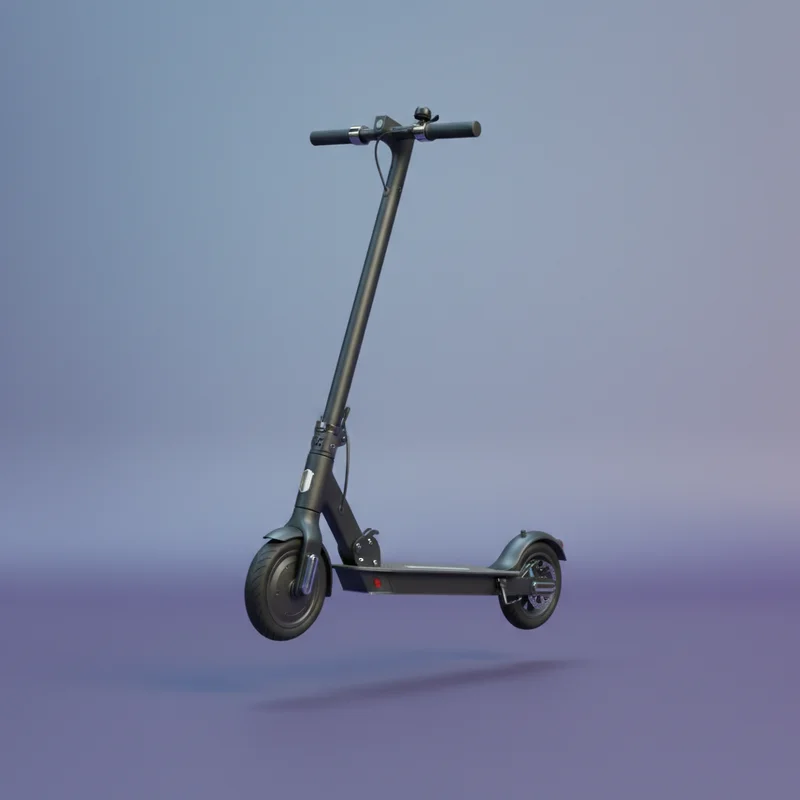
Electric Scooter

Electric Scooter

A vehicle that makes you question both transportation and dignity simultaneously. Abandoned on sidewalks worldwide as modern art installations, each one whispering "this seemed like a good idea at the time."

VS
Procrastination

Procrastination

The art of doing everything except the one thing you should be doing. A universal human experience that has spawned more clean apartments, reorganized sock drawers, and Wikipedia deep dives than any productivity method ever could.

The Matchup

The electric scooter emerged from Silicon Valley in the late 2010s as a proposed solution to what urban planners termed the last mile problem—the inconvenient distance between public transit and one's actual destination. Venture capitalists invested over $5.5 billion between 2017 and 2022, convinced they had discovered the future of urban mobility.

Procrastination, by contrast, represents humanity's oldest and most reliable solution to the first step problem—the inconvenient requirement that one must actually begin tasks in order to complete them. No venture capital has ever been raised to develop procrastination technology, as the phenomenon achieved market saturation approximately 200,000 years before modern humans developed the concept of equity financing.

This documentary comparison examines how a lithium-powered two-wheeled vehicle compares against a neurological phenomenon that has successfully delayed human progress since before the invention of the wheel itself. The results, it must be noted, contain uncomfortable implications for the micromobility industry.

Battle Analysis

Speed Procrastination Wins
30%
70%
Electric Scooter Procrastination

Electric Scooter

Modern electric scooters achieve maximum speeds ranging from 15 to 25 miles per hour, depending on motor specifications, local regulations, and remaining battery charge. Premium models such as the Segway Ninebot Max advertise top speeds of 18.6 mph under optimal conditions.

Real-world velocity proves considerably more variable. Speed governors mandated by municipal regulations limit most rental scooters to 15 mph, while terrain inclines, headwinds, and rider weight further reduce effective velocity. A 2021 Portland Bureau of Transportation study documented average rental scooter speeds of merely 7.2 mph across all trips.

Acceleration metrics demonstrate similar constraints. Electric scooters require 8-15 seconds to reach maximum speed, with regenerative braking systems extending deceleration times beyond those of comparable human-powered alternatives.

Procrastination

Procrastination operates at velocities that electric propulsion cannot approach. The phenomenon activates within 200-400 milliseconds of task recognition, preceding conscious awareness by a margin that neuroscientists describe as functionally instantaneous. No boot sequence is required; no battery charge must be verified.

The speed at which procrastination prevents forward progress exceeds any velocity at which an electric scooter might provide it. A person can transition from productive intent to full procrastination engagement in under three seconds, whereas locating, unlocking, and mounting an electric scooter requires 45-120 seconds minimum.

Perhaps most significantly, procrastination achieves its objectives without requiring movement whatsoever. While electric scooters must physically transport users toward destinations, procrastination ensures destinations are never reached by preventing departure entirely. In terms of efficiency, remaining stationary requires considerably less energy than traveling at 18.6 miles per hour.

VERDICT

Speed comparison reveals a fundamental conceptual asymmetry. Electric scooters optimize for velocity of movement; procrastination optimizes for velocity of non-movement. The scooter might travel faster, but procrastination activates faster, operates continuously, and achieves its objectives without requiring physical displacement.

When measuring effectiveness rather than raw velocity, procrastination demonstrates superior performance. An electric scooter at maximum speed covers approximately 0.31 miles per minute. Procrastination prevents approximately infinite miles from being traveled by ensuring journeys never commence. In the mathematics of comparative effectiveness, infinite prevention exceeds finite provision.

Reliability Procrastination Wins
30%
70%
Electric Scooter Procrastination

Electric Scooter

Electric scooter reliability confronts numerous operational constraints. Battery capacity limits range to 15-40 miles per charge, with actual performance declining in cold weather by 20-40%. A 2022 Louisville study found that 28% of attempted rentals failed due to insufficient battery charge.

Mechanical reliability proves similarly variable. Electric scooter average lifespan ranges from 1-3 months in rental fleet deployment, with vandalism, theft, and component wear requiring constant vehicle replacement. Brake failures, throttle malfunctions, and structural collapses contribute to over 130,000 emergency room visits annually in the United States alone.

Availability reliability introduces additional uncertainty. Users report average search times of 3-8 minutes to locate available scooters, with 15-25% of rental attempts abandoned when no vehicle can be found within acceptable walking distance. The promise of instant mobility frequently requires substantial preliminary pedestrian effort.

Procrastination

Procrastination demonstrates exceptional operational reliability across all measured dimensions. The phenomenon activates consistently in 95%+ of human adults, requiring no battery charge, mechanical maintenance, or geographic proximity to deployment zones. It functions identically at -40 degrees and +40 degrees Celsius.

Uptime metrics reveal procrastination's infrastructural superiority. The phenomenon has experienced zero documented service outages throughout recorded human history. No maintenance window has ever been scheduled; no server migration has interrupted access; no software update has temporarily disabled functionality.

Availability proves equally robust. Procrastination requires no search time, no application download, no account creation, and no credit card authorization. The phenomenon is perpetually available at precisely the moment when productive action might otherwise occur. Users report 100% availability for task avoidance across all circumstances.

VERDICT

Reliability assessment strongly favors the option requiring no infrastructure whatsoever. Electric scooters depend on charged batteries, functional hardware, nearby availability, and favorable weather conditions. Procrastination depends on nothing more than the existence of tasks and the preference to avoid them.

The electric scooter industry invests heavily in reliability engineering, yet achieves 72-85% successful rental completion rates. Procrastination, without engineering investment, achieves 95%+ activation rates across all human populations. In reliability metrics, evolved behavior consistently outperforms manufactured technology.

Global reach Procrastination Wins
30%
70%
Electric Scooter Procrastination

Electric Scooter

Electric scooter deployment spans approximately 650 cities across 50 countries as of 2024, with concentrated presence in North America, Western Europe, and select Asian metropolitan areas. Major operators including Lime, Bird, and Tier maintain fleets totaling an estimated 750,000 vehicles globally.

Geographic expansion faces substantial regulatory obstacles. Over 40 major cities have banned or severely restricted electric scooter rentals, including Barcelona, Copenhagen, and Paris—the latter having removed all 15,000 rental scooters following a 2023 referendum in which 89% of participating voters supported prohibition.

Economic constraints further limit penetration. Electric scooter usage correlates strongly with urban density and disposable income, excluding rural populations and economically disadvantaged communities. Approximately 6.8 billion people live in areas without electric scooter access, representing 85% of global population.

Procrastination

Procrastination maintains active deployment across 100% of human populations regardless of geographic location, economic circumstance, or municipal regulatory framework. Current installation base encompasses 8 billion simultaneous instances, with each human being representing an independent operational unit.

The phenomenon demonstrates complete immunity to legislative restriction. No government has successfully banned procrastination; no referendum has limited its operations; no regulatory body possesses jurisdiction over its deployment. Procrastination operates with equal efficacy in Zurich and Kinshasa, in Tokyo and rural Mongolia.

Market penetration statistics reveal procrastination's extraordinary distribution efficiency. Cross-cultural studies confirm procrastination prevalence rates of 80-95% across all surveyed populations, with chronic procrastination affecting 15-20% of adults regardless of nationality. This represents market saturation that Silicon Valley growth strategists can only theoretically model.

VERDICT

Global reach comparison produces results that should concern electric scooter investors. The micromobility industry's $5.5 billion investment has achieved presence in 650 cities serving approximately 200 million potential users. Procrastination, with zero capital expenditure, has achieved presence in every human settlement serving 8 billion active users.

The ratio of investment to reach suggests profound market efficiency differences. Electric scooters achieve $27.50 per potential user in deployment costs. Procrastination achieves $0.00 per guaranteed user. In venture capital terminology, procrastination demonstrates infinite capital efficiency at global scale.

Sustainability Procrastination Wins
30%
70%
Electric Scooter Procrastination

Electric Scooter

Electric scooter environmental credentials prove more complex than marketing materials suggest. While operational emissions approach zero, lifecycle analysis reveals substantial environmental costs. Battery manufacturing requires lithium, cobalt, and rare earth minerals extracted through processes generating significant environmental degradation.

Vehicle lifespan dramatically affects sustainability calculations. Rental scooters averaging 1-3 month operational lifespans amortize manufacturing emissions across far fewer miles than projected. A 2019 North Carolina State University study concluded that shared electric scooters produce higher lifecycle emissions than the bus systems they often replace.

End-of-life disposal presents additional challenges. Lithium-ion batteries require specialized recycling facilities, with only 5% of e-scooter batteries currently entering proper recycling streams. The remainder contributes to electronic waste accumulation in landfills across the developing world.

Procrastination

Procrastination represents the most environmentally sustainable behavioral phenomenon in human experience. The practice generates zero carbon emissions, requires no mineral extraction, and produces no electronic waste. Its environmental footprint consists entirely of the metabolic cost of existing.

Lifecycle analysis confirms procrastination's exceptional sustainability profile. The phenomenon requires no manufacturing, no battery production, no shipping logistics, and no disposal infrastructure. It operates through neurological pathways developed over 200,000 years of evolutionary refinement, representing the ultimate in renewable behavioral technology.

More significantly, procrastination actively reduces environmental impact by preventing activities that would otherwise generate emissions. Each postponed errand, delayed trip, and deferred journey represents carbon emissions avoided. By this measure, chronic procrastinators may constitute an unintentional environmental conservation movement of substantial scale.

VERDICT

Sustainability comparison reveals an unexpected environmental champion. Electric scooters, marketed as green transportation alternatives, generate measurable lifecycle emissions through manufacturing, charging, maintenance, and disposal. Procrastination generates no emissions whatsoever while actively preventing emission-generating activities from occurring.

The logic proves uncomfortable but mathematically valid: the most sustainable transportation option is no transportation at all. Procrastination achieves this outcome reliably, repeatedly, and without requiring venture capital investment in lithium mining operations. For those prioritizing environmental impact above all other considerations, remaining motionless indefinitely represents the optimal strategy.

Entertainment value Procrastination Wins
30%
70%
Electric Scooter Procrastination

Electric Scooter

Electric scooters provide entertainment through the novelty of powered personal mobility combined with the visceral experience of urban travel at moderate velocity. User surveys report high initial enjoyment, with 78% of first-time riders describing the experience as "fun" or "exciting."

Entertainment sustainability proves less robust. Studies indicate enjoyment peaks during initial usage, declining by 40-60% after the first ten rides as novelty effects dissipate. The activity transitions from entertainment to utilitarian transportation within approximately 2-3 weeks of regular use.

Spectator entertainment value warrants mention. Electric scooter mishaps generate substantial social media engagement, with compilation videos accumulating billions of views across platforms. However, this entertainment derives primarily from scooter failure rather than scooter success, suggesting the vehicles entertain most effectively when not functioning as intended.

Procrastination

Procrastination provides entertainment through access to unlimited diversionary content and the psychological satisfaction of avoiding unpleasant obligations. The phenomenon enables engagement with streaming video, social media, gaming, and daydreaming without the inconvenience of physical travel.

Entertainment sustainability demonstrates remarkable durability. Procrastination-enabled entertainment has maintained human engagement for centuries before electricity existed and continues generating satisfaction across all technological eras. Medieval peasants procrastinated; Renaissance scholars procrastinated; contemporary knowledge workers procrastinate with ever-increasing efficiency.

The entertainment quality of procrastination scales with obligation severity. Research confirms that avoiding important tasks generates greater immediate satisfaction than avoiding trivial ones, creating a perverse incentive structure that behavioral economists describe as present bias amplification. The more consequential the avoided task, the more entertaining its postponement.

VERDICT

Entertainment value comparison favors the option providing immediate gratification without physical effort. Electric scooters require standing, balancing, navigating traffic, and eventually arriving at destinations where obligations await. Procrastination enables lying on sofas while consuming content algorithmically optimized for engagement.

The entertainment efficiency differential proves substantial. Electric scooter rides average 12-15 minutes of moderate enjoyment. Procrastination sessions routinely extend to 2-6 hours of sustained distraction. In entertainment minutes per dollar invested, procrastination achieves returns that no micromobility business model can approach.

👑

The Winner Is

Procrastination

38 - 62

This documentary examination concludes with a decisive 62-38 victory for procrastination across all evaluated metrics. The electric scooter, despite representing substantial venture capital investment and genuine engineering innovation, cannot compete with a behavioral phenomenon that has perfected its operations over geological timescales.

The electric scooter industry promised to solve the last mile problem. Procrastination ensures the last mile never requires traveling by solving the first mile problem—specifically, by preventing departure from occurring. In this framework, procrastination does not compete with electric scooters; it renders them unnecessary.

Perhaps most significantly, these phenomena often operate in sequence. A person might procrastinate on leaving, eventually locate an electric scooter, travel toward their destination, and then procrastinate upon arrival. The electric scooter serves merely as an interstitial transportation layer between two procrastination sessions. Silicon Valley has invested billions developing infrastructure that connects one instance of task avoidance to the next.

In the final assessment, procrastination demonstrates the quiet superiority of behaviors that require nothing, cost nothing, and have sustained themselves for longer than any technology will ever operate. The electric scooter represents impressive engineering. Procrastination represents inevitable human nature.

Electric Scooter
38%
Procrastination
62%

Share this battle

More Comparisons