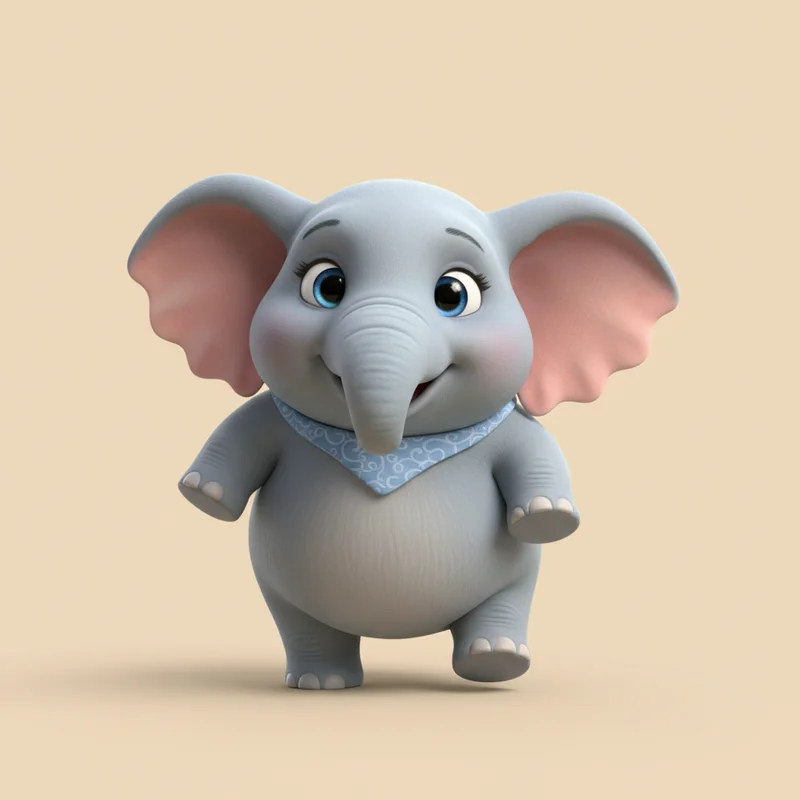
Elephant
The elephant's hippocampus represents one of nature's most sophisticated information storage systems, enabling recall of individual elephants, locations, and events spanning decades. Matriarchs have been documented leading their herds to water sources visited only once, thirty years prior. This navigational precision would embarrass most satellite systems.
The elephant's memory operates without external power sources, cloud subscriptions, or terms of service agreements. Information is stored in biological neural tissue that repairs itself, requires no software updates, and has never once asked anyone to accept cookies. The elephant does not forget. It chooses what to prioritise, which is rather more sophisticated.
Artificial Intelligence
Artificial Intelligence systems can theoretically store unlimited information, constrained only by available server capacity and the electricity bills of data centres. GPT-4 was trained on approximately 570 gigabytes of text data, a figure that sounds impressive until one realises an elephant's brain weighs roughly 5 kilograms and contains rather more useful information about actual survival.
The AI's memory, however, suffers from a critical limitation: it cannot form new memories during conversation. Each interaction begins from the same fixed knowledge state, like meeting someone with anterograde amnesia at every dinner party. The elephant, by contrast, will remember your face, your smell, and whether you were kind — and adjust its behaviour accordingly, forever.