Topic Battle

Where Everything Fights Everything

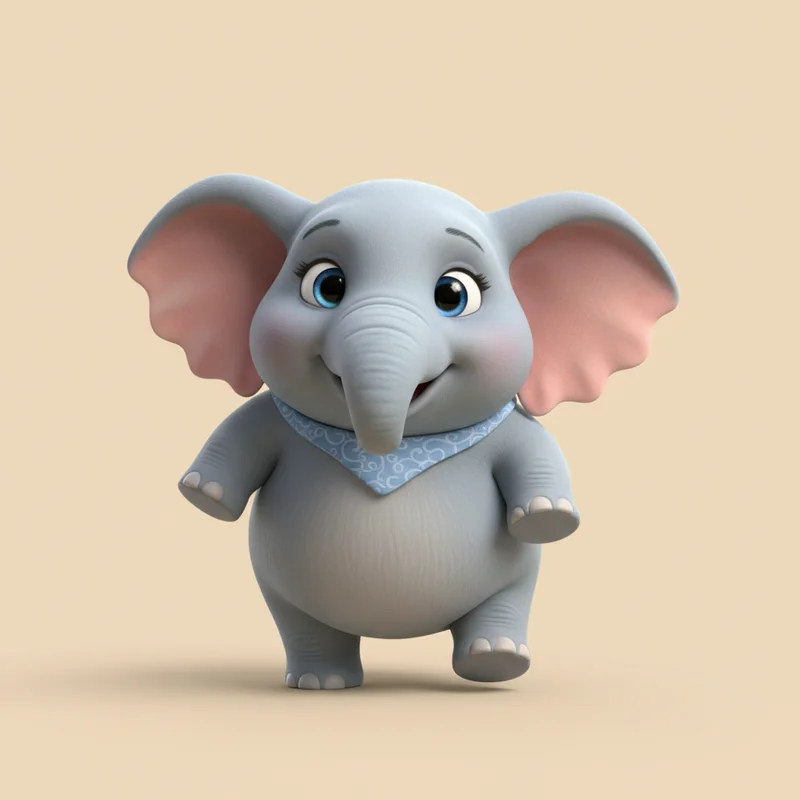
Elephant

Elephant

Earth's largest land mammal with remarkable memory, complex social bonds, and trunk-based problem solving.

VS
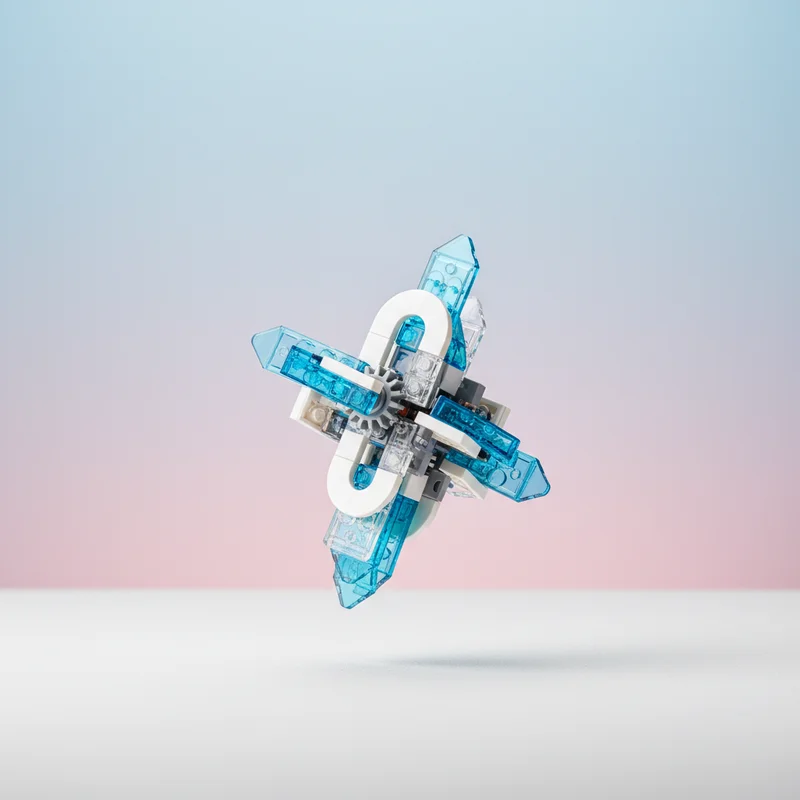
Lego

Lego

Interlocking plastic bricks and barefoot landmines.

Battle Analysis

Global reach lego Wins
30%
70%
Elephant Lego

Elephant

Wild elephant populations now occupy a tragically diminished range. African elephants inhabit fragmented territories across 37 countries, whilst Asian elephants survive in only 13 nations. Combined, they occupy less than 15% of their historical range. Direct human-elephant encounters remain rare for the majority of the global population, limited to those with means for international travel or proximity to the remaining habitats. The elephant's physical presence, despite its enormity, touches fewer lives each passing decade.

Lego

Lego achieves near-universal market penetration across the developed world. The company estimates that 7 Lego sets are sold every second, with products available in over 130 countries. Approximately 80% of households in Western Europe and North America contain at least one Lego brick. The standardised clutch mechanism ensures a child in Tokyo can combine bricks with those purchased in Reykjavik. In terms of physical presence in human dwellings, Lego has achieved what the elephant could never accomplish: true global ubiquity.

VERDICT

Lego exists in 80% of Western households; elephants survive in fragmented populations across limited territories.
Emotional impact elephant Wins
70%
30%
Elephant Lego

Elephant

The elephant possesses an extraordinary capacity for emotional resonance with human observers. Their documented behaviours include apparent grief rituals, long-term memory of individuals and locations, and altruistic assistance to injured herd members. Elephants have been observed shedding tears and standing vigil over deceased companions. Wildlife documentaries featuring elephants consistently achieve the highest viewer ratings, suggesting a profound cross-species emotional connection. The phrase 'an elephant never forgets' has entered common parlance as shorthand for emotional permanence.

Lego

Lego's emotional impact operates through different mechanisms entirely. The distinctive sound of hands rummaging through a brick collection triggers powerful nostalgic responses in adults who built during childhood. The completion of a complex set produces measurable dopamine release. However, Lego's most significant emotional contribution may be negative: the 2 AM barefoot encounter with an unseen brick produces pain responses registering at approximately 830 kilopascals per square centimetre. This shared suffering has bonded generations of parents in mutual commiseration.

VERDICT

Elephants inspire profound emotional connection through demonstrable sentience and social complexity.
Educational value lego Wins
30%
70%
Elephant Lego

Elephant

Elephants serve as charismatic megafauna essential to conservation education worldwide. They demonstrate complex social structures, tool use, and apparent mourning behaviours that challenge assumptions about animal cognition. Observing elephants teaches children about ecosystems, biodiversity, and the consequences of habitat destruction. However, direct educational engagement requires either significant travel to wildlife reserves or contentious visits to zoological institutions. The elephant cannot be brought into the classroom without considerable logistical complexity.

Lego

The educational applications of Lego bricks have spawned an entire pedagogical movement. Lego Education operates in over 100 countries, teaching principles of engineering, robotics, and computational thinking. The tactile nature of brick manipulation develops fine motor skills, spatial reasoning, and mathematical concepts. The Lego Serious Play methodology has been adopted by Fortune 500 companies for strategic planning. Unlike the elephant, Lego requires no feeding schedule, produces no waste, and fits conveniently in a rucksack.

VERDICT

Lego provides accessible, scalable education in engineering and mathematics without veterinary requirements.
Structural integrity lego Wins
30%
70%
Elephant Lego

Elephant

The elephant's skeletal architecture represents millions of years of evolutionary refinement. Its leg bones can support continuous loads exceeding 6 tonnes whilst maintaining mobility across diverse terrain. The skin, measuring up to 2.5 centimetres thick, provides remarkable protection against thorns, insects, and solar radiation. However, the elephant remains fundamentally biological and therefore subject to the inevitable degradation of organic matter. No elephant has survived beyond 70 years in documented history.

Lego

The Lego brick achieves structural performance that borders on the absurd. Manufactured from acrylonitrile butadiene styrene (ABS), each brick maintains dimensional accuracy to within two thousandths of a millimetre. A single 2x2 brick can withstand compressive forces of 4,240 Newtons before failure, equivalent to supporting a mass of 432 kilograms. Bricks manufactured in 1958 remain fully compatible with those produced today. The plastic will persist in landfills for an estimated 1,300 years, achieving a form of immortality that elephants can only dream of, were they capable of comprehending polymer chemistry.

VERDICT

Lego bricks maintain structural integrity for over a millennium; elephants decompose within decades.
Cultural significance elephant Wins
70%
30%
Elephant Lego

Elephant

Elephants occupy sacred positions in numerous cultural traditions. Hindu mythology venerates Ganesha, the elephant-headed deity of wisdom and new beginnings. In Thailand, the white elephant remains a royal symbol of considerable political significance. Hannibal's crossing of the Alps with war elephants represents one of military history's most audacious gambits. The elephant appears on currency, national emblems, and political party logos across multiple continents. Their cultural footprint spans 5,000 years of recorded human history.

Lego

Lego has achieved cultural penetration remarkable for a product barely 75 years old. The brand ranks among the world's most powerful, with an estimated value exceeding $6 billion. Legoland theme parks attract millions annually across eight locations worldwide. The Lego Movie franchise has grossed over $1.1 billion at the box office. Adult fans of Lego (AFOLs) constitute a devoted community exceeding 1 million members. The brick has become shorthand for creative construction itself, transcending its status as mere toy to become cultural metaphor.

VERDICT

Elephants hold sacred positions across ancient civilisations; Lego remains a 20th-century commercial product.
👑

The Winner Is

Lego

45 - 55

The confrontation between biological magnificence and plastic precision yields results both surprising and instructive. The elephant, nature's most impressive terrestrial achievement, secures victories in emotional impact and cultural significance, categories that reward sentience, history, and the capacity to inspire awe. These are not trivial accomplishments; they speak to something essential about the human need for connection with the living world.

Yet Lego's victories in structural integrity, educational value, and global reach reflect the uncomfortable reality of the Anthropocene epoch. The plastic brick persists where the elephant perishes. It educates where the elephant remains inaccessible. It proliferates where the elephant retreats. This is not a celebration but an observation: humanity has created objects that outperform nature's grandest designs by the metrics humans value most in daily life.

Elephant
45%
Lego
55%

Share this battle

More Comparisons