Topic Battle

Where Everything Fights Everything

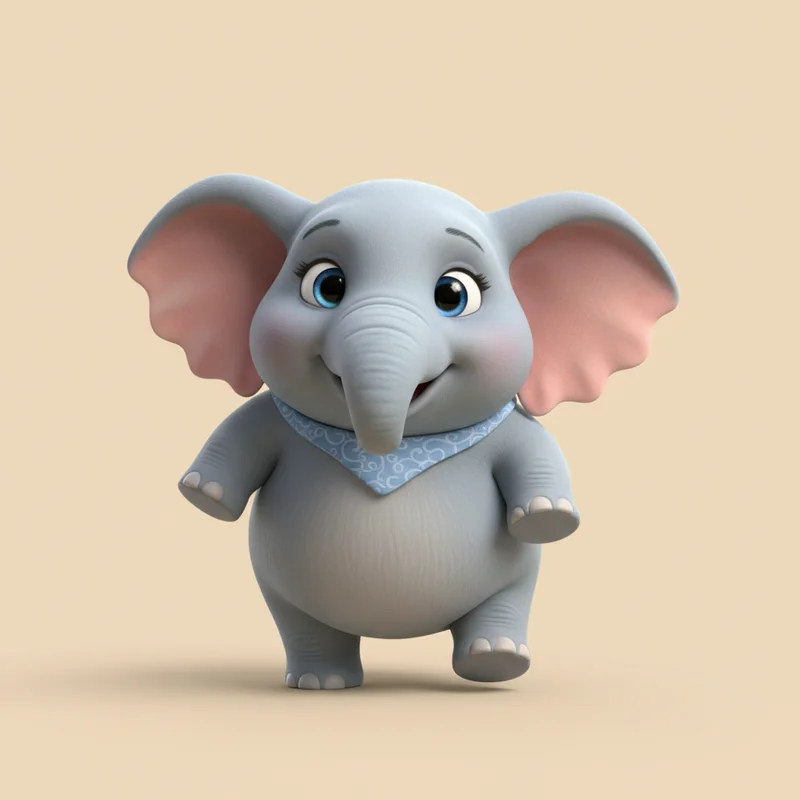
Elephant

Elephant

Earth's largest land mammal with remarkable memory, complex social bonds, and trunk-based problem solving.

VS
Love

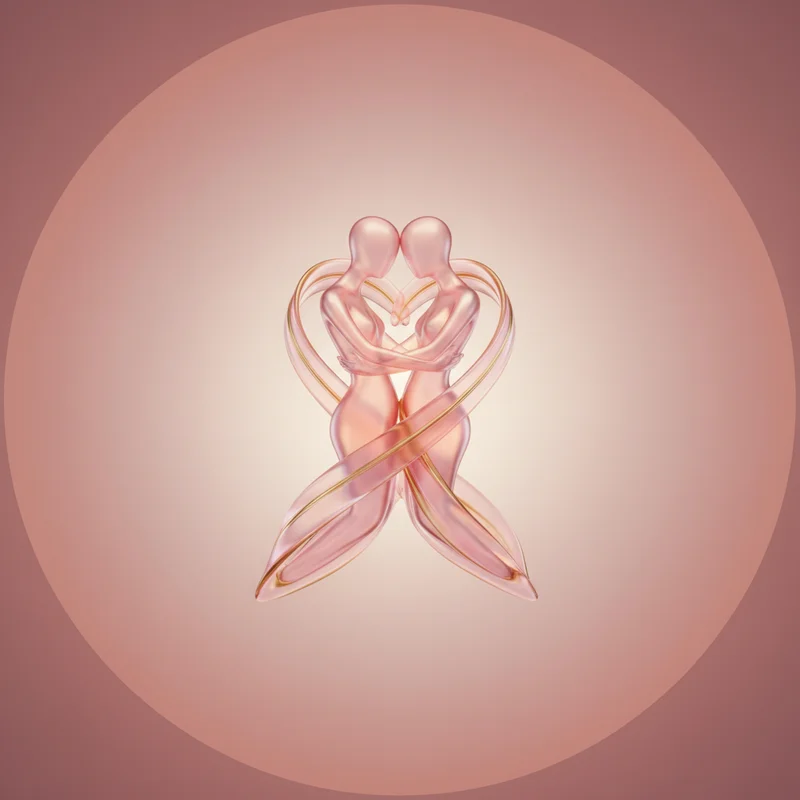
Love

Universal emotion driving art, war, and terrible decisions.

Battle Analysis

Memory elephant Wins
70%
30%
Elephant Love

Elephant

The proverb insists that elephants never forget, and scientific evidence largely supports this folk wisdom. Elephant brains weigh approximately 5 kilograms and contain an estimated 257 billion neurons. Matriarchs remember drought locations from 50 years prior. Elephants recognise individual humans decades after last encounter. They mourn their dead in ways that suggest persistent emotional memory of remarkable fidelity. Research indicates elephants can maintain social memories of over 1,000 individuals simultaneously. This cognitive capacity has proven essential for survival across African savannahs where remembering water sources during drought conditions separates living herds from deceased ones.

Love

Love creates memories of such intensity that they often outlast the relationships themselves. The neurochemistry of romantic bonding produces what researchers term flashbulb memories—recollections of extraordinary vividness and durability. First kisses, wedding days, final conversations: these moments encode themselves with permanence that ordinary experiences cannot achieve. More troublingly, love also creates memories that refuse to fade despite our explicit wishes. Heartbreak produces intrusive recollections that persist for years. Songs, scents, and locations become permanently associated with past loves. The memory effects of love frequently exceed what the conscious mind desires or can control.

VERDICT

The elephant's documented 50-year recall of specific information represents more verifiable memory capability than love's admittedly powerful but less measurable mnemonic effects.
Durability love Wins
30%
70%
Elephant Love

Elephant

Elephants demonstrate remarkable longevity, with lifespans averaging 60 to 70 years in the wild. Their physical resilience includes skin up to 2.5 centimetres thick, bones of extraordinary density, and immune systems that have attracted serious attention from cancer researchers. However, elephants remain vulnerable to poaching, habitat destruction, and the various indignities of biological mortality. An estimated 35,000 elephants are killed annually by human activity. Despite their formidable construction, elephants can be—and routinely are—destroyed. Their numbers have declined by 62% in the past two decades. Physical magnificence, it appears, provides limited protection against human determination.

Love

Love's durability presents a fascinating paradox. Individual instances of romantic love prove notoriously fragile—approximately 50% of marriages in Western nations end in dissolution, and countless non-marital loves fade without formal documentation. Yet love as a concept has persisted through every epoch of human history. It survived the fall of Rome, the Black Death, two World Wars, and the invention of dating applications. It cannot be hunted. It cannot be rendered extinct through habitat loss. Every generation rediscovers love as though inventing it afresh. The specific manifestations may perish; the phenomenon itself appears indestructible. Love has outlasted civilisations that once seemed permanent.

VERDICT

While individual elephants and loves both prove vulnerable, love as a phenomenon has demonstrated civilisation-spanning persistence impossible for any biological entity.
Global influence love Wins
30%
70%
Elephant Love

Elephant

Elephants once ranged across most of Africa and Asia, but their territory has contracted dramatically. Today, approximately 415,000 African elephants and 50,000 Asian elephants remain. Their influence extends primarily across 37 African nations and 13 Asian countries. In cultural terms, elephants feature prominently in Hindu, Buddhist, and various African traditions. The Republican Party has adopted the elephant as its symbol. Elephant-related tourism generates approximately $25 billion annually. However, most humans on Earth will never encounter an elephant directly. Their influence, while significant, remains fundamentally limited by physical geography and declining population.

Love

Love's global influence approaches total cultural saturation. Every human society documented by anthropologists has constructed elaborate frameworks around love—courtship rituals, marriage customs, inheritance laws, artistic traditions. The global wedding industry alone exceeds $300 billion annually. Love songs dominate music charts in every language. Literature across all cultures centres disproportionately on romantic themes. An estimated 86% of all films include romantic subplots. Love shapes architecture (the Taj Mahal), economics (diamond markets), and law (marriage legislation debated in every nation). There exists no culture where love does not command significant institutional and emotional resources.

VERDICT

Love achieves universal cultural presence affecting every human society; elephants, despite their significance, influence a far smaller portion of human experience.
Physical presence elephant Wins
70%
30%
Elephant Love

Elephant

The elephant's physical presence is, by any objective standard, utterly commanding. Adult African males reach heights of 4 metres and weights exceeding 6,000 kilograms. Their footsteps register on seismographs. Their ears alone measure 1.8 square metres each, serving as both temperature regulation devices and rather emphatic communication tools. When an elephant enters a space, every organism present becomes immediately aware of this development. The animal displaces air, bends vegetation, and causes the ground to register measurable tremors. One cannot ignore an elephant. One cannot pretend an elephant is not present. The elephant occupies physical reality with an assertiveness that borders on philosophical argument.

Love

Love possesses no mass, no dimensions, and no measurable physical footprint whatsoever. It cannot be weighed, photographed, or detected by any scientific instrument yet devised. Neuroscientists point to dopamine, oxytocin, and serotonin as its chemical signatures, but these merely correlate with love's presence rather than constituting the phenomenon itself. And yet—here is the peculiar thing—love manages to fill rooms. Its presence transforms the atmosphere of spaces in ways witnesses consistently report. Two people in love alter the social dynamics of any gathering they attend. The absence of love creates tangible voids that persist long after physical presence has departed. Love occupies space without requiring any.

VERDICT

The elephant's six tonnes of verifiable mass represents physical presence that love, despite its atmospheric effects, cannot match.
Destructive capacity love Wins
30%
70%
Elephant Love

Elephant

An agitated elephant represents one of nature's more formidable destructive forces. Approximately 500 humans die annually in elephant-related incidents. A charging elephant can reach speeds of 40 kilometres per hour, sufficient to overturn vehicles and demolish structures. Their tusks, capable of lifting 300 kilograms, function as devastatingly effective weapons. Elephants in musth—a periodic state of heightened testosterone and aggression in males—have destroyed entire villages. The physical damage an elephant can inflict in moments would require human demolition crews considerably longer to achieve. Yet this destruction remains localised; an elephant can only devastate what it physically reaches.

Love

Love's destructive capacity operates on an entirely different scale. The Trojan War—ten years of conflict, an estimated 100,000 casualties, the destruction of an entire civilisation—was supposedly initiated over love. Edward VIII abandoned the British throne for love. Marc Antony compromised Rome's strategic interests for love. The destruction love enables extends far beyond physical damage: careers sacrificed, families fractured, identities transformed beyond recognition. Love provides the motivation for humans to destroy things no elephant could touch—reputations, institutions, their own futures. Its destructive range encompasses everything from individual psyches to geopolitical stability.

VERDICT

While elephants can demolish physical structures, love has toppled kingdoms and redirected the course of human history repeatedly.
👑

The Winner Is

Love

47 - 53

This investigation has illuminated a contest between physical magnificence and conceptual omnipresence. The elephant commands immediate respect through sheer biological achievement—six tonnes of evolved intelligence traversing landscapes with dignity that humans can only admire. Love commands something more insidious: a grip on human consciousness that operates below rational thought and persists regardless of practical inconvenience.

The data reveals patterns that demand acknowledgement. The elephant wins on measures of physical presence and verifiable memory—categories where its concrete existence provides clear advantage. Love prevails in durability, destructive capacity, and global influence—categories where abstraction proves paradoxically more powerful than flesh. Three criteria to two: love claims the narrowest of victories.

What does this verdict signify? Perhaps that humanity has constructed a conceptual framework—love—capable of exceeding what biological evolution has produced. The elephant represents nature's most impressive terrestrial achievement. Love represents humanity's most influential invention. Both have shaped history. Both inspire poetry. Both create memories that outlast reasonable expectation.

Yet one must note the irony: elephants, those famously emotional creatures, demonstrate behaviours strongly suggestive of love itself. They form lifelong bonds, mourn their dead, and protect their families with ferocity that transcends instinct. In the end, the elephant does not lose to love so much as embody it. The distinction between competitor and concept collapses upon close examination.

Elephant
47%
Love
53%

Share this battle

More Comparisons