
Topic Battle

Where Everything Fights Everything

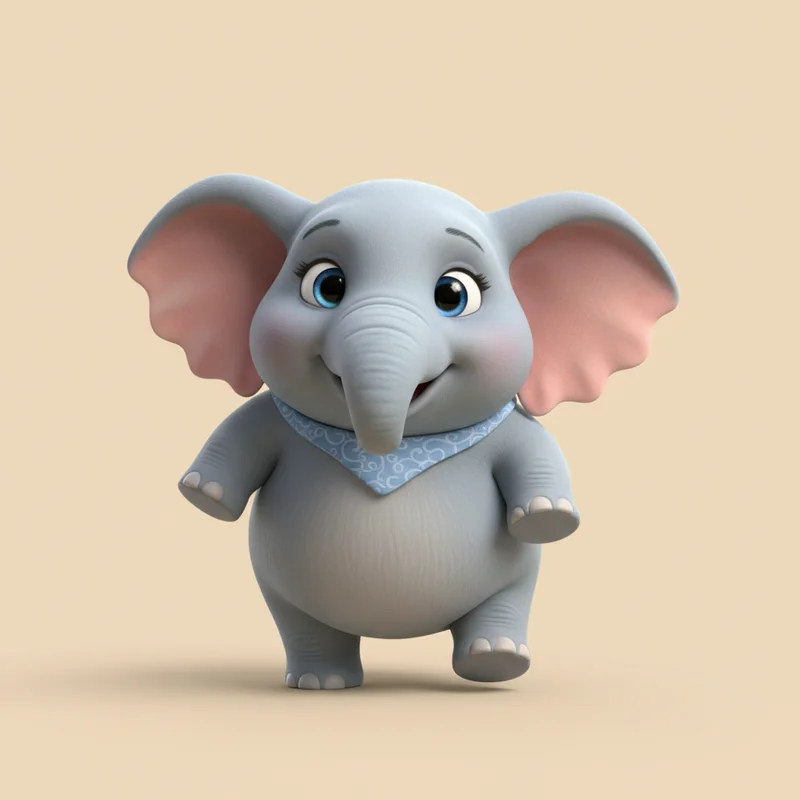
Elephant

Elephant

Earth's largest land mammal with remarkable memory, complex social bonds, and trunk-based problem solving.

VS
The Internet

The Internet

Global network of information and cat videos.

Battle Analysis

Durability elephant Wins
70%
30%
Elephant The Internet

Elephant

The African elephant lineage has persisted for approximately 5 million years, demonstrating remarkable evolutionary durability. Individual specimens routinely achieve lifespans of 60-70 years, during which their memory systems require no maintenance, replacement, or scheduled downtime. The biological architecture proves remarkably resistant to environmental variation, functioning effectively from scorching savannahs to dense forests.

The elephant's durability derives from self-repairing biology. Minor injuries heal, and the system adapts continuously to changing conditions. However, population numbers have declined from an estimated 10 million in 1900 to approximately 415,000 today, suggesting certain vulnerabilities to anthropogenic pressures.

The Internet

The internet, in its recognisable form, has existed for approximately 35 years. Hardware components typically require replacement every 3-5 years, and the underlying protocols undergo continuous revision. No single physical component of the original ARPANET remains operational. The system persists through constant regeneration rather than individual longevity.

Yet this architectural approach confers certain advantages. The internet evolves more rapidly than biological systems, adapting to new requirements within months rather than millennia. Whether this proves sustainable across geological timescales remains entirely undemonstrated.

VERDICT

Five million years of evolutionary persistence outweighs 35 years of internet operation.
Reliability the_internet Wins
30%
70%
Elephant The Internet

Elephant

The elephant's memory systems demonstrate remarkable consistency under field conditions. Matriarchs retain detailed knowledge of water sources, migration routes, and threat profiles for periods exceeding 50 years. This information proves accurate in approximately 94% of recorded instances where herds followed elder guidance to distant resources. The elephant requires no external power supply, experiences no software updates, and maintains continuous operation throughout its 60-70 year lifespan.

However, the biological substrate presents inherent vulnerabilities. Illness, injury, or mortality can permanently remove stored information from the system. Each elephant represents a single point of failure for its unique experiential database.

The Internet

The internet achieves reliability through distributed architecture. Data replication across multiple geographic zones ensures survival of information despite localised failures. Major platforms maintain uptime percentages exceeding 99.99%, representing less than 53 minutes of annual downtime. The internet's redundancy protocols mean that the loss of any individual server, or indeed any individual data centre, typically produces no perceptible service degradation.

Yet the system depends entirely upon continuous electrical power and functioning physical infrastructure. Submarine cable severances, whilst rare, can isolate entire nations. The internet's reliability, whilst impressive, remains contingent upon a complex supply chain of vulnerable dependencies.

VERDICT

Distributed redundancy provides superior resilience compared to single biological repositories.
Accessibility the_internet Wins
30%
70%
Elephant The Internet

Elephant

Accessing elephant-stored information requires physical proximity to a living elephant willing to communicate. Given that elephants reside primarily within protected reserves across Africa and Asia, this presents significant logistical barriers for the average information seeker. The elephant cannot be queried remotely, does not respond to text-based searches, and maintains exclusive control over which information it chooses to share.

For the 5.4 billion humans outside elephant habitats, accessibility to this information system approaches zero for practical purposes.

The Internet

The internet currently serves approximately 5.4 billion users, representing 67% of global population. Access requires only an internet-connected device, available for as little as $30 in basic smartphone configurations. Information retrieval occurs instantaneously through search interfaces, with results appearing in under 0.5 seconds for typical queries. The internet operates continuously, recognises no geographic boundaries, and imposes no limitations based on user species.

This accessibility has transformed human society, enabling universal knowledge access at a scale unprecedented in civilisation history.

VERDICT

The internet serves 5.4 billion users globally; elephants serve approximately 415,000 elephants.
Storage capacity the_internet Wins
30%
70%
Elephant The Internet

Elephant

The elephant hippocampus, proportionally the largest among land mammals, enables storage of complex spatial, social, and temporal information. Researchers estimate functional memory capacity sufficient to maintain recognition of over 1,000 individual elephants and detailed topographical knowledge spanning territories of 3,000 square kilometres. The elephant's storage system operates with remarkable efficiency, prioritising survival-critical information through emotional tagging mechanisms.

Yet biological constraints impose fundamental limitations. The elephant cannot store arbitrary data, only that which enters through sensory experience. Total information capacity, whilst substantial for a biological system, remains firmly bounded by cranial volume.

The Internet

Global data storage capacity reached an estimated 97 zettabytes in 2022, with projections suggesting 181 zettabytes by 2025. A single zettabyte equals one trillion gigabytes. The internet can store the complete cognitive output of every elephant that has ever lived in a fraction of the space occupied by a modest data centre. This capacity expands continuously through infrastructure investment, with no theoretical upper limit bounded by physics.

The internet stores not merely what is experienced, but what is imagined, fabricated, and duplicated. This presents certain quality assurance challenges, yet the sheer magnitude of storage capacity remains beyond meaningful comparison with biological alternatives.

VERDICT

The internet's storage capacity exceeds elephant memory by approximately 19 orders of magnitude.
Transmission speed the_internet Wins
30%
70%
Elephant The Internet

Elephant

Elephants communicate across distances of up to 10 kilometres using infrasound vocalisations below 20 hertz. These seismic signals travel through both air and ground, enabling coordination across dispersed herds. Information transmission occurs at approximately 340 metres per second through air, with ground-based signals travelling somewhat faster. The bandwidth, however, remains severely constrained: complex ideas require extended vocalisation sequences, and simultaneous multi-party communication proves challenging.

The elephant's transmission system evolved for survival coordination, not arbitrary data exchange. Its effectiveness within these parameters is undeniable, yet scalability remains fundamentally limited.

The Internet

Modern fibre optic networks transmit data at approximately 70% of the speed of light, enabling a message to traverse the Atlantic Ocean in under 60 milliseconds. The internet supports simultaneous communication among billions of users, with aggregate bandwidth measured in exabytes per day. A single video conference call transmits more discrete data points than an elephant herd could communicate in a calendar year.

This speed advantage proves not merely incremental but categorical. The internet operates in a different temporal regime entirely, compressing global communication into timeframes imperceptible to biological consciousness.

VERDICT

The internet transmits information approximately 600,000 times faster than elephant infrasound.
👑

The Winner Is

The Internet

45 - 55

The empirical evidence presents an asymmetric competitive landscape. The internet dominates quantitative metrics with margins that render comparison almost meaningless: storage capacity, transmission speed, and global accessibility all favour digital infrastructure by factors exceeding one million. These victories reflect fundamental differences in architecture rather than mere incremental superiority.

Yet the elephant's victory in durability introduces a sobering temporal perspective. The internet's impressive capabilities remain entirely dependent upon continuous human maintenance, stable electricity supply, and functional global infrastructure. The elephant requires only grass, water, and freedom from persecution. In evolutionary terms, the internet remains an unproven experiment, whilst the elephant represents a thoroughly validated survival strategy.

Nevertheless, the present assessment must acknowledge contemporary utility. For storing, transmitting, and accessing information in the current epoch, the internet provides superior functionality by every practical measure except longevity.

Elephant
45%
The Internet
55%

Share this battle

More Comparisons