Topic Battle

Where Everything Fights Everything

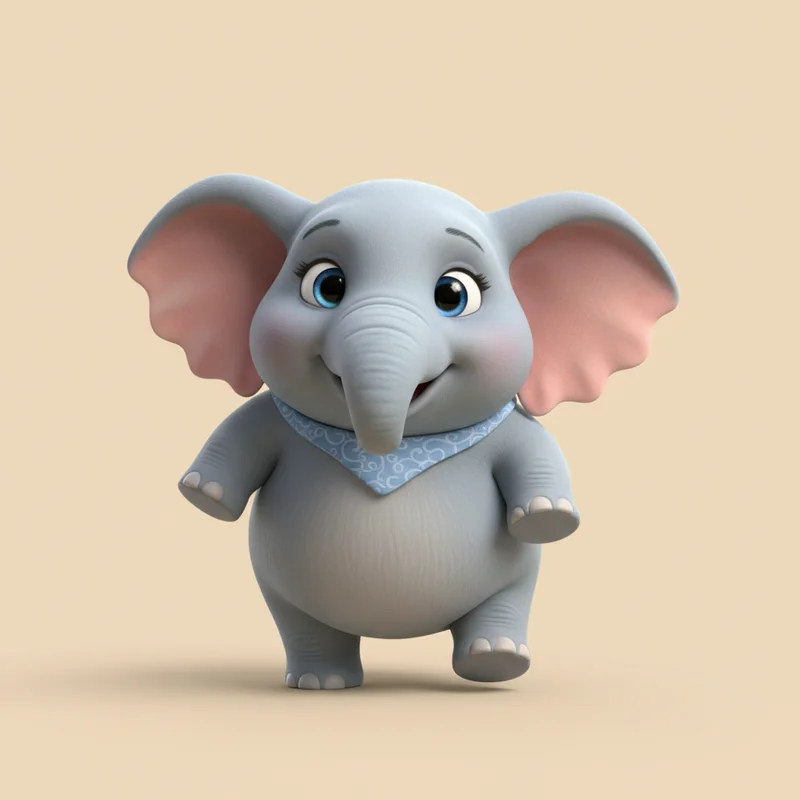
Elephant

Elephant

Earth's largest land mammal with remarkable memory, complex social bonds, and trunk-based problem solving.

VS
Time

Time

Dimension that refuses to slow down when needed.

Battle Analysis

Physical presence elephant Wins
70%
30%
Elephant Time

Elephant

The elephant commands space with undeniable authority. Standing up to 4 metres at the shoulder, occupying roughly 45 cubic metres of volume, and casting shadows visible from considerable distance, the elephant's physical presence cannot be ignored. Its footsteps register on seismographs up to 32 kilometres distant. The trunk alone contains over 40,000 muscles, enabling manipulation of objects from single blades of grass to 270-kilogram logs. This is presence one can photograph, touch, and hear approaching through the bush.

Time

Time's physical presence approaches perfect zero by conventional measurement. It occupies no volume, reflects no light, and produces no sound. Yet paradoxically, time constitutes the fundamental framework within which all physical presence occurs. Without time, the elephant would lack duration and thus existence. Time's presence manifests only through its effects: ageing, decay, growth, and motion. It is the canvas upon which physicality is painted, invisible yet absolutely foundational. One cannot photograph time, yet every photograph proves its existence.

VERDICT

The elephant provides measurable, tangible physical presence, whilst time remains experienceable only through inference.
Practical utility time Wins
30%
70%
Elephant Time

Elephant

The working elephant has served humanity for over 4,000 years. In Southeast Asia, trained elephants perform logging operations in terrain inaccessible to machinery, moving approximately 3-4 tonnes daily. Elephant tourism generates £640 million annually across Africa and Asia. Elephant dung produces biogas, paper products, and artisanal coffee commanding £380 per kilogram. Conservation of elephant habitats protects countless subsidiary species. The elephant provides tangible, measurable economic and ecological utility that can be quantified in annual reports.

Time

Time's practical utility defies conventional measurement because all utility depends upon it. Without time, cause could not precede effect, labour could not produce results, and investment could not generate returns. Time permits planning, enables scheduling, and makes promises meaningful. Every salary represents compensation for time exchanged. Humanity spends approximately £4.3 trillion annually on time-related technologies: clocks, calendars, scheduling software, and productivity tools. Time's utility is not a feature of existence; it is the prerequisite for existence having features at all.

VERDICT

Time enables all practical utility, whereas elephant utility represents one valuable application among countless possibilities.
Cultural significance time Wins
30%
70%
Elephant Time

Elephant

The elephant occupies sacred status across multiple civilisations. Ganesh, the elephant-headed deity, commands worship from over 1 billion Hindus. African traditions recognise elephant wisdom and incorporate pachyderms into creation mythology. The Republican Party adopted the elephant in 1874, ensuring persistent political symbolism. Elephant imagery pervades art, literature, and idiom: the 'elephant in the room' has entered over 40 languages. Annual conservation funding exceeds £180 million, reflecting profound human attachment to these creatures.

Time

Time's cultural significance transcends all others by structural necessity. Every culture organises itself around time: calendars, schedules, seasons, and lifespans. Time features in religious eschatology, scientific theory, and daily conversation. Phrases concerning time occur in speech approximately every 90 seconds on average. Entire philosophical traditions from Heraclitus to Heidegger have devoted themselves to understanding time's nature. Time does not merely feature in culture; time is the medium through which culture exists and transmits. Without time, there would be no culture to measure.

VERDICT

Time constitutes the foundational framework for all cultural activity, whilst elephants occupy significant but subsidiary cultural space.
Destructive capability time Wins
30%
70%
Elephant Time

Elephant

An agitated elephant presents a formidable destructive force. Charging at speeds up to 40 kilometres per hour with momentum exceeding 70,000 newton-seconds, elephants routinely demolish vehicles, flatten structures, and uproot mature trees. A single blow from the trunk can deliver 6,000 newtons of force. During musth, male elephants have destroyed entire villages. Annual elephant-related human fatalities exceed 500 globally. This is destruction one can witness, flee from, and occasionally survive.

Time

Time's destructive methodology operates through patient inevitability rather than dramatic confrontation. Time has eroded the Himalayas by 2 centimetres annually for 50 million years. Time has extinguished 99% of all species that ever existed. Time transforms mountains to sand, civilisations to archaeology, and memory to void. No fortification, no preservation technique, no act of will can ultimately resist time's erosion. The elephant destroys selectively and temporarily; time destroys comprehensively and permanently. Every pyramid, every monument, every elephant itself eventually yields to time's quiet insistence.

VERDICT

Time achieves universal destruction through entropy, whereas elephant destruction remains localised and finite.
Memory and persistence time Wins
30%
70%
Elephant Time

Elephant

The elephant's reputation for exceptional memory rests upon substantial neurological evidence. The hippocampus, responsible for memory formation, occupies a proportionally larger region of the elephant brain than in any other terrestrial mammal. Matriarchs retain navigational knowledge spanning decades, recalling water sources, migration routes, and the locations of deceased family members. Elephants have been documented recognising individuals after 22 years of separation. This memory, whilst remarkable, remains bounded by the lifespan of approximately 70 years.

Time

Time's relationship with memory presents a curious paradox: it is simultaneously the medium through which all memories exist and the force that eventually erases them. Time does not remember; time is the remembering. Every neural pathway, every carved inscription, every digital archive exists only because time permits duration. Yet time also guarantees eventual forgetting through entropy, erosion, and extinction. Time holds all memories whilst belonging to none of them. Its persistence extends beyond the heat death of the universe, a duration no elephant can conceptually approach.

VERDICT

Time provides the substrate for all memory whilst persisting infinitely beyond any individual recollection.
👑

The Winner Is

Time

44 - 56

The elephant mounts a surprisingly credible defence against an opponent of literally cosmic proportions. Securing victory in physical presence, the elephant demonstrates that tangibility retains value even against abstract adversaries. Its cultural significance, exceptional memory, and practical utility represent achievements of evolutionary refinement worthy of profound respect.

Yet the structural asymmetry of this confrontation proves ultimately decisive. Time operates at a categorical level the elephant cannot access. The elephant exists within time; time does not exist within anything. The elephant's memory, however remarkable, depends upon time for its persistence. The elephant's destruction, however formidable, requires time for its execution. The elephant's cultural significance occurs across time, not in spite of it.

Elephant
44%
Time
56%

Share this battle

More Comparisons