Topic Battle

Where Everything Fights Everything

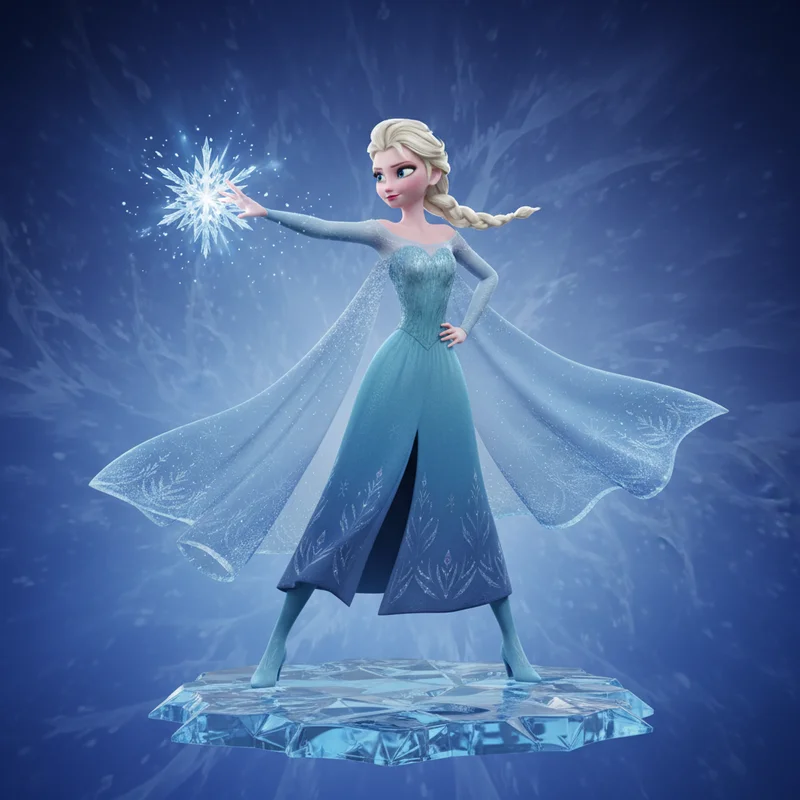
Elsa

Elsa

Ice queen who couldn't let it go.

VS
Love

Love

Universal emotion driving art, war, and terrible decisions.

Battle Analysis

Cultural impact Love Wins
30%
70%
Elsa Love

Elsa

Since her debut in Frozen (2013), Elsa has achieved what marketing executives describe as total market saturation. The character has appeared on approximately 45,000 distinct licensed products, from lunchboxes to luxury perfumes. 'Let It Go' was streamed over 614 million times on Spotify alone, and the song was reportedly played at such frequency in households with young children that several countries considered adding it to their definitions of psychological torture. Elsa has become a cultural shorthand for female empowerment, isolation, and the acceptable parameters of children's entertainment.

Love

Love predates recorded history, making its cultural impact somewhat more extensive than a decade-old animated character. It has inspired every major religion, approximately 78% of all music ever composed, and the entire economy of Valentine's Day, which generates $21.8 billion annually in the United States alone. Love has started and ended empires, motivated explorers, and convinced otherwise sensible humans to write poetry at 3 AM. Shakespeare alone produced 154 sonnets on the subject, and he was merely one of millions of writers similarly afflicted by this particular obsession.

VERDICT

Ten years of merchandise cannot compete with ten millennia of human civilisation built upon romantic foundations.
Commercial viability Elsa Wins
70%
30%
Elsa Love

Elsa

The Elsa franchise represents one of the most lucrative intellectual properties in entertainment history. Frozen merchandise generated $531.1 million in North America during its first year alone, with Elsa-related products accounting for approximately 67% of that figure. The character has been licensed across 150 product categories in 200 territories. Disney's consumer products division experienced a 25% revenue increase directly attributable to Frozen merchandise. Every Halloween between 2014 and 2019, Elsa costumes ranked in the top three most purchased children's outfits globally.

Love

Love, whilst not directly monetisable, has created entire industries. The global wedding industry alone is valued at $300 billion annually. Dating applications generate $5.6 billion in revenue. The greeting card industry, romance publishing, jewellery sales for engagements, and the phenomenon of Valentine's Day collectively represent approximately $80 billion in annual consumer spending. However, love cannot be trademarked, franchised, or licensed, representing a significant commercial limitation compared to Disney's intellectual property protections.

VERDICT

Disney's trademark protection makes Elsa infinitely more commercially exploitable than an emotion in the public domain.
Transformative power Love Wins
30%
70%
Elsa Love

Elsa

Elsa's transformative abilities are, admittedly, visually spectacular. She can convert water vapour into crystalline structures, construct architectural marvels from frozen precipitation, and create sentient snowmen with disturbingly cheerful personalities. Her transformation sequence in the original film, involving the spontaneous generation of an ice palace and a complete wardrobe change, has been viewed approximately 2.9 billion times across various platforms. However, her transformations are largely limited to physical matter and her own emotional state, which took two feature films and several shorts to properly calibrate.

Love

Love transforms neurochemistry itself. Studies indicate that romantic love activates the same neural pathways as cocaine addiction, flooding the brain with dopamine, norepinephrine, and serotonin in quantities sufficient to impair rational judgement. Love has transformed peasants into kings (through strategic marriage), enemies into allies, and sensible individuals into people who voluntarily wake at 5 AM to prepare breakfast in bed. It has been documented to physically alter the structure of the human brain over time, creating new neural connections and, occasionally, poetry.

VERDICT

Reshaping human neurology surpasses rearranging water molecules in terms of transformative significance.
Durability and longevity Love Wins
30%
70%
Elsa Love

Elsa

Elsa's longevity remains uncertain. Whilst the character achieved unprecedented initial success, she exists within the notoriously fickle domain of children's entertainment. Analysis of previous Disney phenomena suggests a typical relevance cycle of 8-15 years before cultural supersession. Already, younger demographics show increasing interest in Encanto and Moana characters, suggesting Elsa's cultural dominance may be waning. The character's survival depends entirely upon Disney's continued investment in sequels, merchandise, and theme park attractions.

Love

Love has demonstrated remarkable resilience across approximately 200,000 years of human existence. It has survived ice ages, plagues, world wars, the invention of social media, and the entire discography of certain boy bands. Archaeological evidence suggests romantic pair-bonding predates Homo sapiens, with similar behaviours observed in our evolutionary ancestors. Biologists note that love's neurochemical basis ensures its perpetuation regardless of cultural changes, economic conditions, or the availability of competing entertainment options.

VERDICT

Two hundred millennia of evolutionary persistence outperforms a decade of box office success.
Ability to inspire sacrifice Love Wins
30%
70%
Elsa Love

Elsa

Elsa has inspired notable sacrifices, primarily amongst parental figures. Parents worldwide have sacrificed sleep (listening to 'Let It Go' on repeat), financial security (purchasing merchandise), and dignity (performing character voices at birthday parties). Anna, Elsa's fictional sibling, sacrificed herself to save her sister, demonstrating the character's in-universe capacity to inspire devotion. However, these sacrifices remain largely voluntary consumer choices rather than fundamental alterations to human behaviour.

Love

Love has inspired humanity's greatest sacrifices. Soldiers have died for it, parents have starved for their children because of it, and individuals have surrendered personal ambitions, relocated across continents, and fundamentally reorganised their entire existence in its pursuit. The Taj Mahal, constructed as a monument to love, required 22 years and 20,000 workers. Romeo and Juliet, whilst fictional, reflects countless documented instances of individuals choosing death over separation from beloved partners.

VERDICT

The construction of world wonders and willingness to die exceed merchandise purchases as sacrificial metrics.
👑

The Winner Is

Love

46 - 54

The verdict, delivered with appropriate scholarly gravitas, favours Love by a margin of 54 to 46. Whilst Elsa represents a remarkable achievement in character design, narrative construction, and commercial exploitation, she remains fundamentally a product of love's influence. The character's entire arc concerns learning to accept love from others and from oneself. Without love as a concept, Elsa's story would lack meaning, her transformation would appear arbitrary, and 'Let It Go' would simply be a song about meteorological preferences. Love created the conditions for Elsa's existence, provided the thematic foundation for her narrative, and continues to drive the emotional resonance that makes her memorable. In the eternal competition between creation and creator, the fundamental force must ultimately prevail.

Elsa
46%
Love
54%

Share this battle

More Comparisons