Topic Battle

Where Everything Fights Everything

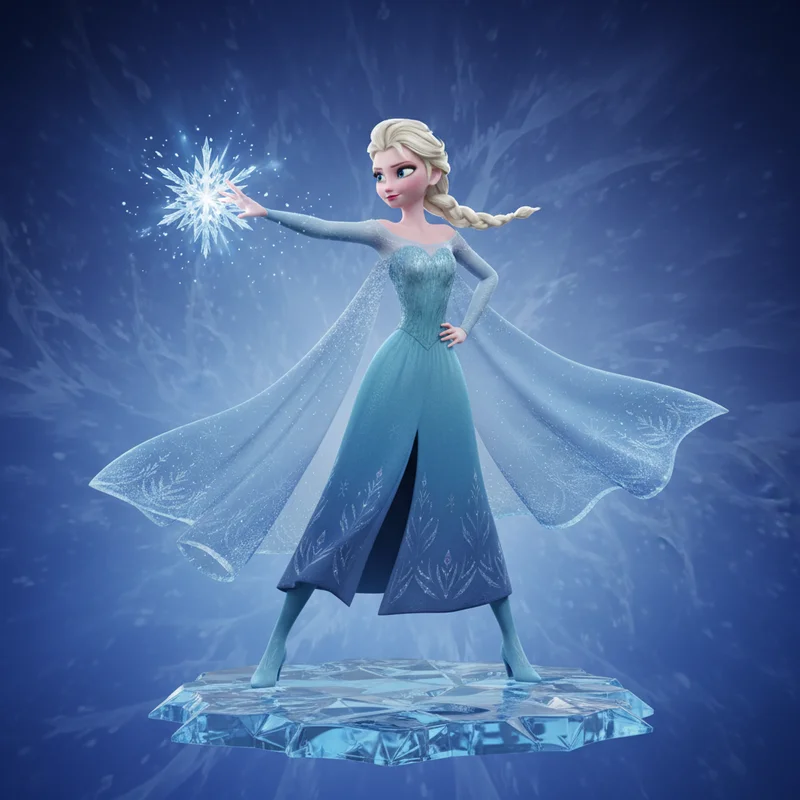
Elsa

Elsa

Ice queen who couldn't let it go.

VS
Mario

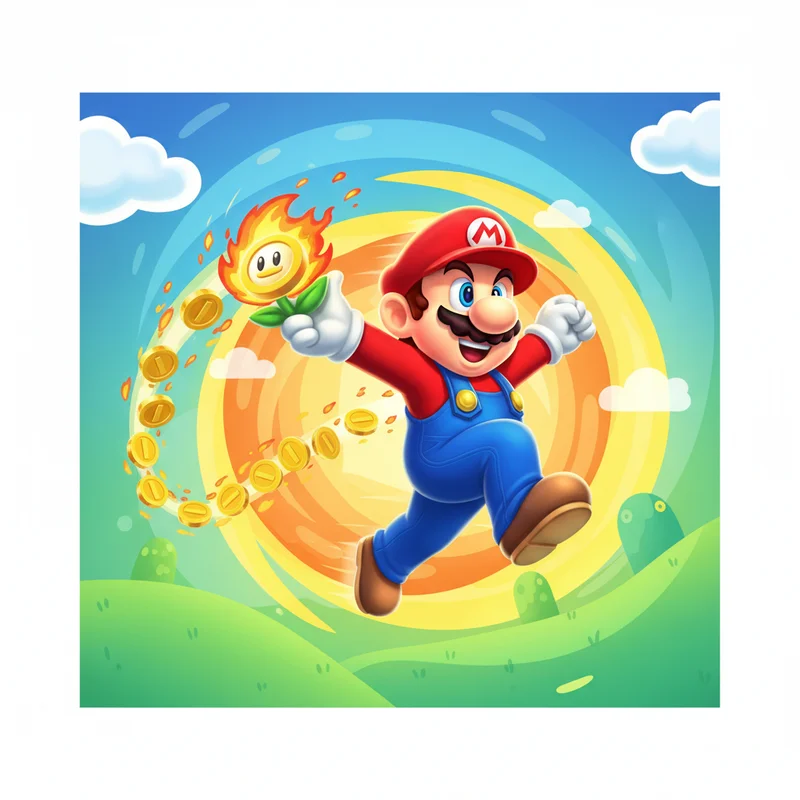
Mario

Nintendo's mustachioed plumber and gaming icon.

Battle Analysis

Cultural penetration Mario Wins
30%
70%
Elsa Mario

Elsa

The Elsa phenomenon represents a masterclass in concentrated cultural saturation. Within eighteen months of Frozen's release, the character had achieved a level of market penetration that marketing executives describe, with evident awe, as 'unprecedented in the princess demographic'.

The 'Let It Go' sequence alone generated merchandise revenues exceeding $5.3 billion in 2014, transforming blue sequined dresses into a form of global currency among the under-ten demographic. Parents reported hearing the song an average of 47 times per day during the peak infection period, a statistic that child psychologists continue to study with evident concern.

However, Elsa's cultural footprint, whilst impressively deep, remains relatively narrow in its demographic reach. Her appeal skews heavily toward young audiences, with recognition rates declining sharply among those who successfully avoided children's media between 2013 and 2019.

Mario

Mario's cultural penetration operates on an entirely different temporal scale. Over four decades of consistent presence, this pixelated plumber has achieved something approaching universal recognition. Studies indicate that Mario enjoys a 93% recognition rate among global populations, placing him alongside corporate logos and religious symbols in terms of visual familiarity.

The character's influence extends far beyond gaming. Mario has appeared in an animated television series, a $1.36 billion grossing film, breakfast cereals, educational software, and a theme park that cost approximately $580 million to construct. His influence on popular music includes references in over 200 songs, whilst his characteristic sound effects have been cited in academic papers on auditory memory formation.

Perhaps most significantly, Mario transcends demographic boundaries. Grandparents, parents, and children can each claim a Mario game as formative entertainment, creating intergenerational cultural continuity rarely achieved by fictional characters.

VERDICT

Forty years of cross-generational recognition trumps concentrated but demographically limited phenomenon.
Economic productivity Mario Wins
30%
70%
Elsa Mario

Elsa

Elsa's economic impact, when properly quantified, represents one of the more remarkable revenue generation events in entertainment history. The Frozen franchise, of which she serves as primary icon, has generated estimated lifetime revenues exceeding $14 billion across all product categories.

Merchandise alone accounts for over $10 billion, with her ice dress remaining one of the most purchased costume items in children's retail history. The secondary market effects include stimulated tourism to Norway (upon which Arendelle is visually based), increased sales of blonde wigs, and a measurable uptick in children named Elsa across Western nations.

Her productivity per unit time is exceptional. Across approximately four hours of screen presence, Elsa has generated $3.5 billion per hour of content, a rate that would make most sovereign nations envious.

Mario

Mario's economic contribution operates on an entirely different model: sustained productivity across an extended period. The Mario franchise has generated estimated revenues exceeding $40 billion since 1981, making it the highest-grossing video game franchise in history.

His diversification strategy proves particularly noteworthy. Mario has successfully monetised himself across video games, films, merchandise, theme parks, and licensing arrangements that include everything from breakfast cereals to Japanese toiletries. Super Nintendo World in Japan alone generates an estimated $1 billion annually.

Furthermore, Mario's economic impact extends beyond direct revenues. He served as the foundation upon which Nintendo built its entertainment empire, contributing indirectly to the company's $60 billion market capitalisation. His influence on the broader video game industry, which now exceeds $180 billion annually, defies precise quantification.

VERDICT

Cumulative forty-year revenues of $40 billion exceed concentrated franchise success, despite lower hourly rate.
Philosophical resilience Mario Wins
30%
70%
Elsa Mario

Elsa

Elsa's philosophical journey represents a compressed but intensive exploration of existential themes. Her narrative arc encompasses isolation, self-acceptance, the burden of exceptional ability, and the tension between personal authenticity and social responsibility. This is, one notes, rather a lot for a children's film.

Her signature moment, the 'Let It Go' sequence, functions as a declaration of philosophical liberation, rejecting external expectations in favour of authentic self-expression. Philosophers have noted parallels with Kierkegaardian concepts of individual authenticity, though Kierkegaard notably failed to include any musical numbers in his oeuvre.

However, Elsa's resilience remains largely untested beyond the specific challenges presented in her films. Her worldview has been shaped by approximately four hours of screen time, limiting the philosophical depth available for analysis.

Mario

Mario's philosophical resilience has been forged through over 200 distinct adventures, each presenting variations on remarkably similar themes: persistence despite overwhelming odds, loyalty to companions, and an unwavering commitment to objectives regardless of apparent futility.

Consider the Sisyphean nature of Mario's existence. Princess Peach has been kidnapped and rescued an estimated 23 times across mainline games alone. A lesser character might question the sustainability of this arrangement, perhaps suggesting improved castle security or diplomatic negotiations with the Koopa Kingdom. Mario simply retrieves his overalls and begins again.

This represents what philosophers might term 'radical acceptance'. Mario does not rage against his circumstances; he simply jumps. He does not question why the same mushrooms have sustained him since 1985; he consumes them and grows. His philosophy, whilst simple, has proven remarkably durable across four decades of interactive challenge.

VERDICT

Forty years of unquestioning persistence demonstrates philosophical durability that compressed film narratives cannot match.
Thermodynamic capability Elsa Wins
70%
30%
Elsa Mario

Elsa

From a purely thermodynamic perspective, Elsa represents one of the most remarkable entities in fictional literature. Her cryokinetic abilities appear to violate several fundamental laws of physics, most notably the second law of thermodynamics, which would typically prevent the spontaneous reduction of entropy required for instantaneous ice formation.

The energy required to construct her ice palace has been calculated by enthusiastic physicists at approximately 500 gigajoules, equivalent to the annual energy consumption of a small town. That she achieves this whilst singing suggests either remarkable multitasking ability or a fundamental misunderstanding of how thermodynamics operates.

Her abilities demonstrate control over phase transitions, pressure dynamics, and crystalline structure formation. She can create sentient life from ice (see: Olaf, Marshmallow), suggesting her powers extend into the realm of consciousness transfer or spontaneous generation, neither of which physics currently permits.

Mario

Mario's relationship with thermodynamics is decidedly more pedestrian, though no less perplexing upon close examination. His Fire Flower power-up grants pyrokinetic abilities, allowing him to generate fireballs from his palms without apparent fuel source or heat damage to his cotton gloves.

More troubling still is his interaction with lava. In various games, Mario can survive brief contact with molten rock, sustaining only what appears to be moderate discomfort. Given that lava temperatures exceed 1,000 degrees Celsius, his survival suggests either superhuman heat resistance or a fundamental misunderstanding of how human tissue interacts with volcanic material.

His thermodynamic contributions remain largely destructive rather than creative. Whilst Elsa constructs elaborate frozen architecture, Mario's thermal interactions typically involve setting things ablaze or falling into hazardous environments. His overall energy efficiency, when measured across franchise appearances, trends decidedly negative.

VERDICT

The capacity to generate palace-scale ice structures exceeds the ability to throw small fireballs.
Gravitational consistency Elsa Wins
70%
30%
Elsa Mario

Elsa

Elsa's relationship with gravity adheres, for the most part, to conventional Newtonian expectations. She walks, she runs, she occasionally slips on ice (though one would expect better traction given her elemental affinity). Her physical movements suggest standard human mass and gravitational interaction.

However, certain sequences raise questions. The construction of her ice staircase in 'Let It Go' requires her to walk on freshly formed ice that should not yet possess sufficient structural integrity to support human weight. The palace itself, lacking proper foundations, ought to collapse within hours under its own mass.

Nevertheless, within the established physics of her universe, Elsa demonstrates consistent gravitational behaviour. She does not float arbitrarily, and her ice constructions obey basic architectural principles even when they shouldn't.

Mario

Mario's gravitational physics represent a systematic rejection of Newtonian mechanics. His jump height varies between 5 and 25 feet depending on the game in question, suggesting either variable gravitational constants or an entirely different relationship with mass.

More troubling is his mid-air directional control. Basic physics indicates that once an object is airborne, its trajectory should be determined solely by initial velocity and gravitational acceleration. Mario's ability to adjust direction mid-jump violates conservation of momentum in ways that would concern any physicist.

The introduction of mechanics such as the triple jump, wall jump, and ground pound suggests either unprecedented muscular control or a fundamental misunderstanding of how human bodies interact with physical surfaces. His gravitational experiences change not merely between games but between levels, creating an inconsistency that defies systematic analysis.

VERDICT

Consistent adherence to established physical rules trumps variable and often contradictory gravitational behaviour.
👑

The Winner Is

48 - 52

This exhaustive analysis yields a result that may surprise those who predicted easy victory for either contestant. Mario claims the scholarly crown with a final tally of 52 to 48, but the margin speaks to the genuine competitiveness of this cross-franchise examination.

Mario's victory rests upon the accumulated weight of four decades of cultural presence. His advantages in Cultural Penetration, Philosophical Resilience, and Economic Productivity stem not from individual superiority but from sustained excellence across an unprecedented timeframe. He has had simply more time to fail, and has not.

Elsa's strengths prove formidable in their own right. Her thermodynamic capabilities exceed anything in Mario's considerable arsenal, and her gravitational consistency demonstrates a respect for physics that Mario has never troubled himself to achieve. In a purely power-based comparison, her cryokinetic abilities would overwhelm his fire flowers without meaningful contest.

Yet cultural impact cannot be measured solely in joules or vertical leap distance. Mario's contribution to interactive entertainment shaped an entire medium, whilst Elsa's contribution, though substantial, remains concentrated in a specific demographic and temporal window. The plumber's persistence prevails.

Elsa
48%
Mario
52%

Share this battle

More Comparisons