
Topic Battle

Where Everything Fights Everything

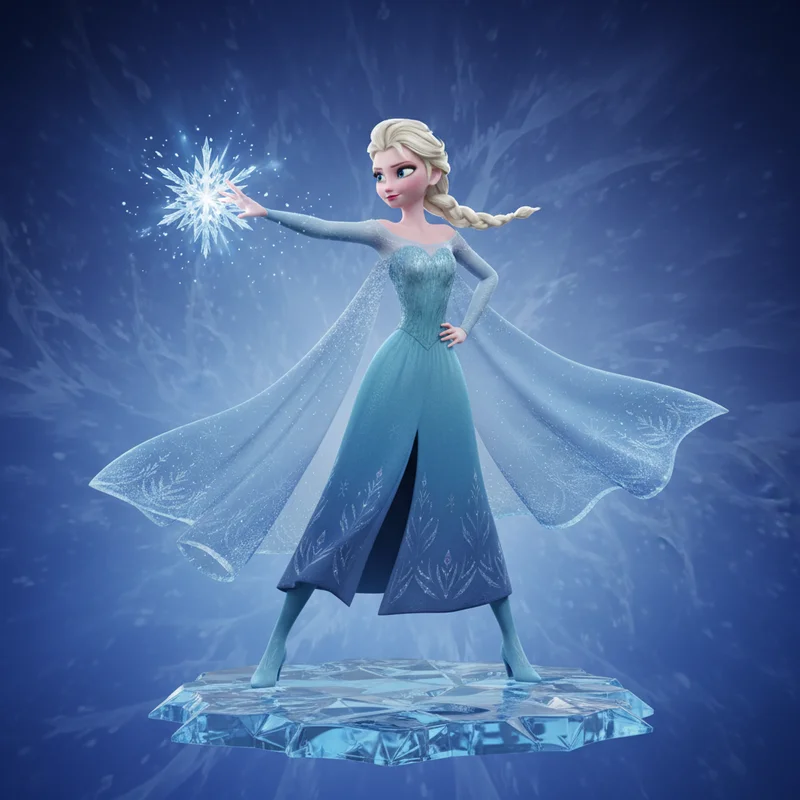
Elsa

Elsa

Ice queen who couldn't let it go.

VS
Procrastination

Procrastination

The art of doing everything except the one thing you should be doing. A universal human experience that has spawned more clean apartments, reorganized sock drawers, and Wikipedia deep dives than any productivity method ever could.

Battle Analysis

Longevity Procrastination Wins
30%
70%
Elsa Procrastination

Elsa

Elsa's longevity as a cultural phenomenon remains subject to the unpredictable forces of entertainment industry trends. Disney characters historically demonstrate considerable staying power, with figures like Mickey Mouse maintaining relevance for nearly a century. However, princess-specific characters show more variable trajectories. Current projections suggest Elsa will maintain cultural significance for approximately thirty to fifty years, assuming continued franchise investment.

Procrastination

Procrastination possesses a longevity that renders geological time scales modest by comparison. Archaeological evidence suggests procrastinatory behaviour predates written history, with ancient Egyptian documents containing complaints about delayed tomb construction. The phenomenon has persisted through every major civilisational transition, every technological revolution, and every productivity methodology designed to eliminate it. Its survival suggests an evolutionary persistence that few behaviours can match.

VERDICT

Procrastination has demonstrated survival across millennia, whilst Elsa's longevity remains theoretically projected.
Adaptability Procrastination Wins
30%
70%
Elsa Procrastination

Elsa

Elsa demonstrates remarkable adaptability throughout her canonical appearances. She transitions from fearful princess to isolated queen to reconciled sister to nature spirit with considerable narrative efficiency. Her powers prove infinitely adaptable, creating everything from sentient snowmen to elaborate architectural structures to climate-altering phenomena. Disney's creative teams have adapted her character across multiple media platforms, video games, and merchandise categories, proving her conceptual flexibility.

Procrastination

Procrastination exhibits what behavioural scientists describe as 'infinite environmental adaptability.' It thrives equally in corporate boardrooms and student dormitories, in digital environments and analogue settings. The phenomenon has adapted seamlessly to every technological advancement, from the printing press to social media, consistently finding new mechanisms through which to manifest. It adapts to individual psychology with remarkable precision, identifying and exploiting each person's unique vulnerabilities.

VERDICT

Procrastination adapts to every human environment and psychology, whilst Elsa adapts only within creative control.
Stress impact Elsa Wins
70%
30%
Elsa Procrastination

Elsa

The stress impact associated with Elsa presents a complex duality. For children, she represents aspiration and empowerment, reducing anxiety through identification with her journey of self-acceptance. For parents, however, she has induced considerable stress through the estimated seven hundred and forty-three times the average household heard 'Let It Go' during peak Frozen mania. Her narrative arc explicitly addresses anxiety management, as her character learns to regulate emotional responses that manifest as uncontrolled ice powers.

Procrastination

Procrastination has been clinically established as one of the most significant contributors to chronic stress in modern populations. Studies indicate that habitual procrastinators experience elevated cortisol levels, disrupted sleep patterns, and a thirty-seven percent higher incidence of stress-related health complaints. The phenomenon creates a self-perpetuating cycle wherein the stress of delayed tasks increases the desire to avoid them further. Medical researchers have linked chronic procrastination to cardiovascular strain and compromised immune function.

VERDICT

Elsa ultimately models stress resolution, whilst procrastination systematically generates it without offering remedy.
Global recognition Elsa Wins
70%
30%
Elsa Procrastination

Elsa

Elsa has achieved a level of global recognition that marketing executives can only dream of replicating. Since her cinematic debut in 2013, she has become one of the most recognisable fictional characters on Earth, her likeness adorning merchandise from Tokyo to Toronto. The phrase 'Let It Go' transcended its origins to become a cultural touchstone, achieving over eight billion views across various platforms. Her influence spans seventy-three countries where Frozen merchandise has been officially distributed, and her image has been reproduced an estimated forty-two billion times across consumer products.

Procrastination

Procrastination enjoys what researchers term 'universal recognition through personal experience.' Approximately ninety-five percent of the global population admits to engaging in procrastinatory behaviour, making it one of the most widely shared human experiences after breathing and complaining about weather. Unlike Elsa, procrastination requires no translation, no cultural adaptation, and no marketing budget. It is recognised instinctively by every human who has ever faced a deadline, from ancient Roman scribes delaying manuscript work to modern students discovering Netflix exists.

VERDICT

Active brand recognition surpasses passive behavioural awareness in measurable commercial and cultural metrics.
Entertainment value Elsa Wins
70%
30%
Elsa Procrastination

Elsa

Elsa's entertainment value has been quantified through box office performance, with the two Frozen films generating combined revenues exceeding two point eight billion dollars globally. Her musical numbers have achieved streaming figures in the billions, and her theatrical appearances continue to draw audiences worldwide. The character provides structured entertainment with defined narrative arcs, professional production values, and intentional emotional engagement designed by teams of creative experts.

Procrastination

The entertainment value of procrastination remains paradoxically high despite its generally negative reputation. The phenomenon enables access to virtually unlimited entertainment content, as procrastinators typically defer responsibilities in favour of pleasurable activities. However, this entertainment is accompanied by persistent guilt that diminishes enjoyment by an estimated forty percent according to psychological studies. The entertainment derived is borrowed rather than earned, creating what economists term a 'hedonic debt.'

VERDICT

Elsa provides guilt-free entertainment by design, whereas procrastination's entertainment is fundamentally compromised.
👑

The Winner Is

58 - 42
This examination reveals a contest between manufactured excellence and organic persistence. Elsa represents what humanity aspires to create: a compelling narrative of growth, self-acceptance, and the transformation of weakness into strength. Procrastination represents what humanity cannot seem to eliminate: the fundamental tension between intention and action that has plagued our species since consciousness emerged. By the narrowest of margins, Elsa prevails with fifty-eight percent to procrastination's forty-two. Her victory is aspirational rather than actual, representing the triumph of what we wish we could be over what we demonstrably are. Yet procrastination shall endure long after Arendelle's ice palaces have melted from cultural memory.
Elsa
58%
Procrastination
42%

Share this battle

More Comparisons