Topic Battle

Where Everything Fights Everything

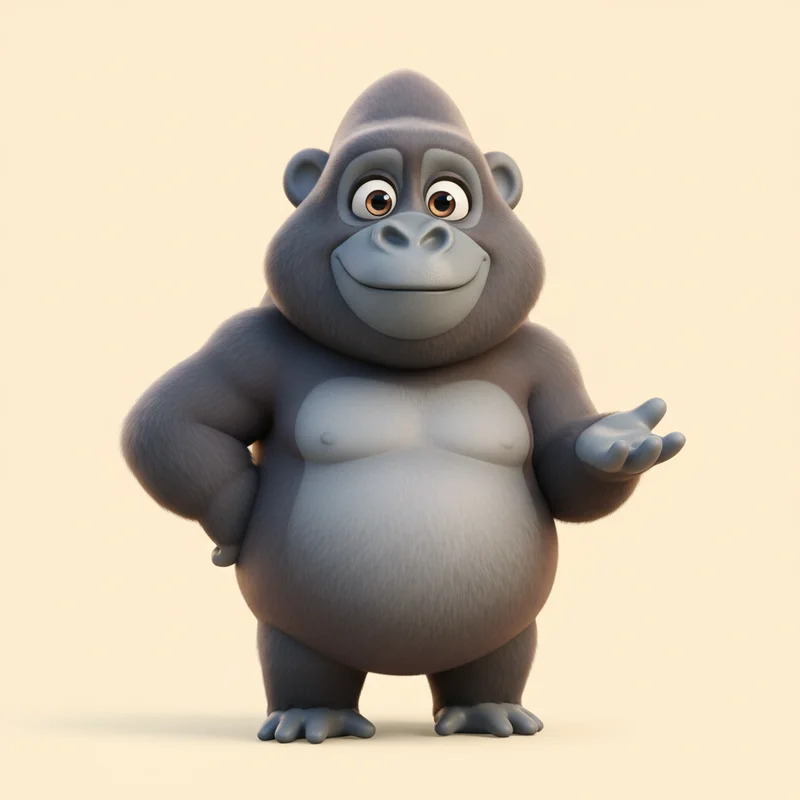
Gorilla

Gorilla

Largest living primate sharing 98% DNA with humans, known for chest-beating and gentle family bonds.

VS
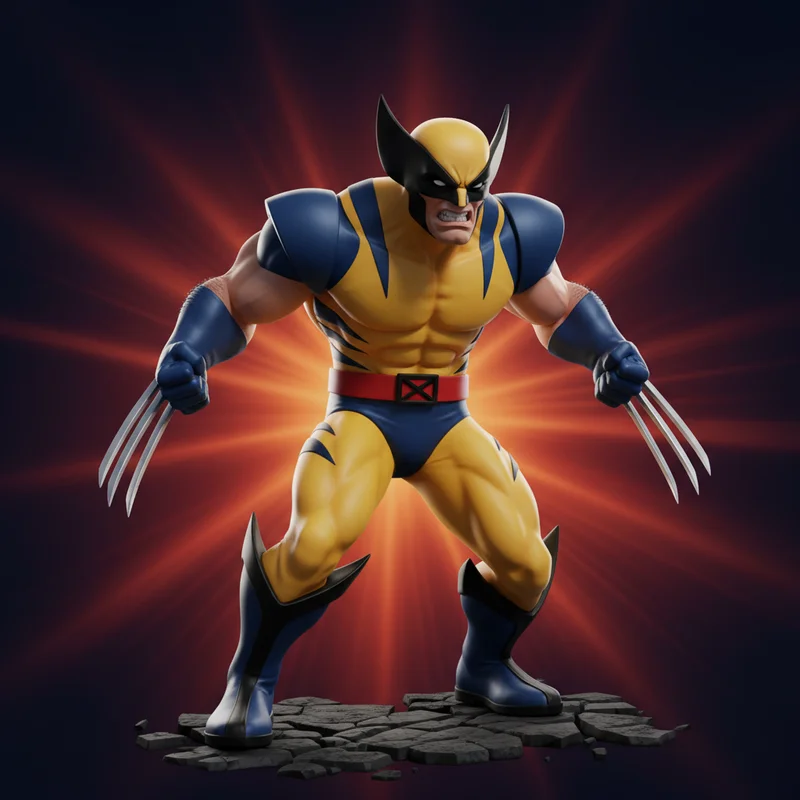
Wolverine

Wolverine

Clawed mutant with regeneration and anger issues.

Battle Analysis

Strength Gorilla Wins
70%
30%
Gorilla Wolverine

Gorilla

The silverback gorilla possesses what researchers term extraordinary functional strength, with documented lifting capacity exceeding 815 kilograms. Their arms, measuring 2.5 metres in span, deliver impacts calculated at approximately 1,300 pounds of force. The musculature, comprising nearly 40% of total body mass, enables feats that would require industrial machinery for humans to replicate. Field observations document gorillas bending steel bars, uprooting mature trees, and dismantling research equipment with alarming efficiency. This power serves primarily for display and foraging rather than combat.

Wolverine

The wolverine demonstrates what biologists classify as disproportionate strength relative to body mass. Documented instances include individuals dragging caribou carcasses weighing three times their own mass across frozen terrain. Their bite force, measured at 50 pounds per square inch, enables them to crush frozen bone and sinew. The wolverine's tendon structure and muscle fibre composition allow sustained exertion that exhausts larger predators. They have been observed driving grizzly bears from kills through sheer persistent aggression.

VERDICT

The gorilla's absolute strength output exceeds the wolverine's by approximately thirty-fold in controlled measurements.
Adaptability Wolverine Wins
30%
70%
Gorilla Wolverine

Gorilla

Gorillas demonstrate remarkable behavioural plasticity within their preferred habitat parameters. They construct new sleeping nests daily, adjust foraging patterns seasonally, and maintain complex social hierarchies that adapt to individual departures. However, their temperature tolerance remains narrow, and they exhibit profound sensitivity to habitat fragmentation. Captive populations have shown capacity for sign language acquisition and abstract reasoning, yet wild populations remain confined to specific ecological niches.

Wolverine

The wolverine exemplifies extreme environmental adaptability across one of Earth's harshest biomes. Their circumpolar distribution spans Scandinavia, Siberia, and North America, thriving in temperatures reaching minus fifty degrees Celsius. Dietary flexibility encompasses carrion, live prey, berries, and bird eggs. Their fur's unique hydrophobic properties prevent ice accumulation, whilst oversized paws function as natural snowshoes. Wolverines have been documented swimming rivers, scaling cliff faces, and traversing terrain that defeats pursuit by any predator.

VERDICT

The wolverine's capacity to thrive across diverse extreme environments far exceeds the gorilla's habitat constraints.
Symbolic value Gorilla Wins
70%
30%
Gorilla Wolverine

Gorilla

The gorilla occupies an unparalleled position in human cultural consciousness as a symbol of primal power tempered by intelligence. From King Kong to Dian Fossey's conservation legacy, the gorilla represents humanity's complex relationship with nature and our closest relatives. Corporate branding, conservation campaigns, and scientific discourse consistently invoke the gorilla as emblematic of wilderness preservation. Their apparent emotional depth resonates with human observers in ways few species achieve.

Wolverine

The wolverine serves as a potent symbol of northern wilderness and indomitable spirit. Indigenous circumpolar cultures revere the creature as a trickster figure and embodiment of survival against impossible odds. The species lends its name to military units, athletic franchises, and fictional characters precisely because of its reputation for refusing surrender. The wolverine represents humanity's respect for persistence and ferocity regardless of size.

VERDICT

The gorilla's global recognition and conservation iconography exceed the wolverine's more regional symbolic significance.
Intimidation factor Gorilla Wins
70%
30%
Gorilla Wolverine

Gorilla

The silverback's intimidation repertoire represents millennia of evolutionary refinement. The chest-beating display, audible at distances exceeding one kilometre, creates infrasonic waves that induce physiological stress responses in observers. Standing erect at 1.8 metres, with canines measuring five centimetres, the charging gorilla presents a spectacle that has caused documented instances of immediate flight response in leopards and humans alike. The silver saddle marking signifies dominance with unmistakable clarity.

Wolverine

Despite modest dimensions, the wolverine projects an aura of absolute fearlessness that has earned it the indigenous Athabaskan name Gulo, meaning glutton or evil spirit. Documented confrontations show wolverines advancing upon wolves, bears, and mountain lions without hesitation. Their defensive posture, combining exposed teeth, raised hackles, and the discharge of potent musk, creates an impression of rabid ferocity. Indigenous cultures across the circumpolar regions regard the wolverine with superstitious dread.

VERDICT

The gorilla's sheer physical presence and theatrical displays overwhelm the wolverine's fierce but diminutive menace.
Evolutionary success Wolverine Wins
30%
70%
Gorilla Wolverine

Gorilla

The genus Gorilla represents seven million years of hominid evolution, diverging from the human lineage in the Miocene epoch. Their brain-to-body ratio places them among Earth's most cognitively sophisticated species. However, contemporary populations face critical endangerment, with estimates suggesting fewer than 100,000 individuals remaining across all subspecies. Their reproductive rate of one offspring every four to six years limits recovery potential. The gorilla represents evolutionary refinement that may prove too specialised for survival.

Wolverine

Gulo gulo descends from five million years of mustelid diversification, emerging as the largest terrestrial member of the weasel family. Their persistence across ice ages and interglacial periods demonstrates robust genetic adaptability. Population estimates suggest approximately 35,000 individuals globally, with stable numbers in protected wilderness areas. The wolverine's generalist strategy and high reproductive output position them favourably for continued survival, though climate change threatens their snow-dependent denning requirements.

VERDICT

The wolverine's stable populations and generalist survival strategy contrast favourably with the gorilla's critical endangerment.
👑

The Winner Is

Gorilla

58 - 42

This comprehensive examination reveals a contest of fundamentally divergent evolutionary philosophies. The gorilla, victorious in strength, intimidation, and symbolic value, represents the apex of great ape development, sacrificing versatility for specialisation. The wolverine, prevailing in adaptability and evolutionary success, demonstrates the mustelid family's remarkable capacity for survival through tenacity rather than dominance. The gorilla claims overall victory through superior performance in three of five criteria, yet this assessment acknowledges the profound limitations of comparing such disparate evolutionary strategies.

Gorilla
58%
Wolverine
42%

Share this battle

More Comparisons