Where Everything Fights Everything

Harry Potter vs iPhone

😜 Just for fun — a tongue-in-cheek, gloriously unscientific showdown.

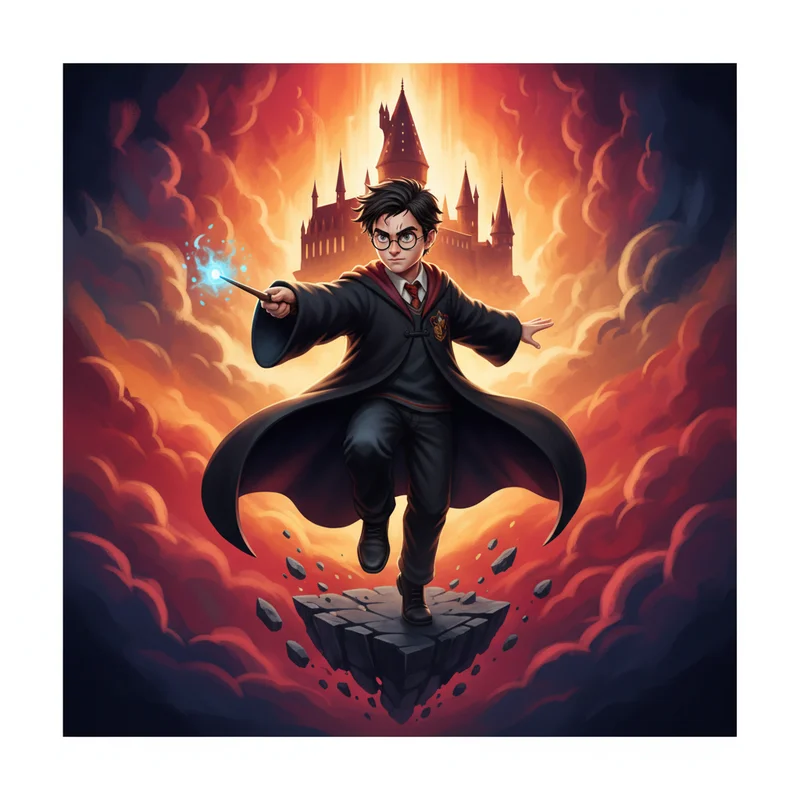
Harry Potter

Harry Potter

Boy wizard who lived and spawned a franchise.

VS
iPhone

iPhone

Apple's flagship smartphone line, known for its iOS operating system, premium build quality, and ecosystem integration.

Battle Analysis

Longevity Harry Potter Wins · 65%
65%
35%
Harry Potter iPhone

Harry Potter

The Harry Potter narrative occupies an unusual temporal position. The core seven books exist as fixed cultural artefacts, unchanged since publication. Unlike technological products, they cannot become obsolete. A first edition from 1997 delivers identical content to a 2024 printing.

Children born after the series concluded discover the books with the same wonder as their predecessors. The stories have already survived nearly three decades and show every indication of joining the canon of enduring children's literature alongside works by Lewis, Tolkien, and Dahl.

iPhone

Individual iPhones exhibit planned obsolescence by design, with the average device lifespan falling between three and four years. Models from merely five years ago struggle with current applications. The original 2007 iPhone functions today primarily as a paperweight.

Yet the iPhone as a product category demonstrates remarkable persistence. Seventeen generations have arrived since launch. The ecosystem grows increasingly entrenched. Abandoning iPhone requires abandoning years of purchased applications, photographs, and cultivated digital habits.

VERDICT

A 1997 book still functions perfectly; a 2019 iPhone increasingly does not. Durability matters.
Accessibility Harry Potter Wins · 65%
65%
35%
Harry Potter iPhone

Harry Potter

Harry Potter exhibits remarkable accessibility characteristics. The books have been translated into over 80 languages, from Albanian to Zulu, making the magical world available to readers across virtually every literate population on Earth.

The reading level progression was deliberately calibrated, with early books suitable for ages eight and above, whilst later volumes challenged adult readers. Libraries worldwide stock multiple copies. No electricity required. No monthly subscription fees. The barrier to entry remains merely literacy itself.

iPhone

iPhone accessibility tells a more complicated story. The device's $799 to $1,599 price point places it beyond reach for significant portions of the global population. Despite Apple's market dominance in wealthy nations, only approximately 27% of global smartphone users carry iPhones.

Yet for those who can access one, the iPhone offers extraordinary capabilities. VoiceOver technology serves blind users. Real-time captions assist the deaf. The device's intuitive interface has proven navigable by toddlers and octogenarians alike.

VERDICT

A book requiring only literacy outperforms a $1,000+ device requiring electricity and cellular infrastructure.
Magical capability iPhone Wins · 65%
35%
65%
Harry Potter iPhone

Harry Potter

The wizarding world operates on a comprehensive magical system with documented spells numbering in the hundreds. From the practical Lumos to the catastrophic Avada Kedavra, the Harry Potter universe offers users a theoretical framework for supernatural intervention in daily affairs.

This magic remains, crucially, fictional. Yet the psychological impact of this limitation has proven surprisingly negligible. Readers report genuine emotional responses to magical events, with studies documenting increased empathic capacity among those exposed to the texts.

iPhone

The iPhone's magic is of a different taxonomy entirely. Through 3.4 billion lines of code and increasingly sophisticated semiconductor architecture, the device performs feats that would have seemed supernatural mere decades ago. Real-time language translation, instant global communication, and pocket-sized access to humanity's collective knowledge.

Critics note that iPhone magic requires consistent electricity, regular software updates, and a willingness to accept planned obsolescence. The wand, notably, never required charging. Yet the iPhone's magic actually functions in the observable universe, a distinction of considerable philosophical weight.

VERDICT

The iPhone's magic operates in physical reality, whilst Harry Potter's remains stubbornly confined to imagination.
Revenue generation iPhone Wins · 80%
20%
80%
Harry Potter iPhone

Harry Potter

The Harry Potter franchise demonstrates remarkable monetisation efficiency. From an initial manuscript rejected by twelve publishers, the property has generated approximately $25 billion across all revenue streams. This includes $7.7 billion in book sales, $9.6 billion at the box office, and billions more in merchandise, theme parks, and theatrical productions.

The franchise continues generating revenue decades after the final book's publication, with the Fantastic Beasts spinoff series and the ongoing success of Wizarding World attractions proving the durability of magical intellectual property.

iPhone

Apple's flagship device operates on an entirely different financial scale. Since launch, iPhone has generated cumulative revenues exceeding $2.3 trillion, a figure that renders most comparative analysis somewhat absurd. The device represents approximately 52% of Apple's total revenue annually.

This revenue generation requires continuous production, marketing, and innovation. Each new model must convince consumers to abandon functional predecessors. The iPhone is less a product than a recurring subscription to status and capability, renewed through biennial upgrade cycles.

VERDICT

A $2.3 trillion revenue stream outperforms $25 billion by a factor of ninety-two, mathematics being impartial.
Cultural transformation iPhone Wins · 65%
35%
65%
Harry Potter iPhone

Harry Potter

Before 1997, children's literature occupied a modest corner of publishing. Harry Potter's arrival triggered what scholars term the Young Adult Revolution, creating an entirely new literary category and proving that children would read 700-page novels if properly motivated.

The cultural penetration extends beyond mere sales figures. Universal Studios constructed entire theme parks around the property. Academic courses examine its themes. The phrase 'sorting hat' has entered common parlance as a metaphor for categorisation systems worldwide.

iPhone

The iPhone's cultural impact manifests in more subtle but arguably more pervasive ways. The device fundamentally altered social interaction patterns, created the modern app economy, and spawned an entirely new category of psychological disorder: smartphone addiction.

Before 2007, humans made eye contact during meals. They navigated using paper maps. They waited patiently. The iPhone eliminated these behaviours with such thoroughness that younger generations struggle to comprehend the pre-smartphone existence their elders describe.

VERDICT

Harry Potter changed how we read; the iPhone changed how we exist. The scope differential proves decisive.
👑

The Winner Is

iPhone

Takes 3 of 5 rounds

The final accounting delivers a victory for the iPhone, three rounds to two, though the margin belies the profound complexity of this comparison. The device from Cupertino dominates where scale matters most: in tangible utility, in revenue that rewrote economic history, and in cultural transformation so thorough it altered human behaviour at a neurological level.

Harry Potter fights admirably, claiming accessibility and longevity as its own — rounds where the humble book's permanence and universal availability expose the iPhone's dependence on electricity, upgrade cycles, and considerable expenditure. Yet in this particular contest, three decisive victories outweigh two, and the iPhone's grip on modern existence proves too comprehensive to deny.

Share this battle

More Comparisons