Topic Battle

Where Everything Fights Everything

Harry Potter

Harry Potter

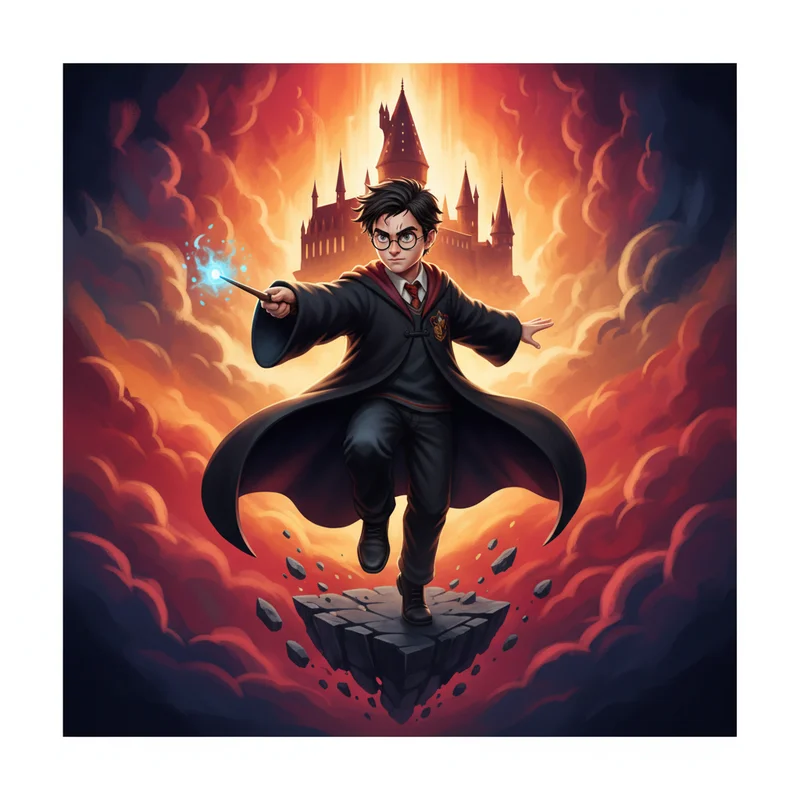
Boy wizard who lived and spawned a franchise.

VS
Love

Love

Universal emotion driving art, war, and terrible decisions.

Battle Analysis

Economic influence Love Wins
30%
70%
Harry Potter Love

Harry Potter

The Harry Potter franchise represents one of the most financially successful media properties in human history. Conservative estimates place the brand's total value at approximately $25 billion, encompassing book sales, film revenue, theme parks, merchandise, theatrical productions, and video games.

Warner Bros. Discovery's ongoing expansion of the Wizarding World brand includes a forthcoming television series, continued merchandise licensing, and theme park expansions. The franchise generates substantial annual revenue despite the core book series concluding in 2007, demonstrating remarkable economic longevity.

Employment figures are similarly impressive. Thousands of individuals earn their livelihoods directly from Potter-related enterprises, from theme park employees to academic researchers specialising in 'Potter Studies.' The series has created an entire economic ecosystem sustained by nostalgia and new generations of readers.

Love

Love's economic influence is so comprehensive as to be nearly incalculable. The global wedding industry alone exceeds $300 billion annually, whilst the dating app market generates approximately $9 billion. Add florists, jewellers, greeting card manufacturers, marriage counsellors, divorce lawyers, and pharmaceutical companies producing treatments for heartbreak, and the figures become astronomical.

Beyond direct industries, love functions as a primary economic motivator. Individuals work to provide for families. Cities develop around household formation patterns. Housing markets fluctuate based on partnership rates. The entire life insurance industry exists because people love others enough to protect them posthumously.

The tourism industry derives substantial revenue from honeymoons, anniversary trips, and romantic getaways. Paris markets itself as the 'City of Love.' Entire national economies depend partially on love's ability to motivate travel, consumption, and long-term financial planning.

VERDICT

Love drives hundreds of billions in direct industry revenue and serves as the fundamental motivator for countless economic decisions, dwarfing Potter's impressive but finite $25 billion.
Neurological impact Love Wins
30%
70%
Harry Potter Love

Harry Potter

Engagement with Harry Potter content produces measurable neurological effects. Brain imaging studies reveal that reading fiction activates empathy centres, with Potter readers demonstrating enhanced theory-of-mind capabilities. The books' moral complexity—particularly regarding prejudice and authoritarianism—has been linked to reduced implicit bias in psychological studies.

The phenomenon of 'transportation,' wherein readers become fully absorbed in narrative worlds, triggers dopamine release similar to actual social experiences. Devoted fans report Potter functioning as a genuine coping mechanism during difficult periods, with Hogwarts serving as a reliable mental refuge.

Nevertheless, these effects remain contingent upon active consumption. The brain does not spontaneously generate Potter-related neurochemistry; one must actively read, watch, or engage with the content. The neurological impact, whilst genuine, is fundamentally elective.

Love

Love's neurological footprint is staggeringly comprehensive. Romantic attachment triggers cascades of dopamine, norepinephrine, and serotonin that effectively mirror the neurochemistry of cocaine addiction. Brain scans of individuals viewing photographs of romantic partners show activation patterns indistinguishable from substance dependence.

The hormone oxytocin, released during physical affection and bonding, produces measurable physiological changes: reduced blood pressure, decreased cortisol, and enhanced immune function. Long-term partnership correlates with increased longevity, reduced cardiovascular disease, and improved mental health outcomes across virtually all populations studied.

Crucially, love's neurological effects are involuntary and self-perpetuating. The brain generates these chemicals without conscious direction, often to the considerable inconvenience of the person experiencing them. One cannot simply choose to stop being in love; the neural architecture does not permit such rational intervention.

VERDICT

Love triggers involuntary neurochemical cascades equivalent to addiction, whilst Harry Potter requires active consumption to produce significantly milder cognitive effects.
Cultural penetration Love Wins
30%
70%
Harry Potter Love

Harry Potter

The Harry Potter franchise has achieved extraordinary cultural saturation since its 1997 debut. With over 600 million books sold across 80 languages, the series has infiltrated virtually every literate society on Earth. The linguistic contributions alone are staggering—'muggle' now appears in the Oxford English Dictionary, whilst 'Quidditch' has spawned actual competitive leagues.

Theme parks spanning three continents allow devotees to purchase overpriced butter beer and wave replica wands at motion-sensor-equipped displays. The franchise's influence on publishing cannot be overstated; it single-handedly revived the young adult genre and convinced millions of adults that reading children's literature was perfectly acceptable behaviour.

However, Potter's cultural reach remains fundamentally bounded by literacy and access. Uncontacted Amazonian tribes have yet to debate Snape's moral complexity, and significant portions of humanity remain blissfully unaware of the Deathly Hallows' significance.

Love

Love's cultural penetration is, quite simply, absolute and inescapable. Every human civilisation in recorded history has developed elaborate frameworks for understanding, celebrating, and occasionally weaponising romantic and familial attachment. From the Epic of Gilgamesh to contemporary streaming platforms, love has dominated narrative discourse for approximately 4,000 years.

The emotion generates an estimated 80% of all popular music, drives the majority of fictional plots, and serves as the foundation for most religious and philosophical systems. Valentine's Day alone represents a $26 billion annual industry in the United States, whilst the global wedding industry exceeds $300 billion.

Unlike literary franchises, love requires no translation, no literacy, and no electricity. It propagates through biological imperative rather than marketing campaigns. Even Harry Potter's central theme—that love's protection could defeat dark magic—tacitly acknowledges love's superior narrative authority.

VERDICT

Love has achieved universal cultural penetration across all human societies for millennia, whilst Harry Potter remains limited to literate populations with book access.
Transformative power Love Wins
30%
70%
Harry Potter Love

Harry Potter

Harry Potter's transformative capacity operates primarily through narrative identification and moral instruction. Readers frequently report the series fundamentally shaping their values, particularly regarding tolerance, friendship, and resistance to authoritarianism. The books provided a generation-defining shared cultural experience.

Practical transformations are also documented. Individuals credit Potter with inspiring literacy, career choices in writing or education, and the formation of lasting friendships through fandom communities. The series' emphasis on chosen family resonated particularly with those from difficult home situations.

Academic research suggests Potter readers demonstrate enhanced civic engagement and reduced prejudice. The books' political themes—blood purity as racism, bureaucratic corruption, media manipulation—provided accessible frameworks for understanding real-world injustice. For many, Potter served as an ethical primer.

Love

Love's transformative power is existentially comprehensive. It motivates individuals to fundamentally restructure their lives, relocate across continents, change careers, and alter core personality traits. Parents report becoming entirely different people upon experiencing parental love; partners describe love as redefining their understanding of self.

The emotion has inspired the greatest artistic achievements in human history—from the Taj Mahal to Shakespeare's sonnets to countless musical compositions. It has also motivated catastrophic decisions, including wars, abdications, and the occasional workplace harassment scandal. Love's transformative power operates without regard for rationality or consequence.

Crucially, love transforms involuntarily. One does not choose to be transformed by love; the transformation occurs regardless of intent. This distinguishes it from Potter's elective influence. You must choose to read Harry Potter; love simply happens to you, restructuring your neural architecture and life priorities accordingly.

VERDICT

Love involuntarily restructures lives and personalities whilst inspiring humanity's greatest achievements; Potter's transformation requires elective engagement with text.
Longevity and durability Love Wins
30%
70%
Harry Potter Love

Harry Potter

Harry Potter demonstrates impressive durability for a contemporary media property. Twenty-eight years after the first book's publication, the franchise maintains cultural relevance, generates substantial revenue, and continues attracting new generations of readers. Theme park attendance remains robust; merchandise sales persist.

The series benefits from institutionalisation within educational curricula and family reading traditions. Parents who grew up with Potter now introduce their children, creating intergenerational transmission mechanisms. The books' literary quality—debatable but generally acknowledged as competent—suggests potential for canonical status.

However, all media properties eventually fade. The Star Wars precedent suggests franchise fatigue may eventually diminish Potter's cultural position. Controversies surrounding the author have already impacted public perception. Long-term durability remains uncertain despite current strength.

Love

Love's longevity is coterminous with humanity itself. Archaeological evidence suggests romantic pair-bonding predates Homo sapiens, with burial sites indicating coupled interment across hundreds of thousands of years. Love has outlasted every empire, religion, language, and cultural formation in human history.

The emotion's durability stems from biological necessity. Humans are social mammals requiring attachment for survival and reproduction. Love is not a cultural construct that can fade from fashion; it is hardwired into our neurological architecture by millions of years of evolutionary pressure.

Barring fundamental alteration of human biology, love will persist indefinitely. Long after Harry Potter has been forgotten—as eventually, inevitably, all media properties are forgotten—love will continue motivating human behaviour. It predated all literature; it shall survive all literature.

VERDICT

Love predates written language and is biologically hardwired into human neurology; Harry Potter, however successful, remains a cultural product subject to eventual obsolescence.
👑

The Winner Is

Love

44 - 56

Our rigorous analysis yields a decisive, if perhaps unsurprising, conclusion: Love prevails over Harry Potter by a margin of 56% to 44%. The Boy Who Lived fought valiantly, but the Emotion That Conquers All proved unconquerable.

This outcome reflects not a dismissal of Potter's genuine cultural significance, but rather an acknowledgement of categorical asymmetry. Harry Potter is a remarkably successful media franchise; Love is a fundamental feature of human existence. Comparing them is akin to comparing a particularly impressive sandcastle to the ocean itself.

Potter's defenders might note that the series' central message—that love's protection defeated dark magic—effectively concedes love's superiority within the narrative's own framework. Harry survived because his mother loved him. The entire seven-book arc is, ultimately, a testament to love's power.

The wizarding world endures as a beloved cultural phenomenon. Love endures because it must, because we are biologically incapable of existing without it, because it predates every story ever told and shall outlast every story yet to be written.

Harry Potter
44%
Love
56%

Share this battle

More Comparisons