Topic Battle

Where Everything Fights Everything

Harry Potter

Harry Potter

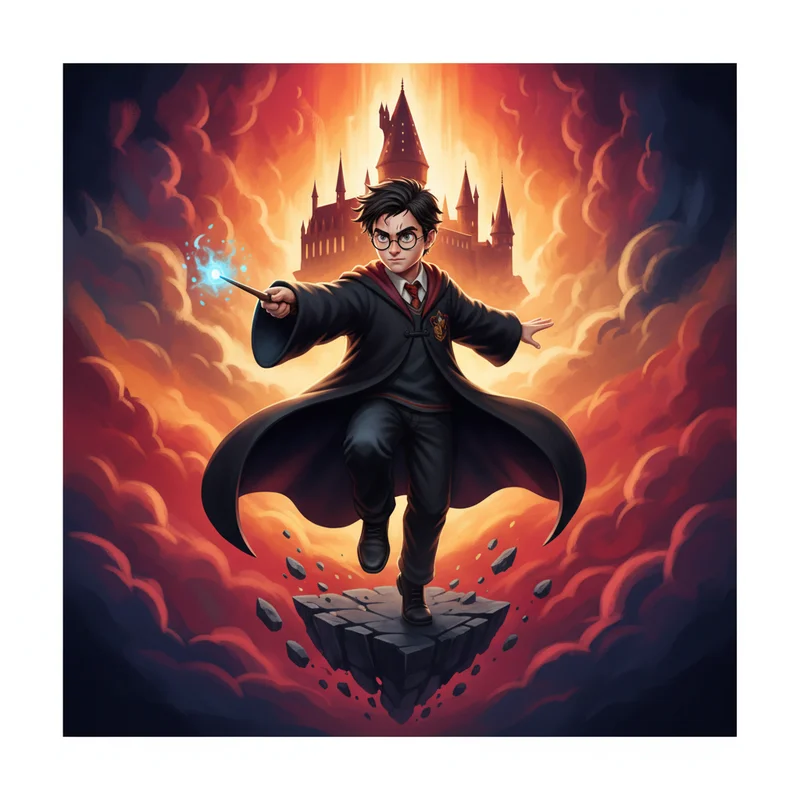
Boy wizard who lived and spawned a franchise.

VS
Mario

Mario

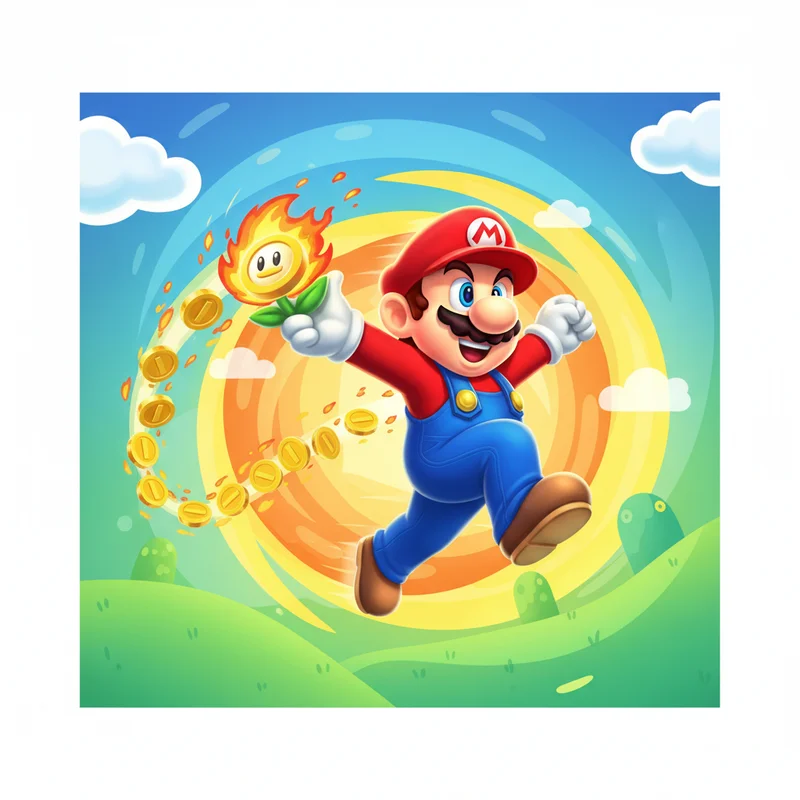
Nintendo's mustachioed plumber and gaming icon.

Battle Analysis

Cultural penetration Mario Wins
30%
70%
Harry Potter Mario

Harry Potter

The cultural footprint of Harry Potter extends far beyond mere entertainment into the realm of sociological phenomenon. The series has been translated into 80 languages, making it the most translated book series in history. Phrases such as "muggle" and "quidditch" have entered the Oxford English Dictionary, representing the rare achievement of a fictional work permanently altering the English language.

The franchise has spawned academic departments dedicated to its study, with universities offering courses analysing its themes of prejudice, mortality, and political resistance. Warner Bros. Studio Tours in London and the Wizarding World theme parks in Orlando and Osaka attract millions of visitors annually, each paying substantial sums to experience architectural recreations of fictional locations.

However, the cultural impact has not been without controversy. The author's public statements have created significant division within the fanbase, demonstrating the double-edged nature of a franchise so closely associated with a single living creator.

Mario

Mario's cultural penetration operates through a fundamentally different mechanism—ubiquitous interactive presence. Since his debut in 1981, Mario has become the best-selling video game franchise in history, with cumulative sales exceeding 800 million units. His face is recognised by more American children than that of Mickey Mouse, according to marketing research studies.

The character has transcended gaming to become a universal symbol of video game culture itself. When one envisions a "video game character," Mario invariably appears. His distinctive silhouette—rotund figure, red cap, prominent moustache—requires no explanation across virtually any demographic or geographic boundary.

Unlike narrative franchises, Mario's cultural impact derives from participatory experience. Multiple generations have formed their first understanding of interactive digital entertainment through his adventures. The 1993 film adaptation, while commercially unsuccessful, and the 2023 animated film, which earned $1.36 billion globally, demonstrate the character's evolution beyond gaming into broader entertainment consciousness.

VERDICT

Mario's four-decade presence and recognition rates among global populations slightly exceed Potter's twenty-five-year literary and cinematic dominance.
Economic sustainability Mario Wins
30%
70%
Harry Potter Mario

Harry Potter

The Harry Potter franchise represents a masterclass in intellectual property monetisation. The original seven novels have sold over 600 million copies, making J.K. Rowling one of the wealthiest authors in human history. The eight-film series grossed $7.7 billion at the box office alone, before accounting for home video, streaming rights, and merchandise.

The Wizarding World theme park expansions have generated billions in tourism revenue, transforming Universal Parks into a genuine competitor to Disney's entertainment dominance. Merchandise licensing continues to produce substantial revenue streams, from official wands (retailing at £30-£40) to elaborate collector's editions of the novels.

Yet the franchise faces sustainability concerns. The core narrative concluded in 2007, with subsequent additions (Cursed Child, Fantastic Beasts films) receiving considerably more mixed reception. The franchise's future revenue potential appears dependent on nostalgia and theme park expansion rather than genuinely new creative developments.

Mario

Mario's economic model demonstrates remarkable resilience through continuous innovation. Nintendo's financial health has been fundamentally linked to Mario's success for four decades. Each new Nintendo console launch relies heavily on Mario titles to drive hardware adoption, with games like Super Mario Odyssey selling over 27 million copies.

The franchise has maintained its economic vitality through constant reinvention—from 2D platforming to 3D exploration, from kart racing to party games, from mobile applications to augmented reality experiences. This diversification strategy has insulated the franchise from the narrative exhaustion that affects story-driven properties.

The 2023 Super Mario Bros. Movie's unprecedented success ($1.36 billion worldwide) demonstrated that Mario's economic potential extends well beyond gaming. Nintendo's Theme Park partnerships with Universal Studios represent additional revenue streams. The character's simplicity—requiring no complex backstory—enables infinite reinterpretation without contradicting established canon.

VERDICT

Mario's model of continuous reinvention across media provides more robust long-term sustainability than Potter's completed narrative arc.
Psychological complexity Harry Potter Wins
70%
30%
Harry Potter Mario

Harry Potter

Harry Potter exists as one of contemporary fiction's most psychologically nuanced protagonists. His character arc encompasses trauma (orphanhood, abuse), identity crisis (discovering his wizarding heritage), moral ambiguity (sharing a soul fragment with his nemesis), and ultimately self-sacrifice. Developmental psychologists have analysed his journey as a textbook illustration of Erikson's stages of psychosocial development.

The character grapples with genuine moral complexity—the temptation of the Deathly Hallows, the questionable ethics of the Wizarding World's class system, and the corruption inherent in magical governance. His relationships demonstrate growth and regression, triumph and profound loss. Literary scholars have identified echoes of Dickens, Tolkien, and classical mythology in his characterisation.

This psychological depth enables readers to form parasocial relationships of remarkable intensity. Fans describe growing up alongside Harry, experiencing his adolescence contemporaneously with their own development. Such identification is only possible with a character possessing substantial internal complexity.

Mario

Mario's psychological profile presents an intentional absence that paradoxically enhances his function. Nintendo's design philosophy explicitly minimises character backstory and motivation. Mario requires no tragic origin, no moral struggle, no character development. He is, by deliberate creative choice, a blank vessel for player projection.

This approach, articulated by creator Shigeru Miyamoto, recognises that interactive media operates differently from narrative fiction. Mario's simplicity enables players across all cultures, ages, and psychological profiles to inhabit him without cognitive dissonance. His motivations—rescue the princess, collect the coins, reach the flag—are universal and require no cultural context to comprehend.

However, this design philosophy means Mario possesses no interiority in the literary sense. He experiences no growth, faces no genuine temptation, and forms no relationships beyond functional rescue operations. His cheerful "Wahoo!" and "Let's-a go!" constitute the entirety of his emotional range, perfectly serving gameplay but offering nothing for psychological analysis.

VERDICT

Potter's narrative format enables genuine psychological complexity impossible in Mario's intentionally minimal characterisation approach.
Accessibility across demographics Mario Wins
30%
70%
Harry Potter Mario

Harry Potter

Harry Potter's demographic reach demonstrates extraordinary but bounded universality. The series has been embraced across age groups, from children encountering the early, gentler volumes to adults appreciating the later books' darker themes. The reading level progression—deliberately calibrated to mature alongside the original readership—represents an innovative publishing strategy.

Geographic penetration, while impressive, shows measurable limitations. The series performs strongest in Anglophone and European markets, with cultural references and boarding school traditions requiring contextualisation for non-Western audiences. Religious communities in various regions have raised objections to the magical content, limiting adoption in certain demographics.

Literacy requirements present an inherent barrier. While films and theme parks provide alternative entry points, the franchise's foundation remains seven substantial novels. Populations with limited literacy access or reading cultures remain partially excluded from the core Harry Potter experience.

Mario

Mario achieves demographic accessibility through elimination of barriers. The character requires no literacy, no cultural context, no prior knowledge to engage with. A child in rural Japan, an elderly person in Norway, and a non-English speaker in Brazil can all immediately comprehend and enjoy a Mario game. This universality is not accidental but the result of deliberate design philosophy.

The franchise offers multiple difficulty calibrations—from the forgiving New Super Mario Bros. series to the punishing challenges of Super Mario Maker levels—enabling engagement across skill levels. The visual language is universally legible: bright colours indicate safety, enemies display clearly hostile characteristics, and goals are visually obvious.

Religious and cultural objections to Mario content are essentially non-existent. The character's benign nature, absence of occult elements, and wholesome presentation enable adoption in contexts where other entertainment properties face resistance. The only significant barrier is economic access to gaming hardware, though mobile games have substantially reduced this obstacle.

VERDICT

Mario's design eliminates literacy, cultural, and content barriers that partially limit Potter's truly universal accessibility.
Legacy and historical significance Mario Wins
30%
70%
Harry Potter Mario

Harry Potter

Harry Potter's historical significance resides primarily in its transformation of publishing and youth literacy. The series is credited with reversing declining reading rates among young people in multiple countries. Publishers, having witnessed Pottermania, subsequently invested far more heavily in young adult fiction, creating the market conditions for subsequent phenomena like The Hunger Games and Twilight.

The series demonstrated that children's literature could command adult respect and engagement, breaking down categorical barriers that had segregated fiction by age. Academic study of the series legitimised popular culture as a subject worthy of scholarly attention in literary departments traditionally resistant to such work.

However, the franchise's legacy remains complicated by contemporary controversies surrounding its creator. Future generations' relationship with the material may be shaped by factors entirely external to the texts themselves, potentially limiting the work's enduring cultural position.

Mario

Mario's historical significance operates at the level of industry creation. Following the 1983 video game crash that destroyed the North American gaming market, Nintendo's strategic deployment of Mario through the Nintendo Entertainment System quite literally rebuilt an industry from near-extinction. Without Mario's success, the modern gaming industry—now larger than film and music combined—might not exist in recognisable form.

The character established fundamental design principles that continue to govern game development. Miyamoto's approach to Mario level design—teaching mechanics through gameplay rather than instruction—remains the gold standard for interactive entertainment. Scholars of game design study Super Mario Bros. with the same reverence literary scholars apply to Shakespeare.

Mario's legacy extends to hardware innovation. Mario 64 defined 3D gaming vocabulary. Mario Kart established multiplayer conventions. Each Mario iteration has pushed technological and design boundaries, ensuring the character's continued relevance across five decades of exponential technological change.

VERDICT

Mario's role in literally saving and subsequently defining an entire entertainment industry represents unparalleled historical significance.
👑

The Winner Is

Mario

47 - 53

This rigorous comparative analysis reveals two distinct models of cultural dominance. Harry Potter represents the power of narrative depth—a complete world with psychological complexity, moral weight, and emotional resonance that has shaped millions of developing minds. The series demonstrates literature's enduring capacity to transform consciousness and create community through shared imaginative experience.

Mario, conversely, demonstrates the power of interactive simplicity—a character whose deliberate emptiness enables universal identification, whose adventures require no translation, and whose franchise has demonstrated remarkable adaptability across five decades of technological revolution. Mario's historical role in creating the modern gaming industry represents a contribution to human entertainment infrastructure that few fictional characters can claim.

By a narrow margin of 53-47, Mario emerges as the more significant cultural force. This assessment reflects not a judgement of artistic quality—Potter's literary achievements arguably exceed anything in Mario's corpus—but rather an evaluation of scope, accessibility, and historical impact. Mario's influence extends to an industry now generating $180 billion annually and engaging three billion people worldwide. His significance transcends entertainment into the realm of technological and cultural history.

Harry Potter
47%
Mario
53%

Share this battle

More Comparisons