
Where Everything Fights Everything

Hedgehog vs Dracula

😜 Just for fun — a tongue-in-cheek, gloriously unscientific showdown.

Hedgehog

Hedgehog

Spiny nocturnal insectivore that rolls into defensive balls and has become an unlikely video game icon.

VS
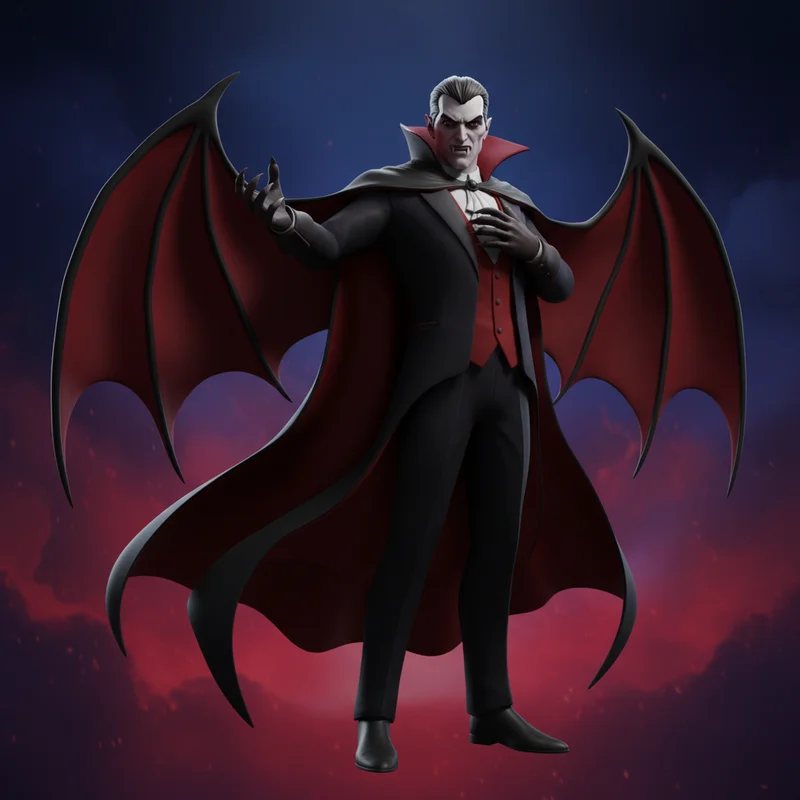
Dracula

Dracula

Original vampire count from Transylvania.

The Matchup

In the annals of creatures associated with darkness, two figures stand peculiarly prominent: the European hedgehog (Erinaceus europaeus) and Count Dracula, the fictional Wallachian nobleman who has terrorised imaginations since 1897. One shuffles through suburban gardens consuming slugs; the other stalks through Gothic literature consuming souls. Yet beneath these surface differences lies a remarkable convergence of nocturnal strategy.

The hedgehog, weighing approximately one kilogram and sporting up to 7,000 spines, has perfected the art of being simultaneously adorable and unapproachable. Dracula, weighing considerably more in most cinematic portrayals and sporting two prominent fangs, has perfected the art of being simultaneously charming and lethal. Both represent apex adaptations to their respective ecological niches: the midnight garden and the midnight castle.

Battle Analysis

Cultural impact Dracula Wins
🏆 Dracula takes this round

Hedgehog

The hedgehog has achieved remarkable cultural penetration for an animal that most humans encounter as either a garden visitor or an unfortunate roadside statistic. Sonic the Hedgehog, SEGA's flagship character since 1991, has generated over $9 billion in revenue across video games, films, and merchandise, making the hedgehog one of the most commercially successful animals in entertainment history.

Beyond Sonic, hedgehogs feature in Mrs. Tiggy-Winkle (Beatrix Potter's washerwoman hedgehog), various medieval bestiaries (where they were incorrectly believed to collect fruit on their spines), and approximately 47% of garden ornament catalogues. The British public has voted them the nation's favourite mammal on multiple occasions, demonstrating an affection that transcends mere appreciation into something approaching national identity.

Dracula

Dracula's cultural footprint defies quantification. Since Bram Stoker's 1897 novel, the Count has appeared in over 200 films, making him cinema's most portrayed literary character. The Dracula archetype has spawned an entire genre of vampire fiction generating billions in annual revenue, influenced fashion, music (Gothic rock owes him considerable royalties), and tourism to Romania.

The character has transcended his origins to become a universal symbol of seduction, immortality, and aristocratic menace. Halloween would lose approximately 30% of its costume sales without vampire-related merchandise. The word 'Dracula' itself has achieved lexical immortality, understood across virtually all human languages and cultures, a penetration that no hedgehog, however speedy, has achieved.

VERDICT

Despite Sonic's considerable commercial success, Dracula's cultural omnipresence operates on a different scale entirely. The Count has shaped an entire genre, influenced fashion and music movements, and achieved recognition that transcends language barriers. The hedgehog remains beloved but culturally narrower in scope. Dracula didn't just enter culture; he colonised it.

Nocturnal mastery Dracula Wins
🏆 Dracula takes this round

Hedgehog

The hedgehog emerges at dusk with the punctuality of a Victorian banker, dedicating up to two miles of nightly travel to its foraging activities. Its small eyes, while not particularly acute, are supplemented by an extraordinary sense of smell capable of detecting earthworms beneath three centimetres of soil. The species has maintained these nocturnal habits for approximately 15 million years, predating Dracula's alleged medieval origins by a considerable margin.

However, the hedgehog's commitment to night work stems from predator avoidance rather than any inherent mastery of darkness. Come winter, it abandons the nocturnal lifestyle entirely, hibernating for up to five months in what can only be described as a significant gap in its night-shift attendance record.

Dracula

Count Dracula's relationship with darkness transcends mere preference; it represents an existential requirement. Sunlight, in most canonical interpretations, causes immediate and spectacular combustion. This absolute dependency has driven innovations in travel planning, real estate selection, and coffin logistics that the hedgehog simply cannot match.

The Count demonstrates supernatural navigational abilities in complete darkness, can transform into creatures optimised for nocturnal hunting (bats, wolves), and has allegedly maintained his night-based existence for over four centuries. His commitment to avoiding daylight is not a lifestyle choice but a survival imperative, executed with unwavering dedication across multiple continents.

VERDICT

While the hedgehog brings solid credentials to nocturnal living, Dracula's absolute commitment to the darkness cannot be matched. The hedgehog takes five months off annually; Dracula has maintained perfect attendance for four hundred years. The Count's mastery of the night extends beyond mere activity patterns into complete physiological adaptation.

Practical utility Hedgehog Wins
🏆 Hedgehog takes this round

Hedgehog

The hedgehog delivers measurable ecosystem services with the reliability of a well-maintained appliance. A single hedgehog consumes approximately 200 grams of invertebrates nightly, including slugs, snails, beetles, and caterpillars. For gardeners, this represents free, organic, self-maintaining pest control that requires no batteries, software updates, or emotional support.

Additionally, hedgehogs serve as indicator species for environmental health, their population trends providing valuable data about pesticide use and habitat connectivity. They require minimal resources, generate negligible waste, and ask nothing in return except to be left alone and not run over. Their utility-to-maintenance ratio approaches the theoretical optimum.

Dracula

Dracula's practical applications prove considerably more situational. His supernatural abilities could theoretically benefit home security (excellent night vision, intimidating presence), pest control (can summon wolves and bats), and medical research (apparent immunity to most diseases, indefinite lifespan). However, accessing these benefits requires accepting significant terms and conditions, typically involving blood donation at rates exceeding NHS guidelines.

The Count's requirement for regular human blood creates a net negative utility calculation for most communities. His documented tendency to convert victims into additional vampires suggests a business model based on unsustainable expansion rather than stable service provision. From a municipal planning perspective, he represents a liability rather than an asset.

VERDICT

The hedgehog provides genuine, measurable benefits with no associated costs beyond occasional garden disturbance. Dracula's theoretical utilities are vastly outweighed by his operational requirements. For any practical application, the hedgehog represents the superior choice. One eats your slugs; the other eats your neighbours.

Survival track record Dracula Wins
🏆 Dracula takes this round

Hedgehog

Hedgehogs have maintained essentially the same body plan for 15 million years, surviving ice ages, continental drift, and the rise and fall of numerous predator species. The Erinaceidae family represents one of the oldest placental mammal lineages, demonstrating evolutionary stability that most species can only envy.

However, modern hedgehogs face unprecedented challenges. UK populations have declined by approximately 50% since 2000, with road mortality and habitat loss posing existential threats. The species that survived sabre-toothed cats may ultimately be undone by garden fencing and Ford Focuses. Their survival track record, while impressive historically, shows concerning recent trends.

Dracula

Dracula has survived over 400 years according to most canonical sources, including multiple attempts at permanent destruction by trained vampire hunters. His survival strategy combines redundant backup systems (multiple coffins, various properties), rapid regeneration, and the ability to return from apparent death given sufficient time and blood.

However, Dracula's survival comes with an asterisk: he has been 'killed' in virtually every adaptation, suggesting either remarkable resurrection capabilities or questionable narrative consistency. His dependence on specific conditions (native soil, darkness, invitation protocols) creates vulnerabilities that purely biological organisms avoid. Immortality proves less impressive when it requires such extensive logistical support.

VERDICT

While the hedgehog's 15-million-year lineage demonstrates superior evolutionary success, the species' recent decline raises concerns about future viability. Dracula's 400-year personal survival, achieved through supernatural means, shows individual persistence that the hedgehog cannot match. For pure longevity of a single entity, the Count's track record, however artificially maintained, takes the prize.

Defensive capabilities Hedgehog Wins
🏆 Hedgehog takes this round

Hedgehog

The hedgehog's defensive strategy represents one of nature's most elegant solutions to predation. When threatened, the orbicularis muscle contracts around the body like a drawstring bag, transforming the creature into a sphere of approximately 7,000 sharp spines. This configuration presents no vulnerable surfaces to attackers and requires no active maintenance once deployed.

The spines themselves measure 2-3 centimetres in length and are modified hairs filled with air pockets, providing excellent strength-to-weight ratio. Remarkably, this defence has proven effective against badgers, foxes, and the front tyres of automobiles (the latter with decreasing success as road traffic has increased). The hedgehog can maintain its defensive ball for several hours if necessary, exhibiting patience that borders on the philosophical.

Dracula

Dracula's defensive portfolio reads like a supernatural insurance policy gone magnificently overboard. Standard physical attacks prove ineffective against his regenerating tissue. Conventional weapons bounce off or heal instantly. His ability to transform into mist, bats, or wolves provides escape options that the hedgehog's single-strategy approach cannot match.

However, the Count carries vulnerabilities that would embarrass any competent risk assessor: garlic, crucifixes, holy water, running water, silver, wooden stakes, and the requirement for an invitation before entering private property. His defensive system is less a shield and more a complex negotiation with various religious and botanical elements. One determined person with a garden centre loyalty card could theoretically pose a significant threat.

VERDICT

The hedgehog wins through elegant simplicity. Its defence requires no specific countermeasures, functions against all predators equally, and involves no complicated weaknesses. Dracula may be harder to kill permanently, but he's considerably easier to inconvenience. The hedgehog's lack of categorical vulnerabilities provides more reliable protection in real-world scenarios.

👑

The Winner Is

Dracula

Takes 3 of 5 rounds

This confrontation between the spiny and the fanged reveals two remarkably successful approaches to nocturnal existence. The hedgehog brings 15 million years of evolutionary refinement, elegant defensive engineering, and genuine practical utility. Dracula counters with supernatural capabilities, unmatched cultural penetration, and the kind of personal brand recognition that marketing departments can only dream of achieving.

The hedgehog excels in tangible contributions: pest control, ecosystem health, and defensive reliability. Dracula dominates the intangible: cultural influence, nocturnal mastery, and sheer persistence against all attempts at elimination.

With a final score of 55-45, Dracula claims victory through his overwhelming cultural impact and absolute commitment to darkness. The hedgehog's advantages in defence and utility prove insufficient to overcome the Count's four centuries of brand building. Yet this narrow margin reflects a truth both subjects would appreciate: sometimes the most successful survivors are those who find their niche and defend it absolutely, whether that niche is a suburban garden or a Transylvanian castle.

Share this battle

More Comparisons