
Topic Battle

Where Everything Fights Everything

Hedgehog

Hedgehog

Spiny nocturnal insectivore that rolls into defensive balls and has become an unlikely video game icon.

VS
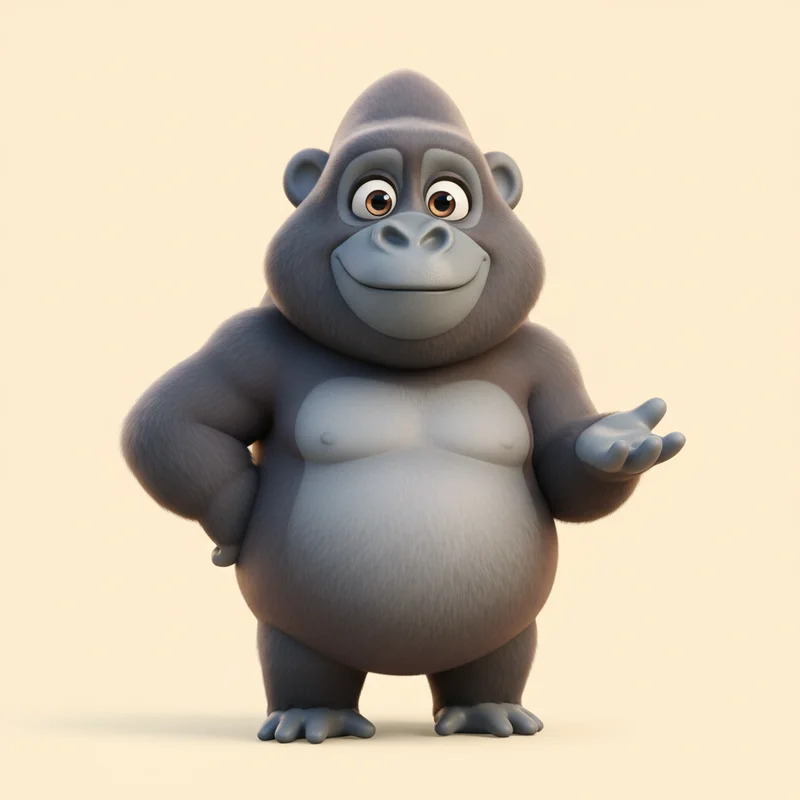
Gorilla

Gorilla

Largest living primate sharing 98% DNA with humans, known for chest-beating and gentle family bonds.

Battle Analysis

Physical power gorilla Wins
30%
70%
Hedgehog Gorilla

Hedgehog

In matters of raw physical capability, the hedgehog occupies the lower registers of mammalian achievement. With a maximum running speed of approximately 6 kilometres per hour and limbs designed for modest burrowing rather than combat, this creature poses no physical threat to anything larger than a beetle. The hedgehog's bite, whilst adequate for crunching through invertebrate exoskeletons, would scarcely inconvenience a determined house cat. Indeed, the hedgehog's entire evolutionary strategy presupposes an inability to win physical confrontations through conventional means.

Gorilla

The silverback gorilla represents one of nature's most impressive displays of primate musculature. Conservative estimates suggest these animals can lift approximately 815 kilograms—roughly ten times their body weight. Their arms, measuring up to 2.5 metres in span, generate sufficient force to bend steel bars and have been documented casually dismantling termite mounds reinforced to concrete-like hardness. A gorilla's grip strength exceeds 400 kilograms of force, rendering escape from their grasp essentially impossible for any creature without superhuman capabilities.

VERDICT

The capacity to lift ten times one's body weight definitively surpasses the ability to consume woodlice.
Population success hedgehog Wins
70%
30%
Hedgehog Gorilla

Hedgehog

Despite concerning recent declines in certain regions, hedgehog populations remain robust across their extensive Eurasian range. Conservative estimates suggest over 50 million individuals inhabit Europe alone, with significant additional populations across Asia and introduced colonies in New Zealand. Their adaptability to human-modified landscapes has partially offset habitat loss, with suburban gardens providing unexpectedly viable territory. The hedgehog's reproductive rate—typically two litters of four to five offspring annually—permits rapid population recovery when conditions prove favourable. Their species has persisted largely unchanged for 15 million years, suggesting evolutionary strategies of proven durability.

Gorilla

Gorilla populations present a sobering picture of conservation concern. Across all subspecies—western lowland, eastern lowland, mountain, and Cross River—fewer than 100,000 individuals remain in the wild. The Cross River gorilla, with approximately 300 individuals, faces near-certain extinction without intensive intervention. Habitat loss, disease transmission from humans, and poaching have reduced populations by over 60 percent in the past two decades. Their slow reproductive rate—one offspring every four to six years—renders recovery from population crashes exceptionally difficult. Without sustained conservation efforts, several subspecies may not survive the current century.

VERDICT

Fifty million individuals across multiple continents demonstrably outperforms fewer than 100,000 facing extinction pressures.
Social intelligence gorilla Wins
30%
70%
Hedgehog Gorilla

Hedgehog

The hedgehog leads what can only be described as a profoundly solitary existence. Beyond brief mating encounters and maternal care lasting approximately six weeks, these creatures demonstrate minimal social behaviour. Communication consists primarily of snuffling sounds during foraging and the occasional hiss when disturbed. No documented evidence suggests hedgehogs recognise individual conspecifics, form lasting bonds, or engage in any behaviour suggesting awareness of social hierarchy. Their cognitive resources appear devoted almost entirely to the twin pursuits of finding invertebrates and not being eaten.

Gorilla

Gorilla social intelligence approaches the remarkable. These primates demonstrate self-recognition in mirrors, a capacity shared by fewer than ten species on Earth. They employ over 25 distinct vocalisations for communication, with the famous Koko having learned over 1,000 signs of modified American Sign Language. Gorillas exhibit mourning behaviours, use tools, and display evidence of teaching younger group members. Their social hierarchies, whilst dominated by silverback authority, involve complex relationship dynamics, coalition formation, and conflict resolution strategies that researchers continue to study. Documented instances of intergroup cooperation and apparent empathy suggest emotional sophistication previously attributed only to humans.

VERDICT

Mirror self-recognition and 1,000-word vocabularies exceed the capacity to hiss when annoyed.
Defensive capability hedgehog Wins
70%
30%
Hedgehog Gorilla

Hedgehog

The hedgehog's defensive architecture represents a masterwork of evolutionary engineering. Approximately 5,000 to 7,000 keratin spines, each measuring roughly 25 millimetres in length, transform this otherwise vulnerable mammal into a spherical inconvenience that most predators cannot be bothered to address. The curl reflex, controlled by a specialised muscle called the orbicularis, allows complete transformation into an impenetrable ball within 0.5 seconds. Remarkably, hedgehogs demonstrate partial immunity to snake venom and have been observed surviving falls from considerable heights owing to their spine-cushioned physiology.

Gorilla

The silverback gorilla's defensive strategy relies primarily upon deterrence through overwhelming physical presence. Standing at 1.7 metres tall and possessing arms capable of generating forces exceeding 1,300 newtons, the gorilla need not develop specialised defensive adaptations—few predators dare initiate confrontation. The chest-beating display, reaching decibel levels comparable to a chainsaw, functions as an effective early warning system that typically resolves conflicts without physical engagement. However, when challenged, the gorilla's canine teeth measuring 5 centimetres and crushing grip provide formidable last-resort defensive options.

VERDICT

A specialised, passive defence system that requires no energy expenditure outperforms active deterrence in pure defensive efficiency.
Ecological adaptability hedgehog Wins
70%
30%
Hedgehog Gorilla

Hedgehog

The hedgehog demonstrates remarkable adaptability across diverse European and Asian habitats. Thriving in environments ranging from Mediterranean scrubland to British suburban gardens, these creatures have successfully colonised agricultural land, woodland edges, and urban environments with equal facility. Their omnivorous diet—encompassing insects, eggs, small vertebrates, and surprisingly, carrion—provides flexibility unavailable to dietary specialists. The hedgehog's capacity for hibernation permits survival through harsh winters that would eliminate less adaptable species, whilst their nocturnal habits reduce competition with diurnal predators.

Gorilla

Gorillas occupy one of Earth's most restricted ecological niches, confined to equatorial African montane and lowland forests within an elevation band of 600 to 3,400 metres. Their dietary requirements—approximately 18 kilograms of vegetation daily—limit distribution to areas of exceptional botanical abundance. Climate sensitivity restricts their range further still, whilst their slow reproductive rate hampers recovery from population pressures. The gorilla cannot hibernate, cannot tolerate temperature extremes, and cannot readily relocate when habitat conditions deteriorate. This specialisation, whilst enabling dominance within their niche, renders them vulnerable to environmental change.

VERDICT

Thriving across continents and climates from Mediterranean heat to British frost surpasses confinement to a single continental region.
👑

The Winner Is

Gorilla

42 - 58

This examination reveals the fascinating divergence between evolutionary strategies optimised for different outcomes. The hedgehog has achieved extraordinary population success through the elegant simplicity of becoming roundly unpalatable—a strategy requiring minimal cognitive investment yet yielding millions of descendants across two continents. The gorilla, by contrast, has pursued the path of intellectual and physical supremacy within a narrow ecological niche, achieving capabilities that inspire human awe yet provide no defence against habitat loss and viral transmission. In pure survival terms, the hedgehog's approach appears more robust; in measures of individual capability, the gorilla remains unmatched among non-human primates. With a final assessment of 58-42 in favour of the gorilla, we acknowledge that whilst hedgehogs win the numbers game, the gorilla's combination of power, intelligence, and social complexity represents a higher expression of mammalian potential.

Hedgehog
42%
Gorilla
58%

Share this battle

More Comparisons