Topic Battle

Where Everything Fights Everything

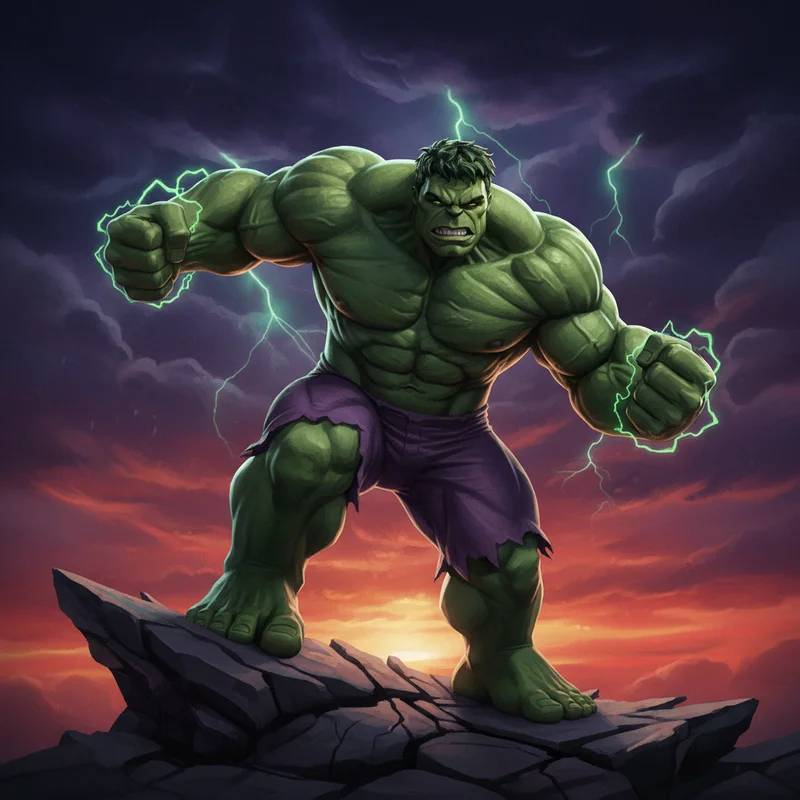
Hulk

Hulk

Green rage monster with PhD-level intelligence.

VS
Love

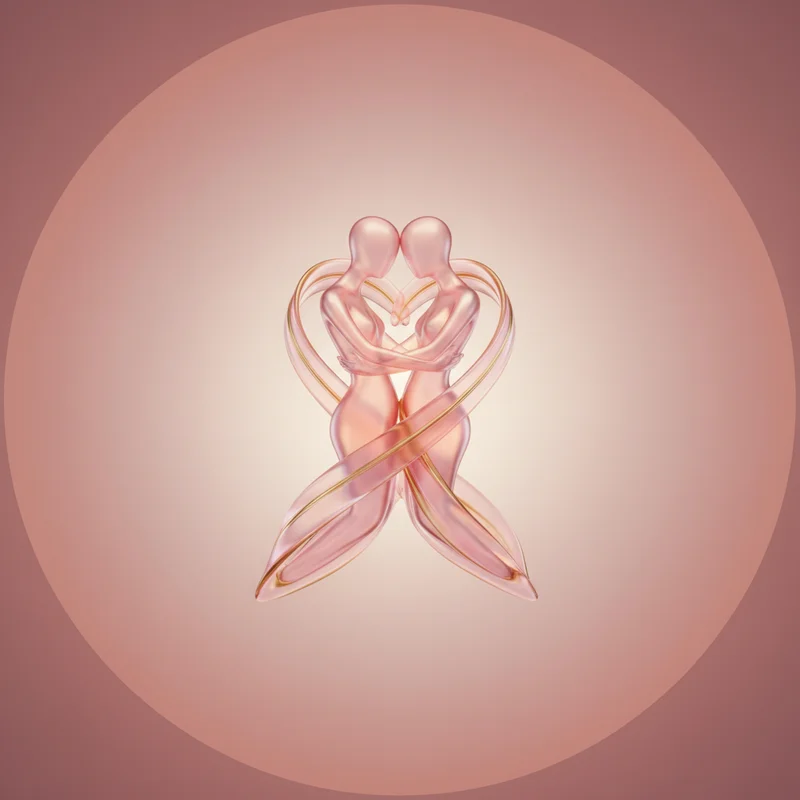
Love

Universal emotion driving art, war, and terrible decisions.

Battle Analysis

Raw power Hulk Wins
70%
30%
Hulk Love

Hulk

The Hulk's strength defies conventional physics with remarkable consistency. Documentation from Marvel's archives indicates he has held together tectonic plates, supported the weight of a 150 billion ton mountain range, and punched through dimensional barriers. His power increases exponentially with anger, creating a feedback loop of destruction that has, on multiple occasions, threatened planetary integrity. Scientists within the fictional universe have classified him as an Omega-level threat—a designation reserved for entities capable of extinction-level events.

The gamma radiation that courses through his cellular structure provides effectively unlimited energy reserves, allowing sustained combat operations that would exhaust conventional armies.

Love

Love's power operates through rather different mechanisms, yet its measurable effects prove equally staggering. Neuroimaging studies reveal that romantic love activates the same neural reward pathways as cocaine, producing dopamine surges of remarkable intensity. This emotional state has motivated humans to build the Taj Mahal, cross oceans in inadequate vessels, and occasionally make spectacularly poor decisions regarding text messages.

More significantly, love has demonstrated the capacity to alter human behaviour across entire civilisations, inspiring social movements, religious traditions, and the complete restructuring of legal systems around marriage and family.

VERDICT

Whilst love reshapes societies, the Hulk reshapes continents—a rather more immediate form of power
Durability Love Wins
30%
70%
Hulk Love

Hulk

The Hulk's regenerative capabilities border on the absurd. He has survived nuclear detonations at ground zero, exposure to the vacuum of space, and temperatures exceeding the surface of the sun. His healing factor operates so efficiently that severed limbs regenerate within minutes, whilst cellular damage repairs itself faster than it can be inflicted. Various entities have attempted to destroy him permanently, including cosmic beings of immense power, yet the Hulk endures.

This biological resilience stems from his unique gamma-mutated physiology, which appears to violate several fundamental laws of thermodynamics with cheerful abandon.

Love

Love's durability manifests across temporal scales that dwarf individual lifespans. Archaeological evidence suggests pair bonding behaviours extending back tens of thousands of years, with burial sites revealing couples interred together across cultures and continents. The emotion has survived every attempt at rational suppression, from Stoic philosophy to Victorian propriety to cynical modern dating applications.

More remarkably, love persists through circumstances that logically should extinguish it—long-distance separations, terminal illness, and even death itself, where grief becomes love's enduring shadow.

VERDICT

The Hulk may survive nuclear fire, but love has outlasted ice ages and civilisations
Global impact Love Wins
30%
70%
Hulk Love

Hulk

The Hulk's global impact, whilst spectacular, remains largely destructive in nature. His documented rampages have caused an estimated $312 billion in property damage across the Marvel universe, necessitating specialised insurance policies and evacuation protocols in major metropolitan areas. The mere rumour of his presence can crash local property markets and trigger mass migrations.

However, this impact remains geographically concentrated. The Hulk cannot be everywhere simultaneously, and his influence, though devastating, affects primarily physical infrastructure rather than human consciousness at scale.

Love

Love's global footprint proves rather more comprehensive. The emotion underpins a $80 billion annual wedding industry, generates approximately 250 million Valentine's Day cards yearly, and drives significant portions of the pharmaceutical, entertainment, and hospitality sectors. Poetry, music, literature, and cinema derive substantial content from love's various manifestations.

Beyond economics, love shapes demographic patterns, migration decisions, and political alliances through family formation. It is, quite literally, the mechanism through which human civilisation perpetuates itself.

VERDICT

The Hulk destroys cities; love built them in the first place
Unpredictability Hulk Wins
70%
30%
Hulk Love

Hulk

The Hulk's unpredictability presents a significant tactical challenge. His transformations occur without warning, triggered by stress responses that Bruce Banner cannot fully control. Once transformed, his behaviour follows patterns that defy strategic analysis—he may protect innocents or demolish city blocks, depending on factors even Banner himself cannot articulate.

Military strategists have classified him as a chaotic variable, impossible to incorporate into defensive planning. His strength fluctuations, tied to emotional state, make damage projections essentially meaningless.

Love

Love's unpredictability operates at a more intimate yet equally confounding scale. Despite millennia of philosophical inquiry and decades of psychological research, no reliable method exists for predicting romantic attachment. Algorithms claiming compatibility expertise demonstrate success rates barely exceeding random chance. Humans consistently fall in love with entirely inappropriate partners, across every demographic and educational category.

The emotion's onset, duration, and termination all resist systematic prediction, making it perhaps the most chaotic variable in human social organisation.

VERDICT

Both prove magnificently unpredictable, but the Hulk adds property damage to the equation
Transformative capacity Love Wins
30%
70%
Hulk Love

Hulk

The Hulk's transformations, whilst visually dramatic, affect primarily one individual. Bruce Banner becomes the Hulk; the Hulk reverts to Banner. This cycle, though personally devastating, represents a contained phenomenon. The transformation grants extraordinary physical capabilities but does not propagate beyond the single affected organism.

Attempts to replicate the Hulk's condition have produced various gamma-mutated beings, but the transformation remains fundamentally non-contagious—one cannot catch Hulk status through proximity.

Love

Love's transformative capacity proves exponentially greater through its propagating nature. One instance of love typically generates offspring, who themselves develop loving attachments, creating cascading networks of emotional connection across generations. A single romantic encounter can, through downstream effects, produce thousands of descendants within centuries.

Moreover, love transforms individuals profoundly—altering priorities, restructuring neural pathways, and modifying behaviour in ways that persist long after the emotion's initial intensity fades. It is genuinely contagious, spreading through social networks via observation and modelling.

VERDICT

The Hulk transforms one man; love transforms humanity itself
👑

The Winner Is

Love

47 - 53

Our rigorous examination reveals a result that may surprise those expecting gamma-powered dominance. Whilst the Hulk commands raw destructive force beyond mortal comprehension, love demonstrates superiority across metrics that ultimately matter more: durability across geological timescales, global economic and social impact, and transformative capacity affecting billions rather than one.

The Hulk can destroy a city in an afternoon. Love built every city that ever existed, motivated every act of creation and sacrifice that comprises human civilisation, and will continue operating long after fictional characters fade from cultural memory. The Hulk is, finally, a symptom—an expression of rage that is itself an emotion, and one considerably less constructive than love.

By a margin of 53 to 47, love claims victory through sheer comprehensive impact.

Hulk
47%
Love
53%

Share this battle

More Comparisons