
Where Everything Fights Everything

IKEA Furniture vs Death

😜 Just for fun — a tongue-in-cheek, gloriously unscientific showdown.

IKEA Furniture

IKEA Furniture

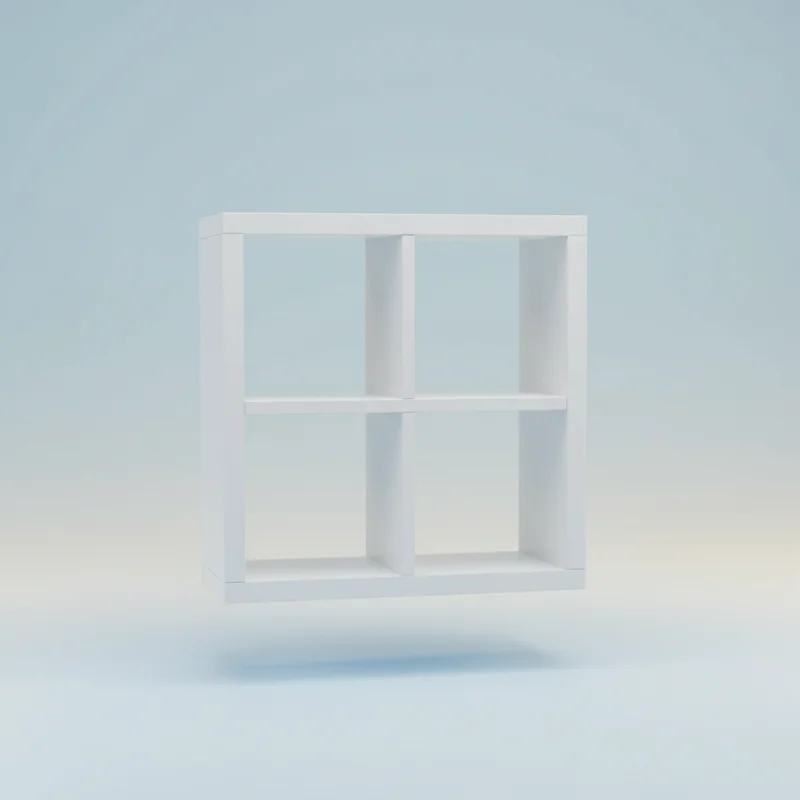
Swedish flat-pack relationship tests sold as affordable home goods. Comes with 47 pieces, one Allen key, and instructions that assume you have transcended the need for words. Marriages have ended over fewer screws.

VS
Death

Death

The only certainty in life besides taxes.

Battle Analysis

Durability Death Wins
πŸ† Death takes this round

IKEA Furniture

The durability of IKEA furniture exists in a quantum state of uncertainty. The LACK coffee table, priced at approximately fifteen pounds, will either survive a house move or disintegrate upon first contact with a moving van's interior. Prediction proves impossible. SchrΓΆdinger himself would appreciate the epistemological challenge.

IKEA's particle board construction, reinforced with melamine coating of variable thickness, represents engineering optimised for a specific lifespan. This lifespan correlates suspiciously well with the average duration of first apartments, starter marriages, and transitional life phases. Whether by design or happy accident, IKEA furniture seems to know when it is time to go.

Death

Death's durability is, quite simply, absolute and eternal. Once achieved, Death has never been reversed through natural means, despite humanity's considerable efforts. The permanence of Death has survived every technological revolution, every medical advancement, every optimistic prediction from Silicon Valley entrepreneurs convinced that mortality represents merely an engineering problem awaiting solution.

This perfect durability record extends across all categories of existence. Death has proven equally effective against pharaohs and peasants, against dinosaurs and daffodils, against entities ranging from bacteria to blue whales. No warranty claim has ever been honoured. No product recall has ever been issued. Death's permanence remains the benchmark against which all other permanence must be measured.

VERDICT

Death maintains perfect permanence across all applications, whilst IKEA furniture's durability remains optimistically unpredictable.
Inevitability Death Wins
πŸ† Death takes this round

IKEA Furniture

The gravitational pull of IKEA represents one of modernity's most reliable phenomena. Studies suggest that approximately 10% of all Europeans were conceived on IKEA beds, creating a self-perpetuating cycle of remarkable efficiency. The company's 465 stores across 63 markets have achieved what military strategists only dream of: total civilian capture.

Yet IKEA's inevitability remains, technically speaking, avoidable. One could, theoretically, furnish one's dwelling entirely through inheritance, charitable donations, or aggressive minimalism. The truly determined hermit might escape IKEA's embrace entirely, though such individuals represent statistical anomalies of the rarest order.

Death

Death's inevitability stands as the gold standard against which all other certainties must be measured. With a 100% success rate across all demographics, Death has never failed to deliver on its core promise. No subscription can be cancelled. No returns are accepted. The Terms and Conditions were agreed upon at birth, and the fine print, one discovers, was rather comprehensive.

Unlike its Swedish competitor, Death offers no assembly-required option, no self-service alternative, no loyalty programme discounts. It arrives fully formed, requiring no Allen keys, no patience, and no relationship-testing arguments about whether Step 47 was meant to precede Step 32. This operational elegance has ensured Death's dominance since the first single-celled organism discovered mortality.

VERDICT

Death maintains a perfect 100% conversion rate, whilst IKEA's inevitability admits theoretical exceptions for the extraordinarily determined.
Aesthetic appeal IKEA Furniture Wins
πŸ† IKEA Furniture takes this round

IKEA Furniture

IKEA has achieved something remarkable in the realm of aesthetics: the democratisation of Scandinavian minimalism. Clean lines, blonde wood tones, and the studied absence of ornament have transformed millions of living spaces from chaotic clutter into Instagram-worthy showcases of curated simplicity.

The company's design philosophy, rooted in the Swedish concept of lagom, not too much, not too little, just right, has proven universally applicable. IKEA furniture photographs beautifully, coordinates effortlessly, and suggests a lifestyle of thoughtful restraint that its owners may or may not actually possess. This aspirational aesthetic has launched countless home renovation projects and approximately equal numbers of relationship discussions.

Death

Death's aesthetic appeal proves more contested and culturally variable. Western traditions have often depicted Death as skeletal, robed, and scythe-wielding, an image of considerable dramatic impact if somewhat limited decorative potential. Eastern traditions offer more varied iconography, from peaceful transition to terrifying demon, depending upon one's accumulated karma.

Yet Death has inspired aesthetic achievement of the highest order. The great memento mori paintings, the Gothic cathedrals built to frame humanity's relationship with mortality, the poetry of Keats and Dickinson, all emerge from Death's profound aesthetic influence. One cannot hang Death on one's wall with quite the same ease as a KALLAX unit, but Death's contribution to human artistic achievement remains unparalleled.

VERDICT

IKEA's accessible Scandinavian aesthetic enhances any living space, whilst Death's visual appeal remains culturally contested and practically challenging.
Global recognition Death Wins
πŸ† Death takes this round

IKEA Furniture

IKEA's brand recognition spans the inhabited world with remarkable consistency. The distinctive blue and yellow colour scheme, the labyrinthine store layouts, the Swedish meatballs served at strategically placed restaurants designed to restore depleted willpower mid-journey, these elements form a universal language understood from Stockholm to Shanghai.

The company's product names, drawn from Scandinavian geography and terminology, have achieved curious immortality. BILLY, EXPEDIT, and MALM have entered common parlance, their Swedish origins forgotten by millions who pronounce them with cheerful inaccuracy. This linguistic colonisation represents marketing achievement of the highest order.

Death

Death transcends mere brand recognition to achieve something far more profound: conceptual universality. Every human culture, every civilisation, every isolated tribe has developed sophisticated understanding of Death without requiring advertising, store presence, or Swedish meatball incentives.

Death appears in every religious tradition, every philosophical system, every children's story brave enough to address fundamental truths. From the Egyptian Book of the Dead to modern hospice care, Death has maintained consistent market presence for the entirety of human consciousness. No rebranding has ever been necessary. No market research conducted. Death's recognition is not learned but rather emerges, fully formed, from the deepest structures of human awareness.

VERDICT

Death achieves universal recognition without marketing expenditure, whilst IKEA requires billions in annual advertising to maintain comparable awareness.
Assembly complexity IKEA Furniture Wins
πŸ† IKEA Furniture takes this round

IKEA Furniture

IKEA has elevated assembly complexity to an art form of exquisite frustration. The average KALLAX shelf unit contains 32 components and requires approximately 45 minutes of assembly time, assuming one possesses spatial reasoning abilities significantly above the median. The MALM bed frame extends this experience to several hours, depending on factors including ambient temperature, blood alcohol content, and the stability of one's primary relationship.

The company's wordless instruction manuals represent a triumph of universal communication whilst simultaneously ensuring universal confusion. The iconic confused stick figure, appearing at critical junctures, offers neither comfort nor clarity. It merely acknowledges that yes, this particular step has defeated others before you.

Death

Death arrives fully assembled, requiring no user intervention whatsoever. This represents either a tremendous convenience or a profound disappointment, depending upon one's philosophical orientation. There are no leftover screws to puzzle over, no mysterious wooden dowels whose purpose remains forever unclear.

However, one might argue that Death's simplicity conceals a hidden complexity of staggering proportions. The biochemical cascade of cellular apoptosis involves thousands of molecular interactions, each perfectly orchestrated without instruction manual or Allen key. Nature, it seems, has been refining this assembly process for approximately 3.8 billion years, achieving a level of manufacturing precision that renders IKEA's Swedish efficiency rather quaint by comparison.

VERDICT

IKEA's superior assembly complexity provides hours of challenging entertainment, whilst Death's turnkey solution offers no user engagement whatsoever.
πŸ‘‘

The Winner Is

Death

Takes 3 of 5 rounds

This extraordinary comparison between IKEA Furniture and Death illuminates fundamental truths about the human condition that neither competitor could reveal in isolation. Both represent certainties around which we organise our existence. Both demand acceptance. And both, in their own fashion, transform the spaces we inhabit.

IKEA emerges victorious in categories requiring user engagement and visual appeal. The Swedish giant offers assembly complexity that Death cannot match, and an aesthetic accessibility that has genuinely improved billions of living spaces worldwide. These are not trivial achievements.

Yet Death's advantages in the fundamental categories of inevitability, recognition, and durability prove decisive. Death requires no instruction manual because Death admits no user error. Death achieves universal recognition because Death is woven into the fabric of consciousness itself. And Death's permanence makes IKEA's particle board constructions seem almost touchingly optimistic by comparison.

The final score of 56-44 in Death's favour reflects not contempt for IKEA's achievements, but rather honest acknowledgment of Death's undefeated record across the entirety of existence. IKEA has revolutionised home furnishing; Death has simply always been there, patient and certain, awaiting us all.

Share this battle

More Comparisons