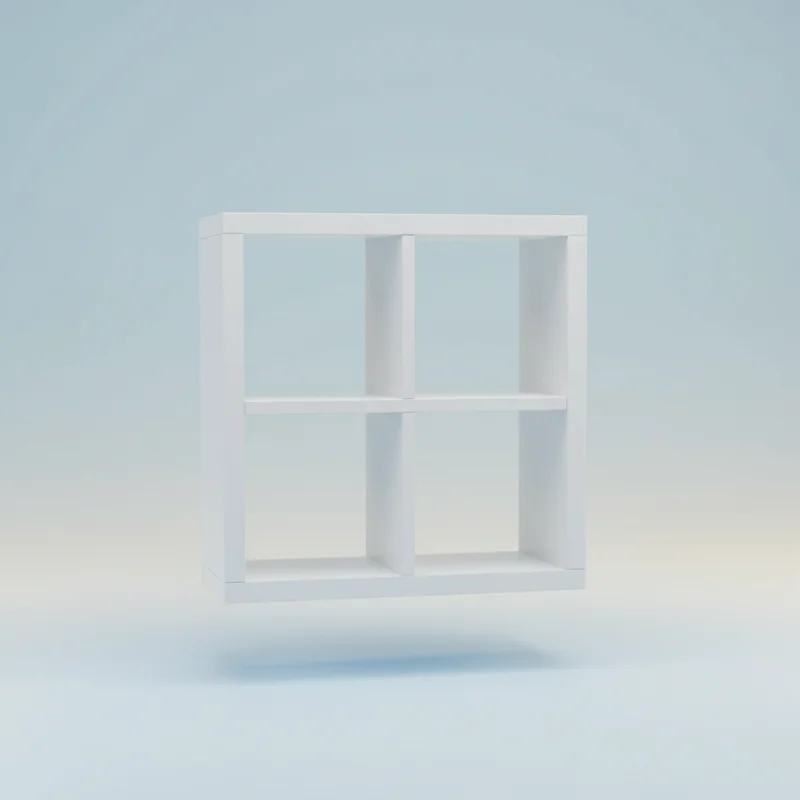

IKEA Furniture
IKEA furniture occupies a controversial position in the durability hierarchy of domestic objects. The Swedish manufacturer has been accused of designing products with planned obsolescence—items that function admirably until the first household relocation, whereupon they disintegrate into their component particles. The infamous cam lock system that enables flat-pack assembly also ensures that repeated assembly degrades structural integrity with each cycle. A BILLY bookcase may survive one move; three moves approaches the miraculous.
Yet IKEA's durability criticisms may be overstated. Under static conditions—remaining in place without reassembly—many products demonstrate remarkable longevity. The company's more expensive lines employ solid wood and traditional joinery that can outlast their owners. The IKEA PS collection and other premium offerings prove that flat-pack and durability need not be mutually exclusive. The average IKEA product, properly maintained and never moved, can provide eight to fifteen years of functional service.
Dog
The domestic dog's durability, measured in operational lifespan, typically ranges from ten to fifteen years depending on breed, with smaller dogs generally outlasting larger specimens. This biological engineering comes with no warranty and no replacement parts—though veterinary science has achieved remarkable advances in hip replacements, cardiac pacemakers, and prosthetic limbs for particularly valued units. Unlike furniture, the dog's durability cannot be extended through careful handling; even the most pampered specimen eventually succumbs to entropy.
However, the dog offers something IKEA furniture cannot: self-repair mechanisms. Minor damage—cuts, bruises, minor fractures—heals without intervention. The immune system combats infection; the cardiovascular system adapts to exercise demands. A dog that survives puppyhood typically requires less structural maintenance than a HEMNES dresser until its final years. The dog's durability, while finite, operates through biological systems far more sophisticated than particle board and cam locks.