Where Everything Fights Everything

IKEA Furniture vs Mars

😜 Just for fun — a tongue-in-cheek, gloriously unscientific showdown.

IKEA Furniture

IKEA Furniture

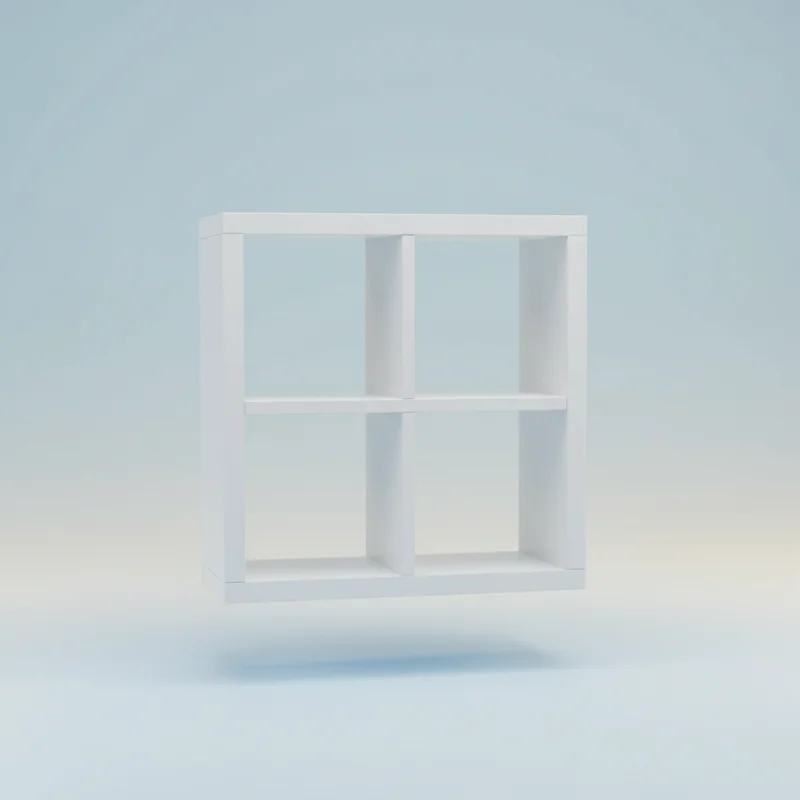
Swedish flat-pack relationship tests sold as affordable home goods. Comes with 47 pieces, one Allen key, and instructions that assume you have transcended the need for words. Marriages have ended over fewer screws.

VS
Mars

Mars

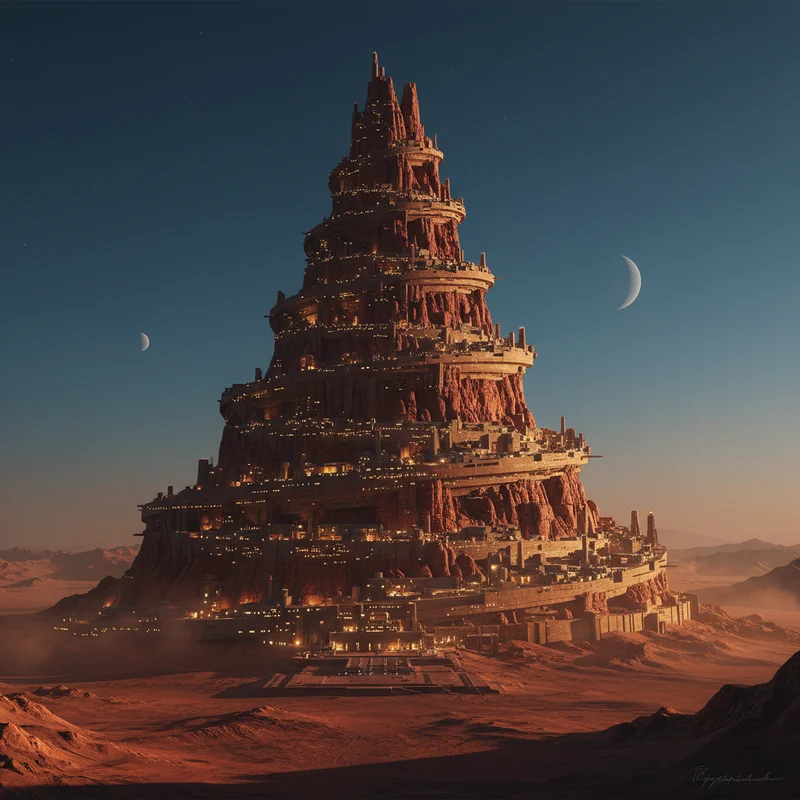
Red planet and humanity's next frontier.

Battle Analysis

Mystery Mars Wins · 65%
35%
65%
IKEA Furniture Mars

IKEA Furniture

IKEA furniture harbours considerable mysteries. Chief among these: the identity of the instruction manual illustrators, who have successfully communicated assembly procedures without using words or depicting recognisable human emotions. The persistent phenomenon of leftover hardware - those extra screws and dowels remaining after assembly - defies explanation. Are they spares? Were steps missed? The ambiguity torments millions.

The navigational design of IKEA stores presents another enigma. Despite clearly marked arrows, customers routinely become disoriented, sometimes spending hours traversing kitchen displays before locating exits. Whether this represents architectural genius or a gentle form of imprisonment remains academically contested.

Mars

Mars presents mysteries of cosmic proportions. The question of whether life ever existed on its surface remains unanswered despite decades of robotic investigation. The planet's ancient river valleys suggest liquid water once flowed freely, yet its current frozen desolation offers few clues about this dramatic transformation. The Martian methane mystery - periodic detection of this gas potentially indicating biological processes - tantalises astrobiologists worldwide.

The planet's two moons, Phobos and Deimos, exhibit orbital characteristics suggesting they may be captured asteroids, though their origin story remains disputed. Mars conceals billions of years of geological and potentially biological history beneath its rust-coloured regolith.

VERDICT

Leftover Allen keys are troubling, but the question of extraterrestrial life represents a more profound cosmic mystery.
Durability Mars Wins · 80%
20%
80%
IKEA Furniture Mars

IKEA Furniture

The durability of IKEA furniture occupies a peculiar position in material science. Constructed primarily from particleboard, medium-density fibreboard, and optimism, these pieces exhibit what researchers term 'conditional permanence'. A KALLAX unit may survive decades of static display, yet collapse catastrophically upon its first relocation. The cam-lock fastening system grows progressively weaker with each disassembly, much like human resolve during the reassembly process.

Studies indicate that IKEA furniture achieves an average lifespan of approximately 15 years under optimal conditions, though many pieces meet premature endings during house moves or fits of redecorating enthusiasm.

Mars

Mars has demonstrated extraordinary durability, maintaining structural integrity for approximately 4.5 billion years without significant deterioration. The planet has survived countless asteroid impacts, solar flares, and the complete loss of its magnetic field, yet continues to orbit reliably. Its surface features, including Olympus Mons - the largest volcano in the solar system - have persisted for hundreds of millions of years.

The Martian atmosphere, whilst thin, has protected the surface from the worst of cosmic radiation. Rock samples analysed by rovers suggest the planet will continue existing for several billion years hence, assuming no catastrophic cosmic events intervene.

VERDICT

Four and a half billion years of continuous existence outperforms even the sturdiest POANG armchair.
Accessibility IKEA Furniture Wins · 75%
75%
25%
IKEA Furniture Mars

IKEA Furniture

IKEA furniture demonstrates remarkable accessibility, with 460 stores spanning six continents. The average human can reach their nearest IKEA within 47 minutes of driving, assuming they survive the labyrinthine store layout and emerge with their sanity intact. The company's democratic design philosophy means a BILLY bookcase costs approximately the same whether purchased in Stockholm or Shanghai. Delivery services extend this reach further still, bringing flat-pack existential challenges directly to one's doorstep.

The psychological accessibility remains another matter entirely. Whilst physically available, the instruction manuals speak a universal language of cryptic pictograms that transcend linguistic barriers by being equally confusing in all tongues.

Mars

Mars presents considerable accessibility challenges. Located between 54.6 million and 401 million kilometres from Earth depending on orbital positions, the Red Planet requires a minimum seven-month journey using current propulsion technology. No commercial flights operate this route, and the return policy is, at present, non-existent. The estimated cost of a single human mission exceeds 100 billion dollars, placing Mars somewhat beyond the reach of most household budgets.

Even robotic visitors face a 40% failure rate, with numerous spacecraft having perished attempting the journey. The planet's thin atmosphere offers minimal assistance with braking manoeuvres, leading to what engineers diplomatically term 'lithobraking' - the technical term for crashing.

VERDICT

IKEA stores exist on Earth, which represents a significant logistical advantage over a planet requiring seven months of space travel.
Cultural Impact IKEA Furniture Wins · 65%
65%
35%
IKEA Furniture Mars

IKEA Furniture

IKEA has fundamentally reshaped global domestic culture. The company's influence extends beyond mere furniture into philosophy, psychology, and interpersonal relationships. The term 'IKEA Effect' now appears in academic literature, describing the phenomenon whereby humans irrationally value objects they have assembled themselves. Couples therapy professionals report that flat-pack assembly ranks among the top stressors in modern relationships.

The Swedish meatball has become an internationally recognised culinary export, consumed by approximately 150 million restaurant visitors annually. IKEA's minimalist aesthetic has influenced architecture, fashion, and interior design across five decades, democratising Scandinavian sensibilities for the global middle class.

Mars

Mars has captured human imagination since ancient Babylonian astronomers first tracked its distinctive red wandering across the night sky. The planet has inspired countless works of literature, from H.G. Wells' The War of the Worlds to contemporary science fiction. Its name derives from the Roman god of war, lending martial associations that persist in popular culture.

The prospect of Martian colonisation drives billion-dollar space programmes and has influenced educational trajectories for generations of scientists and engineers. Mars serves as humanity's symbol of cosmic ambition, representing the next frontier of species expansion.

VERDICT

Whilst Mars inspires dreams, IKEA has physically entered more homes and caused more arguments than any celestial body.
Environmental Impact Mars Wins · 58%
42%
58%
IKEA Furniture Mars

IKEA Furniture

IKEA's environmental footprint presents a complex ledger. The company consumes approximately 1% of the world's commercial wood supply annually, representing both significant resource extraction and, through sustainable forestry initiatives, some of the planet's largest timber management programmes. The flat-pack design reduces shipping volumes by approximately 80% compared to assembled furniture, substantially decreasing transport emissions.

However, the relatively short lifespan of particleboard products contributes to landfill accumulation. The company has committed to using only renewable or recycled materials by 2030, though critics question whether this timeline proves sufficiently ambitious given ecological urgency.

Mars

Mars maintains an essentially neutral environmental impact on Earth, existing at such distance that its gravitational and electromagnetic influences prove negligible for most practical purposes. The planet neither consumes terrestrial resources nor contributes to atmospheric pollution. Its orbital mechanics do contribute to long-term climate cycles through gravitational resonance effects, though these operate on geological rather than human timescales.

Future Martian colonisation would require significant resource investment, potentially including environmental modifications through proposed terraforming schemes. Such interventions remain speculative but could theoretically transform the planet's atmosphere over centuries of deliberate engineering.

VERDICT

Existing 225 million kilometres away represents the ultimate in low-impact living arrangements.
👑

The Winner Is

Mars

Takes 3 of 5 rounds

Our comprehensive analysis reveals a surprisingly competitive contest between Swedish flat-pack ingenuity and planetary geology — and ultimately, planetary geology prevails. Mars commands decisive advantages in durability and mystery: four billion years of continuous existence and the tantalising possibility of extraterrestrial life represent achievements no furniture manufacturer can credibly match. The Red Planet's environmental neutrality, achieved primarily through extreme distance, similarly proves difficult to contest, edging IKEA on the third round that tips the balance.

IKEA Furniture fought admirably, claiming accessibility in a near-blowout and cultural impact with genuine force — 150 million meatball diners and a named psychological effect in academic literature are no small feats. Yet winning two rounds is not enough. Mars takes three — durability, mystery, and environmental impact — and with them, victory. The fourth planet from the Sun has endured asteroid impacts, the death of its magnetic field, and decades of robotic scrutiny; it can certainly withstand a flat-pack comparison.

Share this battle

More Comparisons