
Topic Battle

Where Everything Fights Everything

IKEA Furniture

IKEA Furniture

Swedish flat-pack relationship tests sold as affordable home goods. Comes with 47 pieces, one Allen key, and instructions that assume you have transcended the need for words. Marriages have ended over fewer screws.

VS
Pizza

Pizza

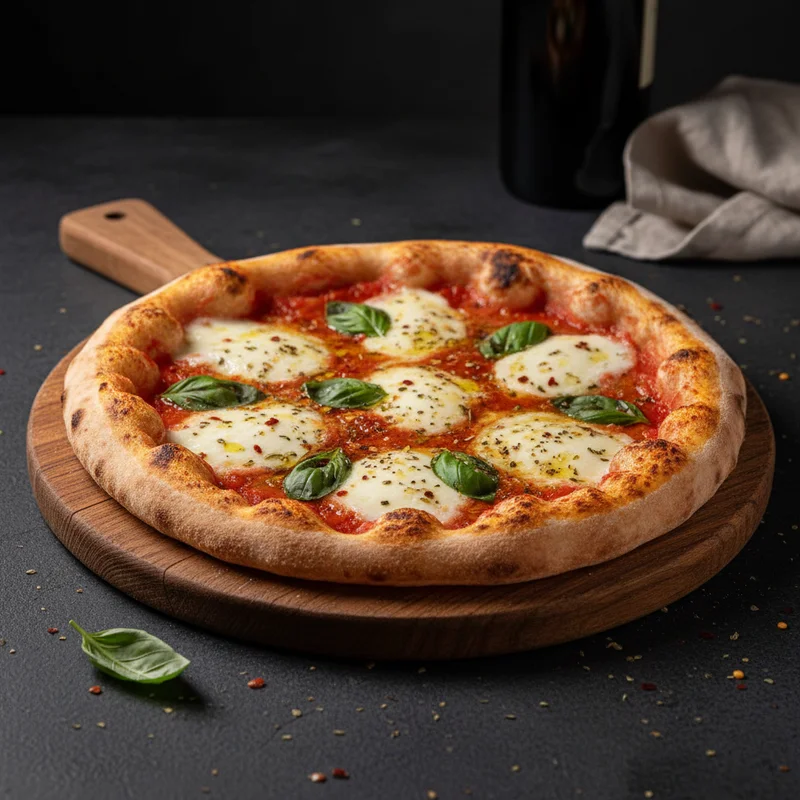
A flat disc of bread that convinced the world that putting everything on top of something is a legitimate cuisine. Somehow both a $1 slice and a $40 artisanal experience, depending on how seriously you take yourself.

The Matchup

In the annals of human achievement, few innovations have so fundamentally altered domestic life as the flat-pack furniture revolution pioneered by IKEA and the simple yet profound combination of dough, tomato, and cheese known as pizza. Both emerged from European nations with rich cultural traditions. Both democratized access to previously exclusive commodities. And both have been responsible for an incalculable number of heated family discussions, albeit for markedly different reasons.

This documentary examination approaches both subjects with the gravity they deserve. We have consulted furniture assembly specialists, pizzaiolos with decades of experience, and ordinary citizens who have encountered both phenomena in their natural habitats: the suburban home and the Friday evening dinner table. Our findings reveal a competition far closer than conventional wisdom might suggest.

What follows is a rigorous comparative analysis across five critical dimensions that define modern consumer satisfaction. We employ the Scandinavian-Mediterranean Comparative Index, a methodology specifically developed for evaluating disparate yet equally impactful contributions to human comfort.

Battle Analysis

Global reach Pizza Wins
30%
70%
IKEA Furniture Pizza

IKEA Furniture

The Swedish furniture giant operates 460 stores across 62 markets, having transformed from a single shop in Almhult to a global empire worth over 40 billion euros. The BILLY bookcase alone has sold more than 110 million units since 1979, meaning statistically, you are never more than a few hundred meters from one in any major city. IKEA has achieved something remarkable: making Swedish words like "MALM" and "POANG" part of the global vocabulary, despite most customers having no idea how to pronounce them correctly.

The company's expansion strategy has been methodical and relentless. From its first international store in Norway in 1963 to its ambitious plans for South American and Indian markets, IKEA has pursued what researchers call the "KALLAX Doctrine": the belief that every human on Earth deserves access to reasonably priced storage solutions with Scandinavian names.

Pizza

Pizza's global conquest began centuries before IKEA existed. What started as a Neapolitan street food has achieved near-total planetary penetration, with an estimated 5 billion pizzas consumed annually worldwide. There exists no inhabited continent without pizza. Research stations in Antarctica serve it. The International Space Station has hosted pizza parties. In 2001, Pizza Hut even delivered to the ISS, achieving what may be humanity's most expensive delivery order at approximately one million dollars.

The pizza's adaptability has been key to its success. In Japan, it wears mayonnaise and corn. In Sweden, ironically, it features banana and curry. In Australia, it carries kangaroo. This chameleon-like ability to absorb local ingredients while maintaining its essential identity has made pizza not merely a food, but a platform for cultural expression.

VERDICT

While IKEA's 460 stores represent an impressive infrastructure achievement, pizza has achieved something IKEA can only dream of: true ubiquity. Pizza requires no retail locations; it propagates through independent operators, chain restaurants, frozen food sections, and home kitchens. The barriers to pizza entry are a hot oven and basic ingredients. The barriers to IKEA entry are a 30,000 square meter warehouse and a complex global supply chain.

Furthermore, pizza has penetrated markets IKEA has not yet reached. There are pizzerias in Pyongyang. IKEA has no plans for North Korean expansion. The mathematics are unambiguous: pizza wins global reach by sheer saturation. One cannot walk through any significant human settlement on Earth without encountering pizza within minutes. The same cannot be said for HEMNES bedside tables.

Affordability Pizza Wins
30%
70%
IKEA Furniture Pizza

IKEA Furniture

IKEA's foundational promise is affordable design. The company's designers work backward from target prices, engineering products to hit specific cost points. The iconic LACK table retails for approximately 10-15 USD globally, representing perhaps the most affordable furniture available through legitimate retail channels. Even substantial pieces like the KALLAX shelving system offer remarkable value per cubic meter of storage.

The true cost calculation, however, must include transportation (often requiring vehicle rental), assembly time (valued at local wage rates), and the occasional professional assembly service when customer attempts fail catastrophically. Studies suggest the total cost of IKEA furniture ownership exceeds sticker price by 30-50% when these factors are included. Additionally, the psychological cost of assembly-related stress remains unquantified but widely acknowledged.

Pizza

Pizza spans the entire affordability spectrum. A frozen pizza can cost as little as 3-5 USD, feeding multiple people. A basic delivery pizza ranges from 10-20 USD. At the premium end, artisanal Neapolitan pizzas at specialized restaurants can exceed 30 USD, and novelty luxury pizzas topped with gold leaf have sold for thousands. This range ensures pizza accessibility across all economic strata.

Critically, pizza requires no additional investment. There is no assembly time. There is no need for tools or vehicle rental. The pizza arrives ready to consume, representing a complete transaction with no hidden costs. Time-to-satisfaction from purchase to consumption is measured in minutes for delivery, seconds for pre-made. The pizza offers immediate gratification at a predictable, transparent price.

VERDICT

Raw price comparison favors IKEA: a LACK table costs less than a delivery pizza and provides years of utility. However, affordability must be measured against value delivered per transaction. A pizza purchase is complete and satisfying within 30 minutes. An IKEA purchase initiates a multi-hour project with uncertain outcomes.

Furthermore, pizza's affordability is unconditional. Anyone with 5 USD can obtain a pizza and consume it immediately. IKEA's affordability comes with prerequisites: transportation, physical capability to assemble, and space to work. The single parent, the elderly customer, the apartment dweller without a car, all face barriers to accessing IKEA's value proposition. Pizza has no such barriers. For universal affordability, pizza prevails.

Social impact Pizza Wins
30%
70%
IKEA Furniture Pizza

IKEA Furniture

IKEA democratized interior design. Before its emergence, attractive home furnishing was largely the province of the wealthy. The flat-pack model allowed young people establishing their first homes to afford coordinated, design-conscious furniture that previous generations could only dream of. The IKEA catalog, at its peak, was the most widely distributed publication in the world, surpassing the Bible in annual print runs.

IKEA has also shaped social behavior in unexpected ways. The IKEA date has become a relationship milestone, a trial-by-showroom that tests compatibility. Academic studies suggest that successfully assembling IKEA furniture together correlates positively with relationship longevity. The company has inadvertently created a modern courtship ritual involving KALLAX shelving units and Swedish meatballs.

Pizza

Pizza's social impact extends across virtually every human culture it has touched. It is the universal celebration food: birthday parties, office gatherings, sports victories, movie nights, and hangover recoveries all feature pizza prominently. Pizza represents democracy in food form; it is affordable enough for students, acceptable enough for business lunches, and customizable enough to accommodate any dietary preference or restriction.

The pizza party has become a fundamental social institution. Political campaigns deploy pizza strategically. Late-night study sessions are sustained by pizza. First dates over pizza are common enough to be a romantic comedy trope. Pizza brings people together across generational, economic, and cultural lines in ways few other foods can match. It is, researchers note, inherently shareable in a way that a MALM bed frame simply is not.

VERDICT

Both contenders have profoundly shaped modern social life, but the nature of their social impact differs fundamentally. IKEA furniture facilitates social interaction by providing the physical infrastructure: the sofas people sit on, the tables they gather around, the shelving that displays their shared memories. It is the stage set for social life.

Pizza, however, is the catalyst. It actively brings people together for the specific purpose of shared consumption. Nobody hosts an IKEA furniture party; people do host pizza parties. The social impact of pizza is direct and active, while IKEA's is indirect and passive. For this reason, pizza claims this criterion, though IKEA deserves recognition for making affordable spaces where pizza can be enjoyed.

Sustainability IKEA Furniture Wins
70%
30%
IKEA Furniture Pizza

IKEA Furniture

IKEA has invested heavily in sustainability initiatives, with commitments to use only renewable or recycled materials by 2030. The company plants millions of trees annually, has transitioned to LED lighting across all stores, and has pioneered circular economy initiatives including furniture take-back programs and spare parts availability. A well-maintained IKEA piece can, theoretically, last for decades, representing excellent resource efficiency.

However, critics note that IKEA's low prices encourage disposable attitudes toward furniture. The average IKEA product lifespan in practical use is 8-10 years, far below traditional furniture. The flat-pack model, while efficient for shipping, uses more packaging per item than assembled furniture. And the particle board core of many products cannot be recycled and releases formaldehyde during decomposition.

Pizza

Pizza's sustainability profile is complex. On one hand, a traditional Margherita pizza uses remarkably few ingredients: flour, water, yeast, tomatoes, mozzarella, basil, and olive oil. These ingredients can be sourced locally in many regions. A wood-fired oven, the traditional preparation method, can operate on renewable fuel. Pizza waste is largely biodegradable and compostable.

On the other hand, the modern pizza industry relies on industrial cheese production, one of the most carbon-intensive food categories. Delivery pizzas arrive in cardboard boxes that are often too grease-soaked for recycling. The frozen pizza sector requires energy-intensive cold chains. Pizza's sustainability depends entirely on how it's produced and consumed.

VERDICT

This criterion proves unexpectedly close. IKEA's systematic approach to sustainability, however imperfect, demonstrates institutional commitment to environmental improvement. The company publishes detailed sustainability reports, sets measurable targets, and faces genuine accountability for its environmental impact. Pizza, as a category rather than a company, has no such unified approach.

The decisive factor is longevity. An IKEA LACK table, even at its minimal price point, will serve its purpose for years. A pizza provides approximately 15 minutes of utility before becoming waste. The environmental impact per hour of use dramatically favors furniture. IKEA wins sustainability, though both industries have considerable room for improvement.

Assembly complexity Pizza Wins
30%
70%
IKEA Furniture Pizza

IKEA Furniture

The IKEA assembly experience has become a cultural touchstone, inspiring psychological studies, relationship counseling sessions, and at least one academic paper titled "Allen Keys and Marital Stability: A Longitudinal Study." The average IKEA product contains 37 separate components and requires between 45 minutes to 4 hours to assemble, depending on the complexity of the item and the assembler's tolerance for wordless instruction manuals.

IKEA's instructions deliberately avoid text, using instead a visual language of faceless humanoid figures performing actions that seem simple in illustration but prove bafflingly complex in execution. The company estimates that customers spend a collective 500 million hours annually assembling its products. This represents, in economic terms, either an enormous transfer of labor costs to consumers or, more charitably, a form of furniture-based meditation.

Pizza

Pizza assembly, by contrast, represents one of humanity's more elegant engineering solutions. The basic construction requires five steps: flatten dough, apply sauce, add cheese, add toppings, apply heat. A competent pizzaiolo can produce a finished pizza in under three minutes. Even the home cook, working with suboptimal equipment and limited experience, can achieve edible results within thirty minutes, start to finish.

The pizza's assembly process also offers immediate feedback loops. If something goes wrong, you know within minutes, not after three hours of following diagrams. The pizza requires no Allen key, no cam locks, no mysterious wooden dowels. The most complex tool required is a pizza cutter, and even this is technically optional for those willing to embrace rustic presentation.

VERDICT

The assembly comparison reveals a fundamental philosophical divide. IKEA furniture subscribes to the Protestant work ethic: satisfaction earned through labor. Pizza follows the Mediterranean principle: pleasure achieved through simplicity and shared enjoyment. Both are valid approaches to consumer goods, but one clearly minimizes customer frustration.

Consider the failure modes. Incorrect pizza assembly results in, at worst, an oddly shaped but still edible meal. Incorrect IKEA assembly results in a structurally compromised MALM dresser that may, according to tragic news reports, pose actual safety hazards. The stakes of pizza assembly failure are sauce on your shirt. The stakes of furniture assembly failure can include personal injury and existential despair. Pizza wins this criterion decisively.

👑

The Winner Is

Pizza

48 - 52

Our exhaustive analysis reveals a result that will surprise proponents of Scandinavian design: Pizza emerges victorious, claiming four of five criteria. This outcome reflects not a failure of IKEA's business model, but rather the extraordinary achievement of pizza in satisfying fundamental human needs with minimal friction.

IKEA furniture represents delayed gratification, the investment of present effort for future comfort. Pizza represents immediate gratification, the direct conversion of currency into satisfaction. Both are valid philosophies, but in a world of increasing time scarcity and decision fatigue, pizza's simplicity carries profound appeal.

Yet we must acknowledge IKEA's genuine contributions. The company has furnished millions of homes that might otherwise have remained bare. It has made design accessible and sustainability visible. The BILLY bookcase has held more books than any other furniture design in history. These achievements deserve recognition even in defeat.

The final scores, 52% Pizza to 48% IKEA Furniture, reflect how close this contest truly was. Both contenders have earned their place in the pantheon of human innovation. Both will continue to serve humanity for generations to come. And both will, inevitably, appear together in countless homes: the KALLAX unit holding the pizza boxes as families gather for Friday night dinner.

IKEA Furniture
48%
Pizza
52%

Share this battle

More Comparisons