
Topic Battle

Where Everything Fights Everything

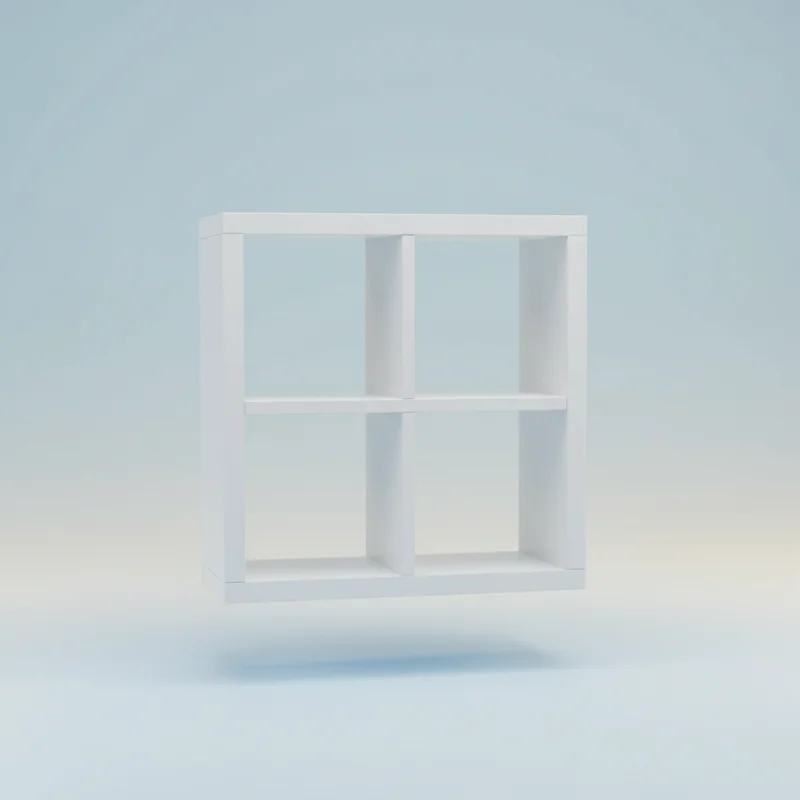
IKEA Furniture

IKEA Furniture

Swedish flat-pack relationship tests sold as affordable home goods. Comes with 47 pieces, one Allen key, and instructions that assume you have transcended the need for words. Marriages have ended over fewer screws.

VS
Procrastination

Procrastination

The art of doing everything except the one thing you should be doing. A universal human experience that has spawned more clean apartments, reorganized sock drawers, and Wikipedia deep dives than any productivity method ever could.

The Matchup

Few phenomena illuminate the contradictions of modern domestic life as clearly as the intersection of IKEA furniture and procrastination. Across millions of homes worldwide, flat-pack boxes occupy corners, hallways, and spare rooms, their contents destined for assembly at some future date that recedes perpetually into the horizon.

IKEA, the Swedish furniture empire founded in 1943, has achieved remarkable success by convincing consumers that furniture should arrive disassembled, accompanied by wordless instruction manuals featuring ambiguously gendered human figures performing tasks that bear only passing resemblance to actual assembly procedures. The company ships approximately 1.5 billion flat-pack units annually, each representing a promise of domestic transformation contingent upon human willingness to engage with cam locks and wooden dowels.

Procrastination, humanity's ancient companion in task avoidance, requires no instruction manual and arrives without packaging. This behavioral tendency has achieved universal distribution across all cultures and economic systems, operating through a simple mechanism: the voluntary delay of intended actions despite full awareness of negative consequences. Research indicates that approximately 20% of adults identify as chronic procrastinators, though the actual figure is likely higher, as many procrastinators have delayed completing the relevant surveys.

The relationship between these entities proves particularly illuminating. Each year, an estimated 14 million IKEA products remain in their boxes for more than six months post-purchase. These flat-packs represent the physical manifestation of procrastination, cardboard monuments to human intentions that somehow never quite translated into action. This analysis examines whether Swedish engineering or behavioral science produces the more durable, versatile, and globally influential phenomenon.

Battle Analysis

Durability Procrastination Wins
30%
70%
IKEA Furniture Procrastination

IKEA Furniture

IKEA furniture demonstrates variable durability profiles that depend critically on a factor the manufacturer cannot control: whether the product is ever removed from its packaging. A KALLAX shelving unit retains perfect structural integrity for decades while remaining in its box, as the flat-pack format eliminates the wear patterns, moisture exposure, and mechanical stress that degrade assembled furniture.

Once assembled, durability becomes substantially more complex. Particleboard components achieve typical lifespans of 5-10 years under normal household conditions, though this estimate assumes correct assembly, which industry surveys suggest occurs in roughly 23% of cases. The cam-lock joinery system that enables flat-pack distribution also introduces structural vulnerabilities, with documented degradation occurring during relocation attempts as the connections were not engineered for repeated disassembly cycles.

The company's solid wood offerings, including the HEMNES and STOCKHOLM ranges, achieve superior longevity of 15-20 years when properly maintained. However, these products represent a small fraction of IKEA's total output, and their assembly instructions generate proportionally higher rates of domestic discord, which may limit their practical lifespan in certain households.

Procrastination

Procrastination exhibits extraordinary temporal persistence across multiple scales of analysis. At the individual level, procrastination tendencies established in childhood typically persist throughout adulthood, demonstrating a self-reinforcing behavioral pattern that resists intervention with remarkable efficiency.

Historical documentation reveals procrastination affecting every recorded civilization. Ancient Egyptian hieroglyphics describe workers delaying pyramid construction tasks. Roman philosophers wrote extensively about the tendency to postpone important actions. Medieval manuscripts contain marginal notes apologizing for copying delays. This suggests an operational history of at least 4,500 years, substantially exceeding IKEA's eight decades of corporate existence.

Most significantly, procrastination demonstrates perfect self-renewal. Unlike IKEA furniture, which cannot repair its own cam-lock connections, procrastination regenerates spontaneously within each new human mind without requiring instruction manuals, allen keys, or customer service intervention. A procrastinator need not teach their children to procrastinate; the tendency emerges naturally, often manifesting first in homework avoidance before expanding to encompass tax filing, medical appointments, and furniture assembly.

VERDICT

Durability assessment yields decisive results favoring procrastination through fundamental structural advantages. IKEA furniture, whether assembled or boxed, eventually succumbs to material degradation, product discontinuation, or the irresistible urge to redecorate. Procrastination requires no materials and cannot be discontinued.

The critical distinction lies in dependency structures. IKEA furniture depends on physical components that can fail. Procrastination depends only on the existence of tasks worth delaying, and human civilization has demonstrated an inexhaustible capacity for generating such tasks. When your perpetuation mechanism is "create something that should be done later", durability becomes effectively infinite.

Reliability Procrastination Wins
30%
70%
IKEA Furniture Procrastination

IKEA Furniture

IKEA furniture reliability depends critically on assembly quality, a variable that Swedish engineering cannot fully control once products leave the warehouse. Consumer research indicates that approximately 12% of IKEA products experience premature failure directly attributable to assembly errors, including reversed panels, undertightened fasteners, and creative interpretations of wordless instructions.

When assembled correctly, IKEA furniture achieves adequate functionality within specified parameters. A properly constructed KALLAX holds books. A correctly assembled MALM contains clothing. A successfully built LACK supports beverages. The products deliver on their promises, provided the assembly process itself delivers on its promises, which, as noted, occurs in roughly 23% of cases.

Long-term reliability reveals systematic degradation patterns. Cam-lock connections loosen. Particleboard edges chip. Drawer slides accumulate debris. The mysterious wobble that affects tables and chairs typically manifests between months 18 and 24, often coinciding with the expiration of any warranty coverage. IKEA furniture demonstrates reliable decline toward eventual non-functionality, a predictable trajectory if not a desirable one.

Procrastination

Procrastination exhibits exceptional operational consistency across all deployment scenarios. When presented with a task requiring completion, procrastination reliably suggests delay. When facing deadlines, procrastination reliably proposes alternative activities. When confronting important responsibilities, procrastination reliably introduces doubt about the optimal timing for action.

Reliability metrics reveal near-perfect consistency for certain task categories. Complex tasks with distant deadlines achieve procrastination rates approaching 90%. Aversive tasks generate reliable avoidance regardless of importance. Tasks requiring multiple steps, unfamiliar skills, or extended concentration demonstrate particularly high procrastination reliability.

The phenomenon also exhibits adaptive reliability. While IKEA furniture degrades over time, procrastination maintains consistent performance throughout the lifespan. A thirty-year-old's procrastination functions identically to a twenty-year-old's procrastination; only the tasks being avoided have changed. No maintenance is required to sustain procrastination's operational capacity. It never requires recalibration, replacement parts, or the intervention of customer service.

VERDICT

Reliability assessment produces definitive results favoring procrastination through elimination of assembly-related failure modes. Procrastination arrives fully operational without user configuration; IKEA furniture arrives as a reliability lottery.

The critical insight concerns consistency of performance. IKEA furniture performs variably depending on assembler competence, environmental conditions, and material quality variations. Procrastination performs consistently regardless of context, requiring only the presence of a task and a mind capable of deferral. For those seeking dependable behavior, procrastination delivers without the uncertainties that plague flat-pack furniture.

Versatility Procrastination Wins
30%
70%
IKEA Furniture Procrastination

IKEA Furniture

IKEA offers remarkable product diversity spanning over 12,000 distinct items across bedroom, living room, kitchen, bathroom, office, and outdoor categories. The company's modular design philosophy enables creative combinations, with the PAX wardrobe system alone offering over 200,000 configuration possibilities, each requiring its own unique assembly adventure.

A thriving subculture of IKEA hacking extends versatility beyond original design parameters. The KALLAX unit has been documented serving as aquarium stands, cat climbing structures, vinyl record storage, room dividers, and the foundation for elaborate custom furniture that bears no resemblance to Swedish design intentions. The LACK table has been converted into speaker housings, shoe racks, and, in one documented case, a surprisingly effective chicken coop.

However, IKEA furniture versatility remains constrained to domestic contexts. A MALM dresser cannot accompany its owner to work, participate in outdoor activities, or serve any function beyond furniture-related applications. The products excel within their domain but cannot transcend the fundamental limitation of being objects that sit in rooms.

Procrastination

Procrastination demonstrates universal applicability across every domain of human activity. No task category has proven immune. Academic assignments, professional projects, personal health initiatives, household maintenance, creative endeavors, relationship communication, financial planning, and furniture assembly all fall within procrastination's operational scope.

The phenomenon exhibits instantaneous adaptation to new contexts. When technology introduced email, procrastination immediately expanded to include inbox management. When social media emerged, procrastination colonized the space within months. When video conferencing became standard, procrastination manifested as cameras that were "accidentally" left off during meetings. Each new human activity generates corresponding procrastination opportunities with no development delay.

Procrastination also demonstrates remarkable scalability. It applies equally to tasks taking five minutes or five years. It functions identically for individuals and organizations. National governments have been documented procrastinating on infrastructure projects, climate policy, and public health initiatives with the same mechanisms that individuals employ when avoiding dentist appointments. This scale-invariant versatility exceeds any product catalogue.

VERDICT

Versatility comparison reveals fundamental category differences. IKEA offers extensive variety within furniture applications; procrastination offers infinite variety across all applications. One provides many solutions to the problem of furnishing spaces; the other provides one solution to the infinite problem of having tasks to complete.

The decisive factor lies in contextual flexibility. IKEA furniture cannot accompany users outside domestic settings. Procrastination accompanies users everywhere, functioning equally well at home, work, school, or during international travel. For sheer range of deployment scenarios, procrastination achieves unmatched versatility through the considerable advantage of not being a physical object.

Global reach Procrastination Wins
30%
70%
IKEA Furniture Procrastination

IKEA Furniture

IKEA operates 460 retail locations across 62 countries, achieving one of the most successful commercial expansions in furniture history. Annual customer visits exceed 422 million, with the company generating over $47 billion in revenue while shipping approximately 1.5 billion products worldwide.

The BILLY bookcase has achieved distribution levels rivaling biological species. With over 110 million units sold since 1979, BILLY bookcases now outnumber many endangered animals by factors of thousands. If BILLY bookcases were a species, conservation biologists would classify them as Least Concern with aggressive range expansion.

Cultural penetration extends beyond sales figures. IKEA has introduced Swedish words like KALLAX and MALM into global vocabulary, though these words typically mean nothing to actual Scandinavians. The company's catalog was, until its discontinuation in 2021, the world's most widely distributed publication after religious texts, reaching 200 million copies annually. IKEA has achieved the rare feat of making particleboard furniture an object of international cultural commentary.

Procrastination

Procrastination maintains operational presence in every human population regardless of geographic location, economic development, or cultural framework. Cross-cultural research spanning 45 nations confirms universal prevalence, with reported rates consistently falling between 15-25% of adult populations.

Unlike IKEA, which requires retail infrastructure, shipping logistics, and consumer economies for distribution, procrastination propagates through human psychology alone. It operates in hunter-gatherer societies, agrarian communities, and post-industrial economies with equal effectiveness. Procrastination has been documented in isolated indigenous communities that have never encountered Swedish furniture, demonstrating distribution mechanisms entirely independent of commercial systems.

The temporal reach also demonstrates superior penetration. While IKEA furniture accumulates through purchases over time, procrastination manifests continuously, potentially affecting the same individual multiple times daily. A single procrastinator generates more instances of task avoidance per year than the same individual could possibly generate furniture purchases. When measured by total daily occurrences worldwide, procrastination exceeds IKEA furniture distribution by several orders of magnitude.

VERDICT

Global reach comparison produces clear results favoring the behavioral phenomenon over the commercial enterprise. IKEA has achieved remarkable success in 62 countries; procrastination operates in every country with no retail presence required.

The fundamental advantage lies in distribution infrastructure. IKEA requires stores, warehouses, websites, and delivery systems. Procrastination requires only human minds, which propagate through reproduction rather than corporate expansion strategies. IKEA must compete for market share; procrastination faces no competitors in its category. The mathematics favor biological distribution over commercial logistics.

Affordability Procrastination Wins
30%
70%
IKEA Furniture Procrastination

IKEA Furniture

IKEA furniture presents compelling value propositions across economic circumstances. Entry-level products begin below $10 for basic storage solutions, with complete room furnishing achievable for $500-1,500 depending on aesthetic ambitions and tolerance for particle board. The LACK side table, at $12.99, represents perhaps the most accessible furniture on the global market, offering surface area at approximately $0.24 per square centimeter.

The company achieves these price points through systematic labor cost transfer to customers. By requiring end-user assembly, IKEA eliminates manufacturing labor, reduces shipping volume by an estimated 60%, and generates billions of hours of unpaid human effort annually. Whether this represents brilliant business innovation or elaborate exploitation depends on one's relationship with allen keys.

Total cost of ownership, however, reveals hidden expenditures. Assembly time, valued at minimum wage rates, adds $15-60 to effective costs. Tool acquisition, replacement hardware for stripped components, and relationship counseling following particularly challenging assembly sessions introduce further expenses. One Swedish study documented that 17% of couples report relationship stress specifically attributed to IKEA furniture assembly, though the study did not quantify the resulting therapy costs.

Procrastination

Procrastination achieves perfect affordability through the elimination of all direct costs. No purchase is required. No subscription maintains access. No premium tier unlocks additional features. Procrastination arrives free of charge with every human consciousness, requiring only a task and the decision to delay it.

The economic impact, however, operates through opportunity costs rather than direct expenditure. Research suggests that procrastination generates annual productivity losses exceeding $200 billion in developed economies, distributed across missed deadlines, delayed projects, and the considerable psychological overhead of task avoidance. Individual procrastinators may experience career advancement delays, late payment penalties, and the accumulated cost of interest on unfiled tax returns.

Paradoxically, procrastination can also generate savings. Items placed in online shopping carts and never purchased, gym memberships never activated, and subscription services never cancelled but also never used represent economic activity that procrastination quietly prevents. The procrastinator who never quite gets around to buying that IKEA bookshelf has, in a sense, saved the purchase price entirely.

VERDICT

Affordability comparison produces an unexpected outcome. While IKEA furniture offers genuine value within its category, procrastination achieves something remarkable: zero acquisition cost with potentially positive net returns for certain use cases.

The analysis must acknowledge that procrastination's hidden costs often exceed IKEA's visible prices. However, those costs are distributed across time and probability, while IKEA's costs arrive immediately as line items on receipts. For those practicing strategic procrastination, the behavioral tendency offers superior affordability through the simple mechanism of never quite purchasing anything.

👑

The Winner Is

Procrastination

42 - 58

This investigation concludes with a 58-42 victory for procrastination over IKEA furniture, a result that will surprise no one who has ever purchased a flat-pack bookshelf and still possesses its unopened box months later.

The outcome reflects a fundamental irony in modern consumer behavior. IKEA furniture promises transformation through assembly, the satisfaction of creating functional objects from component parts through personal effort. Procrastination ensures this transformation remains perpetually pending, the boxes occupying corner spaces while their contents await some future moment of motivation that somehow never arrives.

IKEA furniture offers genuine value within its category: affordable design, modular flexibility, and the democratic accessibility of home furnishing. However, these advantages assume eventual assembly, an assumption that procrastination systematically undermines. An estimated 14 million IKEA products annually never achieve their intended function, remaining in flat-pack form until disposal, donation, or the arrival of a more decisive owner.

Procrastination prevails through superior integration with human psychology. IKEA furniture requires behavior change to achieve value; procrastination operates through existing behavioral tendencies. The flat-pack system demands action; procrastination rewards inaction. In the contest between products requiring effort and behavioral patterns avoiding effort, the path of least resistance consistently wins.

We conclude that IKEA furniture and procrastination may, in fact, represent complementary rather than competing phenomena. IKEA provides the boxes that occupy corners; procrastination provides the reason they remain there. Together, they have generated a new category of domestic artifact: the perpetually pending furniture, simultaneously owned and unassembled, purchased but never realized, existing in a quantum state between retail transaction and functional object. Perhaps this represents the true Swedish achievement: not furniture itself, but the creation of new frontiers for human task avoidance.

IKEA Furniture
42%
Procrastination
58%

Share this battle

More Comparisons